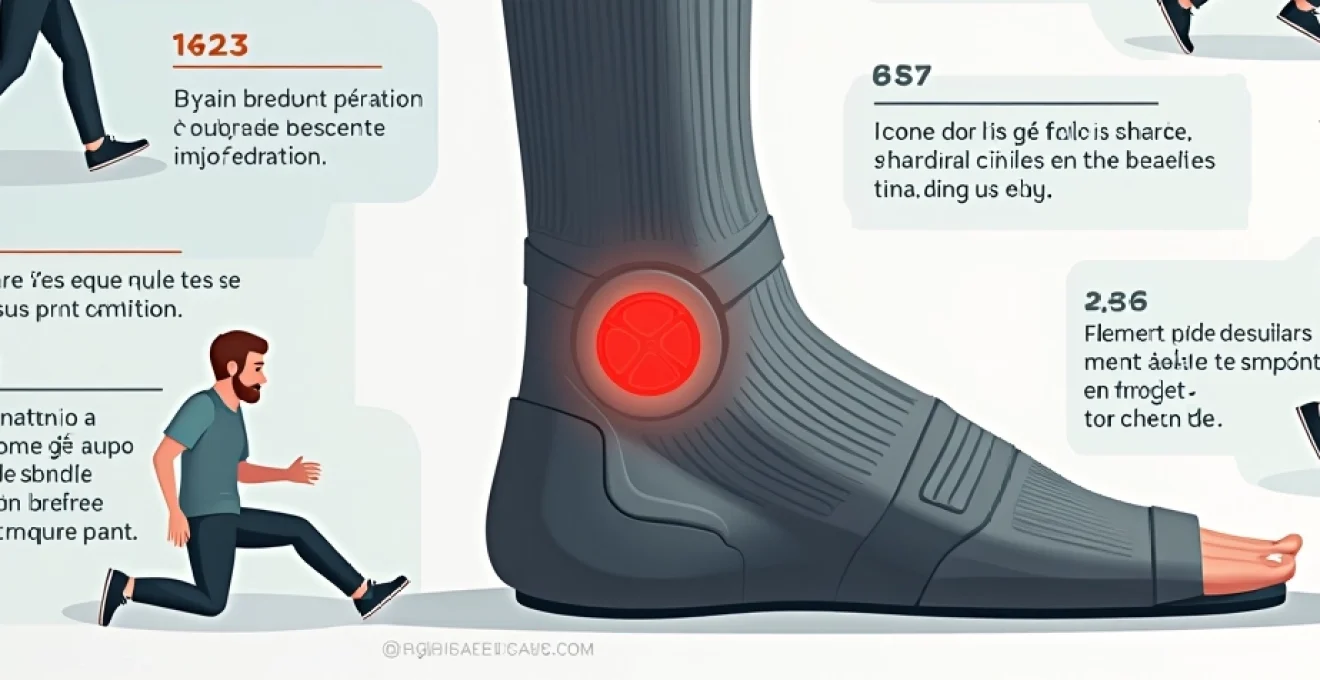
Aircast walking boots, whilst essential for protecting ankle fractures and supporting healing, can paradoxically become a source of significant discomfort and secondary complications. Many patients experience unexpected ankle pain, tingling sensations, and biomechanical dysfunction whilst wearing these controlled ankle movement (CAM) devices. Recent clinical research indicates that nearly 70% of patients develop secondary pain symptoms away from their original injury site when using walking boots, with complications ranging from heel slippage and pressure point irritation to nerve compression and gait dysfunction. Understanding these mechanisms and implementing proper fitting protocols, modification strategies, and therapeutic interventions can dramatically improve patient comfort and treatment outcomes during the critical healing phase.
Aircast walking boot biomechanical complications and pain mechanisms
The biomechanical alterations imposed by Aircast walking boots create a cascade of physiological adaptations that can generate pain and dysfunction throughout the kinetic chain. These devices fundamentally alter the body’s natural movement patterns, creating compensatory mechanisms that place stress on previously unaffected structures. The rigid shell design, whilst providing necessary immobilisation for healing tissues, can simultaneously create new sources of discomfort and functional limitation.
Altered gait patterns and compensatory movement dysfunction
Walking boots create a significant limb length discrepancy, typically adding 2-4 inches of height to the affected leg. This asymmetry forces the body to develop compensatory movement patterns that can generate pain throughout the pelvis, spine, and contralateral limb. The altered biomechanics place excessive stress on the hip flexors, creating tension patterns that radiate upward through the lumbar spine and downward through the knee joint.
The rigid rocker sole design, whilst intended to facilitate forward progression, often creates an unnatural heel-strike pattern that generates jarring forces through the ankle joint. These impact forces can exacerbate existing inflammation and create new sources of discomfort, particularly in patients with sensitive fracture sites or soft tissue injuries. The inability to plantarflex naturally during push-off phase creates compensatory hip hiking and circumduction patterns that place enormous stress on the uninjured leg.
Pressure point distribution and soft tissue compression
Aircast boots rely on circumferential compression to maintain position and provide stability, yet this compression can create localised pressure points that compromise circulation and nerve function. The malleolar regions are particularly vulnerable to excessive pressure, as the bony prominences concentrate forces within the rigid shell structure. Patients frequently report numbness and tingling sensations around the lateral malleolus, indicating potential peroneal nerve compression.
The heel cup design in many Aircast models fails to accommodate individual anatomical variations, leading to heel slippage and subsequent ankle pain. When the heel cannot maintain proper position within the boot, the foot slides forward, creating pressure against the toes whilst simultaneously allowing the ankle to move excessively within the device. This instability undermines the therapeutic benefits of immobilisation whilst creating new sources of discomfort and potential re-injury.
Achilles tendon shortening and posterior ankle impingement
Extended immobilisation in Aircast boots places the Achilles tendon in a shortened position, leading to adaptive shortening and posterior ankle impingement. The fixed plantar flexion angle maintained by most boot designs prevents normal dorsiflexion range of motion, creating contracture development within days of initial application. This adaptive shortening creates a vicious cycle where attempts to dorsiflex the ankle generate painful impingement sensations.
The posterior compartment compression created by tight boot strapping can exacerbate these symptoms by reducing space for tendon gliding and creating additional pressure on the posterior ankle structures. Patients often describe a deep aching sensation in the posterior ankle that worsens with weight-bearing activities and persists even during rest periods. The combination of immobilisation-induced stiffness and mechanical compression creates a complex pain syndrome that can persist long after boot removal.
Peroneal nerve entrapment and lateral compartment syndrome
The lateral compartment of Aircast boots creates a high-risk environment for peroneal nerve entrapment, particularly around the fibular head region where the superficial peroneal nerve becomes vulnerable to compression. The rigid lateral supports, whilst providing necessary stability for ankle fractures, can create excessive pressure on this nerve pathway, resulting in numbness, tingling, and burning sensations along the lateral leg and dorsal foot.
Swelling dynamics within the boot environment can exacerbate these neurological complications, as fluctuating oedema levels create variable pressure patterns throughout the day. Morning stiffness and increased symptoms after periods of elevation suggest that fluid redistribution plays a significant role in symptom development. The inability to adjust compression levels dynamically throughout the healing process creates a therapeutic dilemma where adequate immobilisation conflicts with neurological comfort.
CAM walker boot fitting protocols and adjustment techniques
Proper fitting protocols represent the foundation of successful Aircast boot therapy, yet many patients receive inadequate instruction regarding optimal adjustment techniques. The complex interaction between pneumatic systems, strap positioning, and anatomical accommodation requires systematic assessment and ongoing modification throughout the healing process. Understanding these technical aspects can dramatically improve patient comfort and therapeutic outcomes.
Pneumatic air cell calibration for optimal pressure distribution
The pneumatic air cell system within Aircast boots provides the primary mechanism for achieving comfortable, secure fit whilst maintaining therapeutic immobilisation. Proper calibration requires understanding the relationship between air pressure, tissue compression, and circulation maintenance. Initial inflation should begin with minimal pressure, gradually increasing until snug contact is achieved without compromising circulation or creating pressure point discomfort.
The key to successful air cell management lies in recognising that optimal pressure varies throughout the day based on swelling patterns, activity levels, and healing progression. Morning applications typically require lower pressure settings due to overnight swelling reduction, whilst afternoon adjustments may need increased pressure to accommodate tissue expansion. The goldilocks principle applies here – too little pressure allows excessive movement and instability, whilst too much pressure creates circulation compromise and neurological symptoms.
Proper pneumatic calibration should achieve secure immobilisation without creating numbness, tingling, or circulation compromise. Patients should be able to insert one finger between the liner and their skin at the top of the boot.
Heel lift integration and leg length discrepancy correction
Addressing limb length discrepancy represents one of the most overlooked aspects of Aircast boot management, yet this intervention can dramatically reduce secondary pain and improve functional outcomes. Adding a heel lift to the unaffected leg helps restore pelvic alignment and reduces compensatory movement patterns that generate hip, back, and knee pain. The heel lift height should approximate the additional height created by the walking boot, typically requiring 1-2 inches of elevation.
The timing of heel lift introduction requires careful consideration of healing status and weight-bearing restrictions. Patients on strict non-weight-bearing protocols may benefit from heel lift application during transfers and limited standing activities, whilst those progressing to partial weight-bearing can use heel lifts during more extensive ambulation. The psychological benefits of restored symmetry often provide immediate comfort improvements that enhance overall treatment compliance.
Strap tension optimisation and circumferential compression management
Achieving optimal strap tension requires balancing immobilisation needs with circulation preservation and comfort maintenance. The proximal straps require the greatest attention, as excessive tension in this region can compromise peroneal nerve function and create compartment syndrome symptoms. A systematic approach begins with securing the most distal strap first, progressing proximally whilst monitoring for signs of excessive compression.
The liner positioning plays a crucial role in strap effectiveness and comfort. Ensuring the liner extends above the rigid shell prevents direct contact between the plastic boot and skin, eliminating pressure point development and improving overall comfort. Wrinkled or bunched liner material can create localised pressure concentrations that generate pain and skin breakdown, requiring careful attention during each application.
Liner replacement protocols and moisture control systems
Moisture management within Aircast boots represents a critical yet often neglected aspect of patient care. The enclosed environment created by the boot system promotes moisture accumulation, bacterial growth, and skin maceration if proper protocols are not maintained. Daily liner inspection and regular replacement schedules help prevent these complications whilst maintaining hygiene standards.
Sock selection plays a vital role in moisture control and comfort enhancement. Moisture-wicking synthetic materials or merino wool provide superior performance compared to cotton alternatives, which retain moisture and promote bacterial growth. Compression sock application can provide additional benefits by reducing swelling and improving circulation, though care must be taken to avoid excessive compression when combined with boot systems.
Evidence-based aircast boot modification strategies
Clinical research has identified numerous modification strategies that can significantly improve Aircast boot comfort and effectiveness whilst maintaining therapeutic immobilisation. These evidence-based interventions address common sources of boot-related pain and dysfunction through targeted mechanical adjustments and accessory applications. The key lies in understanding which modifications address specific patient complaints whilst preserving the essential protective functions of the device.
Padding modifications represent the most commonly employed strategy for addressing pressure point discomfort. Strategic placement of moleskin, foam padding, or gel inserts can redistribute pressure away from sensitive areas whilst maintaining overall fit integrity. The malleolar regions benefit particularly from donut-shaped padding that surrounds the bony prominence without creating additional bulk. Custom foam modifications can be trimmed and shaped to address individual anatomical variations that create pressure point problems.
Heel gripping enhancements address one of the most common complaints associated with Aircast boot wear. Adding heel grips, foam wedges, or custom-molded inserts can prevent heel slippage whilst maintaining proper ankle positioning within the device. The goal is to create secure heel positioning without over-tightening straps, which can compromise circulation and create new pressure points. Some patients benefit from dual-density foam systems that provide firm heel support with softer interface materials.
Successful boot modifications should address specific patient complaints whilst preserving therapeutic immobilisation. Any modification that compromises fracture stability or healing progression should be avoided.
Ventilation improvements can dramatically enhance patient comfort, particularly during extended wear periods. Strategic perforation of liner materials, addition of moisture-wicking inserts, and implementation of drying protocols between wear sessions help manage the enclosed environment challenges. Some patients benefit from alternating between multiple liner sets to ensure dry application each morning whilst allowing proper cleaning and drying of used liners.
Physical therapy interventions for Boot-Related ankle dysfunction
Physical therapy interventions play a crucial role in managing boot-related complications whilst supporting the healing process and preparing for eventual boot discontinuation. These interventions must be carefully calibrated to respect healing tissue constraints whilst addressing the secondary complications that develop during immobilisation periods. The challenge lies in maintaining therapeutic benefits whilst working within the mechanical limitations imposed by the boot system.
Range of motion restoration techniques during immobilisation
Maintaining ankle mobility during Aircast boot immobilisation requires creative approaches that work within the constraints of the device whilst preventing contracture development. Non-weight-bearing range of motion exercises can be performed with the boot removed during supervised sessions, focusing on gentle dorsiflexion and plantarflexion within pain-free ranges. The frequency and intensity of these exercises must be carefully calibrated based on healing status and physician protocols.
Subtalar joint mobility becomes particularly important during extended immobilisation periods, as these movements are often restricted by boot designs. Manual mobilisation techniques applied to the subtalar joint can help maintain three-dimensional foot mobility whilst respecting primary healing tissue constraints. Patients can be taught self-mobilisation techniques using towel stretches and gentle manual pressure to maintain some degree of mobility between formal therapy sessions.
Eccentric loading exercises for achilles tendon adaptation
Preventing Achilles tendon contracture during Aircast boot immobilisation requires strategic implementation of eccentric loading exercises that can be performed within device constraints. Seated calf raises using resistance bands provide controlled eccentric loading whilst maintaining boot stability and protection. The resistance level must be carefully calibrated to provide therapeutic stimulus without compromising healing tissues or creating excessive strain on fracture sites.
Progressive loading protocols help prepare the Achilles tendon for eventual boot discontinuation whilst addressing the adaptive shortening that occurs during immobilisation. These exercises should begin with minimal resistance and short duration, gradually progressing as healing advances and symptoms allow. The tissue tolerance principle guides progression, ensuring that loading remains within therapeutic ranges whilst promoting positive adaptation.
Proprioceptive training protocols within boot constraints
Maintaining proprioceptive function during Aircast boot immobilisation requires innovative approaches that challenge balance and position sense within the safety constraints of the device. Single-leg standing exercises with the boot can provide vestibular challenges whilst maintaining ankle protection. Progressive difficulty can be added through visual occlusion, unstable surface training, or dual-task activities that challenge the proprioceptive system.
Weight-shifting exercises provide another avenue for proprioceptive maintenance within boot constraints. Patients can practice controlled weight transfers between affected and unaffected limbs whilst maintaining boot protection. These exercises help preserve the neuromuscular control patterns that will be essential for successful transition away from boot protection during later healing phases.
Progressive Weight-Bearing transition programmes
The transition from non-weight-bearing to full weight-bearing represents a critical phase where progressive loading protocols can optimise outcomes whilst minimising re-injury risk. Boot-protected weight-bearing allows graduated tissue loading whilst maintaining fracture stability and soft tissue protection. The progression rate must be individually calibrated based on healing status, pain levels, and functional goals.
Gait training within boot constraints helps patients develop efficient movement patterns that minimise compensatory dysfunction whilst maximising therapeutic benefits. Teaching proper heel-strike patterns, weight transfer techniques, and step length adjustments can reduce secondary pain and improve functional outcomes. The goal is to develop movement competency within boot constraints that will facilitate successful transition to normal footwear.
Alternative immobilisation devices and CAM boot substitutes
The limitations and complications associated with traditional Aircast boots have driven innovation in alternative immobilisation technologies that aim to provide equivalent protection with improved comfort and functionality. These newer devices address many of the biomechanical and comfort issues inherent in traditional boot designs whilst maintaining the therapeutic immobilisation necessary for optimal healing outcomes.
The TayCo External Ankle brace represents a significant advancement in ankle immobilisation technology, offering lightweight protection that fits over regular footwear rather than replacing it. This design eliminates the limb length discrepancy problem that creates so many secondary complications with traditional boots. Clinical studies indicate that 85% of patients who would traditionally receive CAM boots can be successfully treated with this alternative device, experiencing faster return to normal activities and reduced secondary pain.
Removable cast alternatives provide another option for patients who experience significant boot-related complications. These devices use different materials and construction techniques to achieve immobilisation whilst addressing common comfort issues. Fiberglass alternatives offer lighter weight and better ventilation compared to traditional plaster casting, whilst maintaining superior immobilisation compared to boot systems. The trade-off involves reduced adjustability and convenience compared to removable boot systems.
Alternative immobilisation devices should be considered when traditional Aircast boots create complications that compromise patient comfort or treatment compliance. The goal is to maintain therapeutic immobilisation whilst eliminating secondary complications.
Hybrid bracing systems combine elements of traditional boots with ankle-foot orthosis (AFO) technology to create devices that provide immobilisation whilst maintaining some degree of functional mobility. These systems often feature adjustable range of motion controls that can be modified as healing progresses, allowing gradual transition from complete immobilisation to controlled mobility without device changes.
Long-term ankle function recovery Post-Aircast boot treatment
The transition away from Aircast boot protection represents a critical phase where proper rehabilitation protocols can determine long-term functional outcomes. Many patients experience persistent ankle dysfunction, stiffness, and proprioceptive deficits that require systematic intervention to restore optimal function. The complications that develop during boot immobilisation often persist beyond device removal, requiring targeted therapeutic interventions.
Ankle stiffness represents the most common long-term complication following extended Aircast boot immobilisation. The combination of tissue adhesion formation, contracture development, and joint surface changes creates complex mobility limitations that require comprehensive intervention. Manual therapy techniques, progressive stretching protocols, and joint mobilisation procedures can help restore normal range of motion, though full recovery may require several months of consistent intervention.
Strength deficits develop predictably during immobilisation periods, with particular weakness in the plantarflexor and dorsiflexor muscle groups. Progressive resistance training must be implemented gradually to avoid re-injury whilst restoring normal strength levels. The eccentric strength component often shows the greatest deficits and requires specific attention during rehabilitation programming. Functional strength training that mimics real-world demands provides the most effective preparation for return to normal activities.
Proprioceptive function shows significant deterioration during extended immobilisation, creating increased risk for re-injury and chronic instability.
Systematic proprioceptive retraining programmes must begin early in the post-boot phase to restore normal neuromuscular control patterns. Balance training progressions that challenge the ankle stabilisation system help restore the complex feedback mechanisms that prevent injury recurrence. Single-leg stance exercises, perturbation training, and sport-specific movement patterns provide graduated challenges that rebuild proprioceptive competence.
The psychological impact of extended Aircast boot immobilisation often receives inadequate attention during rehabilitation planning. Many patients develop movement anxiety and kinesiophobia that persist beyond device removal, creating functional limitations that exceed the physical constraints of their injury. Graduated exposure therapy and movement confidence building exercises help address these psychological barriers to full recovery. The fear-avoidance cycle that develops during prolonged immobilisation requires specific intervention to prevent chronic disability patterns.
Return-to-activity protocols must be individualised based on pre-injury activity levels, healing progression, and functional goals. Athletic populations require sport-specific training progressions that address the unique demands of their chosen activities. Workplace return considerations must account for occupational demands such as prolonged standing, lifting requirements, or exposure to uneven surfaces. The timeline for full activity resumption varies significantly based on injury severity and individual healing responses, typically ranging from 3-6 months for complete recovery.
Successful long-term recovery requires addressing not only the physical complications of ankle injury but also the secondary effects of prolonged immobilisation. A comprehensive rehabilitation approach considers strength, mobility, proprioception, and psychological factors.
Preventing re-injury represents a critical component of long-term ankle function recovery. The statistics surrounding ankle injury recurrence are sobering – up to 40% of patients experience repeat injuries within two years of initial trauma. This high recurrence rate reflects the complex nature of ankle stability and the challenges associated with complete functional restoration. Implementation of ongoing maintenance exercise programmes, activity modification strategies, and protective equipment protocols can significantly reduce re-injury risk whilst supporting long-term ankle health.
Monitoring for delayed complications remains important throughout the recovery process, as some boot-related problems may not manifest until weeks or months after device removal. Chronic pain syndromes, persistent swelling, and functional limitations may indicate underlying complications that require additional intervention. Regular follow-up assessments help identify these delayed complications early, when they are most responsive to treatment intervention.