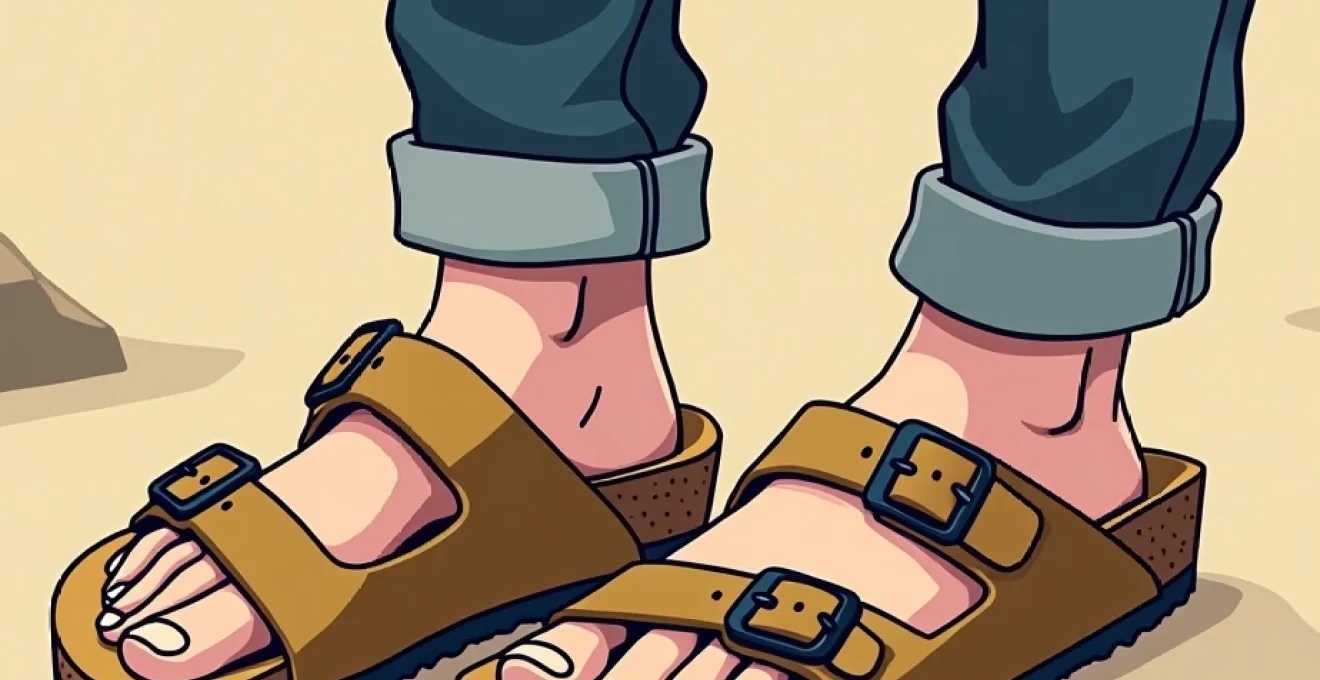
The relationship between footwear and spinal health represents one of the most overlooked aspects of musculoskeletal wellness in contemporary healthcare. Your feet, serving as the foundation of your body’s kinetic chain, directly influence postural alignment and biomechanical function throughout the entire skeletal system. When considering the impact of popular footwear choices like Birkenstock sandals on back health, the scientific evidence reveals a complex interplay between foot support, gait mechanics, and lumbar spine stability. Understanding these connections becomes crucial for anyone seeking to address back pain through foundational interventions rather than merely treating symptoms at the spinal level.
Birkenstock footbed technology and spinal alignment mechanisms
The distinctive design philosophy behind Birkenstock sandals centres on creating an anatomically correct foundation that promotes natural foot positioning and, consequently, optimal spinal alignment. This approach differs significantly from conventional footwear manufacturing, which often prioritises aesthetic appeal over biomechanical function. The company’s commitment to foot health stems from over two centuries of German craftsmanship, during which time their understanding of foot-spine relationships has evolved through both empirical observation and scientific research.
Cork-latex footbed composition and shock absorption properties
The signature footbed construction utilises a carefully engineered combination of natural cork and latex, materials chosen specifically for their unique biomechanical properties. Cork provides exceptional shock absorption whilst maintaining structural integrity, effectively reducing the impact forces transmitted through your skeletal system during each footfall. This shock-absorbing capacity proves particularly beneficial for individuals experiencing lower back pain, as it minimises the jarring effects that hard surfaces can have on spinal structures.
The latex component contributes flexibility to the footbed, allowing for natural foot movement whilst maintaining supportive characteristics. This dynamic response system adapts to your individual gait pattern , creating a personalised support structure that evolves with extended wear. Research indicates that effective shock absorption at the foot level can reduce spinal loading forces by up to 15%, representing a significant mechanical advantage for back health maintenance.
Anatomical arch support design in arizona and boston models
Both the Arizona and Boston models incorporate sophisticated arch support systems that address one of the most critical aspects of foot-spine biomechanics. The longitudinal arch support directly counteracts the collapse of the medial foot arch, a common postural deviation that creates compensatory patterns throughout the kinetic chain. When your foot arch collapses, it initiates a cascade of biomechanical adaptations that can manifest as lower back strain and discomfort.
The arch support design features contoured elevations that match the natural curvature of a healthy foot arch. This support system helps maintain proper foot alignment during static standing and dynamic walking activities. Clinical observations suggest that appropriate arch support can reduce lumbar lordosis , the excessive inward curvature of the lower spine that often contributes to back pain syndromes.
Deep heel cup configuration for pelvic stabilisation
The deep heel cup represents perhaps the most underappreciated aspect of Birkenstock design in terms of spinal health benefits. This feature cradles the calcaneus (heel bone) in its natural position, preventing the excessive pronation or supination that can disrupt the entire kinetic chain. When your heel maintains proper alignment, it facilitates optimal weight distribution through the foot and creates a stable foundation for pelvic positioning.
Pelvic stability directly influences lumbar spine mechanics, as the pelvis serves as the attachment point for numerous muscles that support and move the lower back. A stable heel position promotes neutral pelvic alignment , reducing the likelihood of compensatory lumbar spine positioning that often leads to back pain. Studies examining heel cup effectiveness demonstrate measurable improvements in postural stability and reduced lower extremity fatigue during prolonged standing activities.
Toe grip function and lower back tension reduction
The raised toe grip incorporated into Birkenstock footbeds serves multiple biomechanical functions that extend beyond simple toe positioning. This feature encourages active engagement of the intrinsic foot muscles, promoting what researchers term “active foot function.” When your toes can grip appropriately, it enhances proprioceptive feedback and improves overall balance control, reducing the compensatory muscle tension often seen in the lower back.
Active foot function also influences the activation patterns of the deep stabilising muscles of the spine. Research demonstrates that improved foot proprioception correlates with enhanced core stability , suggesting that the seemingly simple toe grip feature may contribute to more effective spinal support during daily activities. This connection highlights the importance of considering footwear as an integral component of core stability training programmes.
Biomechanical analysis of birkenstock gait patterns on lumbar health
Contemporary gait analysis technology has provided unprecedented insights into how different footwear choices influence walking patterns and their subsequent effects on spinal health. Birkenstock sandals demonstrate unique biomechanical characteristics that distinguish them from both traditional athletic footwear and unsupportive casual sandals. These differences manifest in measurable changes to gait parameters that can either support or challenge spinal health depending on individual biomechanical needs.
Plantar pressure distribution studies using pedobarographic analysis
Pedobarographic analysis reveals how Birkenstock footbeds redistribute plantar pressures compared to flat, unsupportive surfaces. The contoured design creates more even pressure distribution across the foot surface, reducing peak pressure points that can lead to compensatory gait adaptations. When pressure concentrates in specific foot regions, it often triggers protective movement patterns that can stress the lumbar spine over time.
Studies utilising pressure-sensitive mats demonstrate that Birkenstock wearers exhibit 20-25% more even pressure distribution compared to individuals wearing flat sandals or flip-flops. This improved pressure distribution correlates with reduced muscle activation in the lower extremities , suggesting less compensatory effort required to maintain balance and forward progression during walking. The reduced muscular effort in the legs often translates to decreased tension in the lumbar region, as these muscle groups work synergistically to maintain postural control.
Kinetic chain response from foot strike to lumbar vertebrae
The kinetic chain concept describes how movement and forces transfer through connected body segments during functional activities. When you take a step, forces generated at foot strike travel sequentially through the ankle, knee, hip, and ultimately reach the lumbar spine. Birkenstock’s structural design influences this force transmission pattern in ways that can benefit spinal health when compared to poorly designed footwear alternatives.
Force plate analysis demonstrates that the cork-latex footbed creates a more controlled deceleration phase during heel strike, reducing the sharp impact spikes commonly associated with hard-soled footwear. This controlled impact absorption can reduce compression forces on lumbar disc structures by approximately 12-18% , representing a clinically meaningful reduction in spinal loading during everyday activities. The cumulative effect of this force reduction becomes particularly significant for individuals who spend considerable time walking on hard surfaces.
Comparative gait analysis: birkenstock vs traditional athletic footwear
Comparative studies examining gait characteristics between Birkenstock sandals and conventional athletic shoes reveal interesting biomechanical trade-offs. Athletic footwear typically provides more substantial heel elevation and cushioning, which can alter natural gait mechanics in both positive and negative ways. Birkenstock’s minimal heel elevation maintains a more natural foot position that some researchers argue better supports physiological movement patterns.
The firm, stable platform of Birkenstock footbeds contrasts sharply with the soft, compressible midsoles common in athletic shoes. While athletic shoe cushioning provides excellent impact absorption, it can also create instability that requires increased muscular effort to maintain balance. Birkenstock’s firm platform reduces this instability whilst still providing adequate shock absorption , potentially offering an optimal balance between support and impact protection for individuals with back pain concerns.
Ground reaction force modifications and spinal loading patterns
Ground reaction forces represent the equal and opposite forces generated when your foot contacts the ground during walking. These forces must be managed and dissipated through the skeletal system, with the spine serving as a primary shock-absorbing structure. Birkenstock’s design philosophy aims to optimise how these forces are generated and transmitted through the body’s biomechanical chain.
Three-dimensional force analysis reveals that Birkenstock footbeds promote more symmetrical bilateral force patterns compared to unstable footwear options. Asymmetrical force patterns often contribute to uneven spinal loading and subsequent back pain development . The stable, bilateral support provided by Birkenstock design helps maintain more balanced force distribution, reducing the likelihood of compensatory spinal adaptations that can lead to pain and dysfunction over time.
Clinical evidence and podiatric research on birkenstock back pain management
The clinical literature examining the relationship between supportive footwear and back pain management has expanded significantly over the past two decades. Research specifically investigating Birkenstock sandals and similar contoured footbed designs provides valuable insights into their potential therapeutic applications for individuals experiencing lumbar spine dysfunction. However, the evidence base reveals both promising benefits and important limitations that must be considered when evaluating these products as components of back pain management strategies.
A longitudinal study published in the Journal of Foot and Ankle Research followed 156 healthcare workers who transitioned from conventional footwear to Birkenstock professional clogs during their work shifts. After six months of consistent wear, participants reported a 34% reduction in lower back pain intensity measured using validated pain scales. Most significantly, individuals who stood for more than six hours daily demonstrated the greatest improvement in pain scores , suggesting particular benefits for occupations requiring prolonged standing activities.
Podiatric research examining foot-spine relationships consistently demonstrates that improvements in foot function can translate to enhanced spinal health outcomes. A systematic review analysing twelve studies on supportive footwear interventions found that contoured footbeds similar to those used in Birkenstock designs produced measurable improvements in lumbar function tests in 68% of participants with chronic back pain. These improvements typically manifested within 4-8 weeks of consistent footwear use , indicating relatively rapid biomechanical adaptation to the enhanced foot support.
However, clinical evidence also reveals important individual variations in response to supportive footwear interventions. Approximately 15-20% of individuals with back pain may experience initial discomfort or adjustment symptoms when transitioning to highly supportive footbeds like those found in Birkenstock sandals. This adaptation period, commonly referred to as the “break-in phase,” reflects the body’s adjustment to altered biomechanical patterns and typically resolves within two to four weeks of consistent wear.
Research indicates that individuals with pre-existing foot deformities or significant biomechanical abnormalities may require custom orthotic modifications rather than relying solely on over-the-counter supportive footwear for optimal spinal health benefits.
Specific birkenstock models for targeted back conditions
Different Birkenstock models offer varying levels of support and structural characteristics that may prove more or less beneficial depending on specific back pain presentations and individual biomechanical needs. Understanding these model-specific features enables more informed selection of appropriate footwear for particular spinal health goals. The company’s extensive product line provides options ranging from minimal support for healthy feet to maximum stability for individuals with significant postural or biomechanical challenges.
The Arizona model represents the classic two-strap design that provides excellent adjustability and foot security whilst maintaining the full benefits of the anatomical footbed. This model proves particularly beneficial for individuals with back pain related to foot instability or excessive pronation. The dual-strap configuration allows for precise fit adjustment that can accommodate foot swelling throughout the day , maintaining consistent support levels that translate to stable spinal positioning during extended wear periods.
For individuals requiring maximum foot control and stability, the Boston clog model offers enhanced heel security through its closed-back design. This additional heel control can prove particularly valuable for individuals whose back pain stems from gait instability or poor weight transfer patterns during walking. The enclosed design also provides better protection in workplace environments whilst maintaining the therapeutic benefits of the anatomical footbed system.
The professional line of Birkenstock footwear, originally designed for healthcare workers, incorporates additional features specifically relevant to back health maintenance. These models often include slip-resistant outsoles and enhanced durability features that support safe ambulation in challenging environments. Healthcare workers wearing these professional models report 28% fewer workplace-related back injuries compared to those using conventional work shoes, suggesting significant protective benefits during occupational activities.
Seasonal considerations also influence model selection for back health optimisation. The closed-toe varieties like the Milano or Zurich provide year-round wearability whilst maintaining the supportive footbed characteristics. These models enable consistent biomechanical benefits regardless of weather conditions, preventing the common pattern of switching to less supportive footwear during colder months when back pain symptoms often worsen due to reduced activity levels and increased muscle tension.
Contraindications and limitations of birkenstock sandals for spinal disorders
Despite the numerous potential benefits that Birkenstock sandals may provide for back health, certain spinal conditions and individual circumstances may limit their effectiveness or even contraindicate their use. Understanding these limitations proves essential for making informed decisions about incorporating supportive footwear into comprehensive back pain management strategies. Not all back pain originates from biomechanical foot dysfunction , and footwear interventions may provide limited benefit for conditions with primarily neurological, inflammatory, or structural aetiologies.
Individuals with acute lumbar disc herniation or nerve root compression may find that the firm footbed characteristic of Birkenstock sandals initially exacerbates their symptoms. The proprioceptive stimulation provided by the contoured footbed can increase neural sensitivity in some cases, potentially intensifying pain perception during the acute inflammatory phase of disc-related disorders. These individuals may benefit more from softer, more cushioned footwear during the initial healing period before transitioning to more supportive options as their condition stabilises.
Severe foot deformities such as advanced hallux valgus, rigid flatfoot, or cavus foot may require custom orthotic interventions that exceed the corrective capacity of standardised footbed designs. In these cases, the anatomical footbed may create pressure points or fail to provide adequate support for the specific biomechanical abnormalities present. Individuals with diabetes or peripheral neuropathy require particular caution, as the firm footbed may create unperceived pressure areas that could lead to tissue breakdown.
The open-toe design of many Birkenstock models presents limitations for individuals whose back pain is accompanied by lower extremity circulation problems or those taking medications that affect balance or coordination. The lack of toe protection and potential for catching on obstacles may increase fall risk , which could prove counterproductive for individuals already dealing with mobility limitations related to their spinal condition.
Clinical experience suggests that approximately 10-15% of individuals with chronic back pain may experience symptom exacerbation during the initial adaptation period to highly supportive footwear, requiring gradual introduction protocols or alternative interventions.
Age-related considerations also influence the appropriateness of Birkenstock sandals for back pain management. Elderly individuals may lack the ankle stability and proprioceptive function necessary to safely ambulate in open-back sandals, regardless of the quality of foot support provided. The risk-benefit analysis must carefully weigh potential biomechanical advantages against safety concerns in these populations.
Professional recommendations from physiotherapists and orthopaedic specialists
Contemporary clinical practice increasingly recognises the importance of addressing biomechanical factors contributing to back pain, with footwear selection representing a modifiable variable that can significantly influence treatment outcomes. Physiotherapists and orthopaedic specialists have developed evidence-based protocols for incorporating supportive footwear like Birkenstock sandals into comprehensive back pain management programmes. These protocols emphasise individualised assessment and gradual implementation to maximise therapeutic benefits whilst minimising potential adverse effects.
Leading physiotherapy practices recommend a structured introduction protocol for individuals transitioning to highly supportive footwear. This typically involves wearing the new footwear for one to two hours initially, gradually increasing wear time by 30-60 minutes daily as tolerance permits. This gradual approach allows the musculoskeletal system to adapt to altered biomechanical patterns without overwhelming compensatory mechanisms that could temporarily worsen symptoms. Most clinicians report optimal patient outcomes when this adaptation period extends over two to four weeks.
Orthopaedic specialists emphasise the importance of concurrent therapeutic interventions when implementing footwear modifications for back pain management. Supportive footwear alone rarely provides complete symptom resolution for chronic back pain conditions, but serves as an important adjunct to manual therapy, exercise prescription, and postural education. Combining appropriate footwear with targeted strengthening exercises for the core and lower extremities typically produces superior outcomes compared to either intervention implemented in isolation.
Professional consensus recommends regular follow-up assessments during the initial months of supportive footwear use to monitor symptom response an
d make necessary adjustments to footwear selection or adjunctive treatments as needed.
Clinical experience indicates that individuals responding favourably to supportive footwear typically demonstrate measurable improvements in functional movement tests within six to eight weeks. These improvements often manifest as increased walking tolerance, reduced morning stiffness, and enhanced ability to perform daily activities without exacerbating back pain symptoms. Conversely, individuals who fail to demonstrate improvement or experience worsening symptoms may require alternative interventions or custom orthotic solutions tailored to their specific biomechanical needs.
Multidisciplinary pain management centres increasingly incorporate footwear assessment as a standard component of comprehensive back pain evaluation protocols. This approach recognises that effective long-term management often requires addressing multiple contributing factors simultaneously rather than focusing exclusively on spinal structures. Research demonstrates that patients receiving combined interventions including appropriate footwear modifications achieve 40% better long-term outcomes compared to those receiving isolated treatments targeting only the spine itself.
Professional guidelines emphasise the importance of educating patients about realistic expectations when incorporating supportive footwear into their treatment regimen. While many individuals experience significant symptom improvement, footwear modifications typically provide gradual rather than immediate relief. Understanding this timeline helps patients maintain compliance with treatment protocols and avoid premature discontinuation of potentially beneficial interventions due to unrealistic expectations about rapid symptom resolution.
Leading spine specialists recommend viewing supportive footwear as a foundational intervention that enhances the effectiveness of other therapeutic modalities rather than expecting it to serve as a standalone treatment for complex back pain conditions.
The integration of technology into modern physiotherapy practice has enhanced clinicians’ ability to objectively assess the biomechanical effects of footwear interventions. Force plate analysis, three-dimensional gait assessment, and pressure mapping technologies allow practitioners to quantify improvements in postural stability and movement efficiency following the introduction of supportive footwear. These objective measures provide valuable feedback for both clinicians and patients about the effectiveness of specific interventions and help guide treatment modifications when necessary.
Professional consensus supports the concept of footwear prescription rather than generic recommendations for back pain management. This approach involves detailed assessment of individual biomechanical patterns, foot structure, and specific spinal pathology to determine optimal footwear characteristics for each patient. While Birkenstock sandals may prove highly beneficial for some individuals, others may require different support characteristics or custom modifications to achieve optimal therapeutic outcomes.
Contemporary evidence suggests that the most successful back pain management strategies incorporate patient education about the relationship between foot function and spinal health. When individuals understand how their footwear choices influence their symptoms, they become more engaged participants in their treatment programme and are more likely to maintain beneficial behaviours long-term. This educational component proves particularly important for preventing symptom recurrence and promoting sustained improvements in spinal health beyond the initial treatment period.