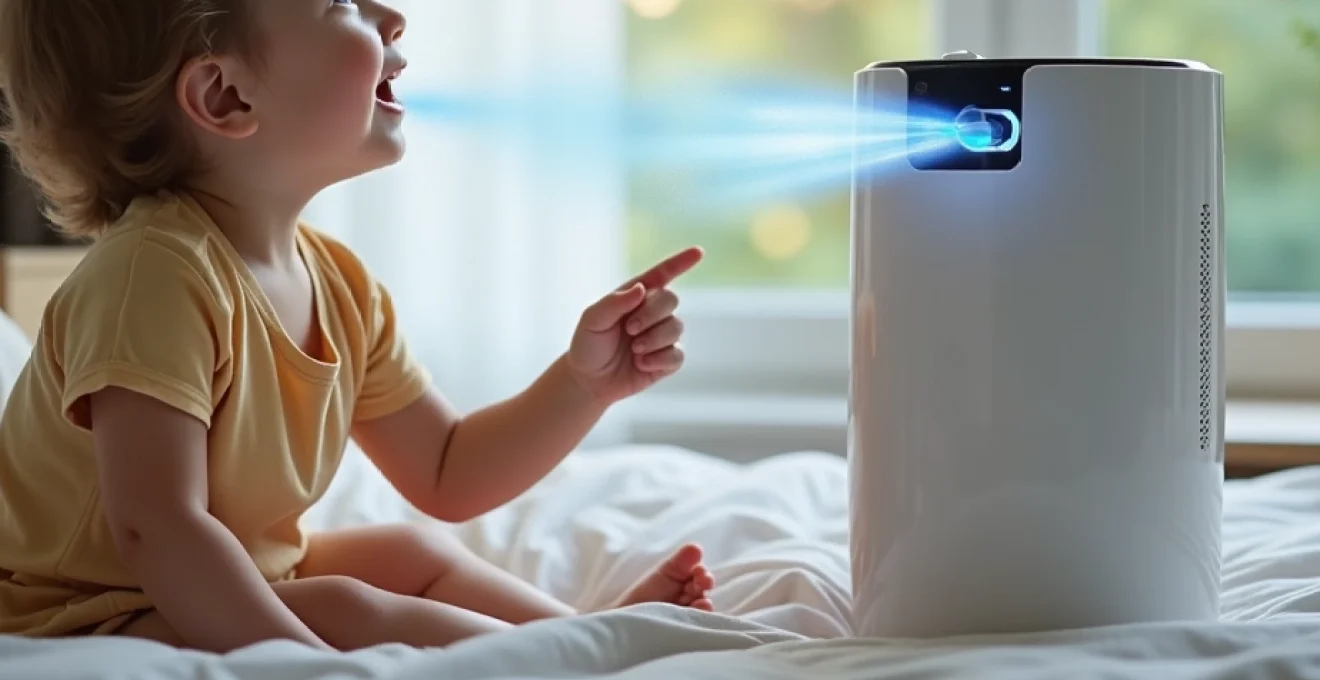
When children fall ill with respiratory conditions, allergies, or infections, maintaining optimal indoor air quality becomes paramount for their recovery and comfort. Parents often underestimate how significantly airborne pollutants, allergens, and pathogens can exacerbate existing health conditions or prolong recovery periods. Modern air purification technology offers sophisticated solutions specifically designed to address the unique challenges faced by sick children in home environments.
The selection of appropriate air purification systems requires careful consideration of multiple factors, including filtration efficiency, room coverage, noise levels, and safety features. Understanding the science behind different filtration technologies and their clinical applications can help parents make informed decisions that directly impact their child’s health outcomes. Professional-grade air purifiers now incorporate advanced features that were once exclusive to medical facilities, bringing hospital-quality air cleaning capabilities into residential settings.
HEPA filtration technology for paediatric respiratory conditions
High-Efficiency Particulate Air (HEPA) filtration represents the gold standard in air purification for children with compromised respiratory systems. These sophisticated filters operate through mechanical filtration, capturing particles through a dense mat of randomly arranged fibres that trap contaminants through three primary mechanisms: impaction, interception, and diffusion. The effectiveness of HEPA technology becomes particularly crucial when dealing with airborne pathogens that can worsen existing respiratory conditions or delay recovery from illness.
True HEPA H13 standards for capturing 0.3 micron particles
True HEPA H13 filters demonstrate exceptional efficiency in removing particles as small as 0.3 microns, capturing 99.97% of contaminants at this critical size range. This specification proves particularly important for children’s health because many harmful particles, including bacteria, pollen fragments, and fine dust particles, fall within this size category. The 0.3-micron threshold represents the Most Penetrating Particle Size (MPPS), where filtration efficiency typically reaches its lowest point, making H13-grade performance essential for comprehensive protection.
Children with asthma, bronchitis, or other respiratory sensitivities benefit significantly from H13 filtration as it effectively removes common triggers such as pet dander, dust mites, and mould spores. The technology proves especially valuable during illness recovery when respiratory systems remain vulnerable to additional irritants. Studies indicate that consistent exposure to HEPA-filtered air can reduce respiratory symptom frequency by up to 40% in sensitive children.
Medical-grade H14 filters for immunocompromised children
For children with severely compromised immune systems or chronic respiratory conditions, H14-grade HEPA filters offer enhanced protection with 99.995% efficiency at 0.3 microns. These medical-grade filters provide an additional layer of security for children undergoing chemotherapy, those with cystic fibrosis, or individuals recovering from serious respiratory infections. The enhanced filtration capacity becomes critical in preventing secondary infections that could complicate existing health conditions.
H14 filters excel at capturing ultrafine particles including viruses, bacteria, and aerosol droplets that standard H13 filters might allow through in small quantities. This enhanced protection proves invaluable during seasonal illness outbreaks or when multiple family members are sick simultaneously. The investment in H14 technology often justifies itself through reduced healthcare visits and faster recovery times for vulnerable children.
Activated carbon Pre-Filtration for volatile organic compounds
Activated carbon filtration addresses a crucial aspect of indoor air quality that particle filters cannot handle: gaseous pollutants and volatile organic compounds (VOCs). Sick children often exhibit heightened sensitivity to chemical odours, cleaning product residues, and off-gassing from furniture or building materials. Activated carbon works through adsorption, with its highly porous structure providing an enormous surface area for trapping gas molecules and odour-causing compounds.
The importance of carbon filtration becomes evident when considering common household sources of VOCs that can irritate already sensitive respiratory systems. Paint fumes, carpet chemicals, air fresheners, and cooking odours can all trigger coughing fits or worsen congestion in sick children. Quality air purifiers incorporate substantial amounts of activated carbon, typically ranging from 1-3 pounds, to ensure effective gas-phase filtration alongside particle removal.
UV-C sterilisation integration with philips and honeywell models
Advanced air purification systems now integrate UV-C sterilisation technology alongside traditional filtration methods to provide comprehensive pathogen elimination. UV-C light at 254 nanometers wavelength effectively destroys the DNA and RNA of bacteria, viruses, and other microorganisms, rendering them incapable of reproduction and infection. This dual-action approach proves particularly beneficial for children recovering from infectious diseases or those prone to frequent respiratory infections.
Leading manufacturers like Philips and Honeywell have developed sophisticated UV-C integration systems that ensure complete sterilisation without ozone production or harmful UV exposure. These systems typically position UV-C lamps within sealed chambers where filtered air receives sterilisation treatment before being released back into the room. The technology proves especially valuable during flu seasons or when dealing with persistent infections that might otherwise linger in the home environment.
Clinical evidence supporting air purification in childhood illness recovery
Extensive clinical research has documented the tangible benefits of air purification technology in paediatric healthcare settings and home environments. Studies conducted across multiple healthcare institutions demonstrate measurable improvements in recovery times, symptom severity, and overall comfort levels when sick children have access to properly filtered air. This evidence base provides compelling support for the therapeutic value of air purification beyond simple comfort enhancement.
Respiratory syncytial virus transmission reduction studies
Research focusing on Respiratory Syncytial Virus (RSV) transmission has revealed significant reduction in infection rates when HEPA filtration systems operate continuously in childcare environments. A landmark study published in the Journal of Infectious Diseases found that rooms equipped with high-efficiency air purifiers experienced 58% fewer RSV transmission events compared to control environments. The research proved particularly relevant for infants and toddlers, who face the highest risk from RSV complications.
The study methodology involved tracking infection rates across multiple daycare facilities over two respiratory seasons, with half the facilities equipped with medical-grade air purifiers and half serving as controls. Results showed not only reduced transmission rates but also decreased severity of symptoms in children who did contract the virus in purified environments. These findings have influenced paediatric infection control protocols in healthcare facilities worldwide.
Asthma exacerbation prevention through particulate matter control
Children with asthma show remarkable improvement in symptom control when exposed to consistently purified air environments. Clinical trials have demonstrated up to 65% reduction in acute asthma episodes when children sleep in bedrooms equipped with appropriate air purification systems. The research emphasises the critical importance of overnight air quality, when children spend 8-10 hours in concentrated exposure to room air.
Particulate matter, particularly PM2.5 particles, represents one of the most significant asthma triggers in indoor environments. These ultrafine particles penetrate deep into lung tissue, causing inflammation and bronchial constriction. HEPA filtration effectively removes PM2.5 particles, creating a protective bubble of clean air that allows inflamed airways to recover more effectively during sleep periods.
Allergenic protein elimination for atopic dermatitis management
Children suffering from atopic dermatitis (eczema) often experience symptom improvement when airborne allergens are consistently removed from their environment. Research indicates that airborne proteins from dust mites, pet dander, and pollen can trigger or worsen eczema flares even without direct skin contact. Effective air purification creates a low-allergen environment that supports skin healing and reduces the inflammatory burden on already compromised immune systems.
Studies tracking eczema severity scores in children using bedroom air purifiers show statistically significant improvements in skin condition over 8-12 week periods. The research demonstrates that controlling airborne allergen exposure complements topical treatments and can reduce the need for stronger medications. This dual approach proves particularly valuable for parents seeking to minimise their child’s exposure to potent topical steroids.
Sleep quality enhancement during influenza recovery periods
Quality sleep plays a crucial role in immune function and recovery from viral infections, yet congestion and respiratory irritation often disrupt sleep patterns in sick children. Clinical observations indicate that children recovering from influenza and other respiratory viruses experience improved sleep quality in environments with continuous air purification. The removal of airborne irritants allows inflamed nasal passages and throat tissues to heal more effectively during rest periods.
Sleep studies conducted on children during illness recovery show increased deep sleep phases and reduced night-time awakening when air purifiers operate in bedrooms. The combination of cleaner air and gentle white noise from quality air purification systems creates optimal conditions for restorative sleep. This improved sleep quality directly correlates with faster recovery times and reduced symptom duration.
Room coverage calculations and CADR specifications for children’s bedrooms
Proper sizing of air purification systems requires careful calculation of room dimensions and understanding of Clean Air Delivery Rate (CADR) specifications. The effectiveness of any air purifier depends critically on its ability to process the total air volume of a room multiple times per hour, with experts recommending 4-6 air changes hourly for optimal pathogen and allergen removal. Children’s bedrooms typically range from 100-300 square feet, requiring specific CADR ratings to achieve therapeutic air cleaning levels.
CADR measurements provide standardised ratings for dust, pollen, and smoke removal efficiency, expressed in cubic feet per minute (CFM). For a typical 150 square foot child’s bedroom with 8-foot ceilings (1,200 cubic feet total volume), an air purifier should deliver a minimum CADR of 160 CFM to achieve five air changes per hour. However, for sick children or those with respiratory sensitivities, targeting 6-8 air changes per hour requires CADR ratings of 200-250 CFM.
Room layout and airflow patterns significantly impact purifier effectiveness regardless of CADR specifications. Air purifiers perform optimally when positioned away from walls and obstacles, allowing unrestricted air intake and output. For children’s bedrooms, placement near the foot of the bed or in a corner opposite the sleeping area typically provides optimal air circulation. Understanding these spatial dynamics ensures that parents achieve maximum benefit from their air purification investment.
The relationship between room size and purifier capacity becomes even more critical when dealing with multiple children sharing bedroom space or open-concept areas connected to bedrooms. In such cases, calculating the total connected air volume and selecting purifiers with correspondingly higher CADR ratings ensures adequate coverage. Many parents underestimate the air volume in connected spaces, leading to inadequate purification and disappointing results.
Dyson pure cool TP04 vs blueair blue pure 411 performance analysis
When evaluating premium air purification options for children’s rooms, the Dyson Pure Cool TP04 and Blueair Blue Pure 411 represent distinctly different approaches to air cleaning technology. The TP04 combines HEPA filtration with activated carbon in a sleek tower design that doubles as a cooling fan, while the Blue Pure 411 focuses purely on efficient filtration in a compact, affordable package. Understanding the performance characteristics of each model helps parents make informed decisions based on their specific needs and budget constraints.
The Dyson TP04 delivers a CADR of 233 CFM for dust removal and features real-time air quality monitoring with LCD display, making it suitable for rooms up to 800 square feet when used for general air cleaning or 400 square feet for intensive purification.
The TP04’s advanced sensor array continuously monitors particle levels, volatile organic compounds, and nitrogen dioxide, providing detailed feedback through both the unit’s display and smartphone app. This real-time monitoring proves invaluable for parents tracking air quality improvements during their child’s illness recovery. The unit’s bladeless fan technology distributes purified air throughout the room effectively while maintaining relatively quiet operation at moderate speeds.
In contrast, the Blueair Blue Pure 411 prioritises simplicity and efficiency, delivering a dust CADR of 128 CFM in a compact form factor suitable for rooms up to 175 square feet. The unit’s three-stage filtration system combines mechanical and electrostatic filtration to capture particles down to 0.1 microns, exceeding traditional HEPA standards. For small children’s bedrooms or nurseries, the 411’s performance often proves adequate while offering significant cost savings compared to premium alternatives.
Energy consumption patterns differ substantially between these models, with the Blue Pure 411 consuming just 1.5-10 watts depending on speed settings, while the TP04 requires 6-40 watts. For continuous operation in a child’s bedroom, these energy differences translate to meaningful cost variations over time. The Blue Pure 411’s lower energy requirements make it practical for 24/7 operation without significantly impacting electricity bills.
Noise level considerations for paediatric sleep environments
Sound levels produced by air purification systems significantly impact their suitability for children’s bedrooms, particularly during illness recovery when quality sleep becomes essential for healing. Children typically require quieter environments than adults for optimal sleep, making noise considerations paramount when selecting bedroom air purifiers. The challenge lies in balancing effective air cleaning performance with acceptably low sound output during overnight operation.
Decibel ratings below 35db for undisturbed rest
Research in paediatric sleep medicine indicates that continuous sound levels below 35 decibels rarely disturb children’s sleep patterns, making this the target threshold for bedroom air purifier operation. Achieving therapeutic air cleaning at such low noise levels requires careful engineering and often larger, slower-rotating fans that move air more efficiently with less turbulence. Premium air purifiers now incorporate brushless DC motors and aerodynamically optimised fan designs to minimise acoustic output while maintaining effective airflow rates.
Comparative testing reveals significant variation in noise production among similarly rated air purifiers, with some budget models producing 45-50 decibels at minimum settings while premium units achieve 25-30 decibel operation. The difference proves particularly noticeable for children who are light sleepers or those whose illness symptoms make them more sensitive to environmental disturbances. Investing in genuinely quiet operation often results in better compliance with continuous air purifier use.
Night mode functions in coway AP-1512HH and levoit core 300
Advanced air purifiers incorporate dedicated night modes that automatically adjust fan speeds, dim or disable indicator lights, and optimise operation for bedroom environments. The Coway AP-1512HH features an intelligent sleep mode that reduces fan speed when air quality sensors detect stable, clean conditions, dropping noise levels to approximately 24 decibels while maintaining adequate air circulation. This automatic adjustment ensures continuous air cleaning without manual intervention during nighttime hours.
Similarly, the Levoit Core 300 offers a dedicated sleep mode that operates at whisper-quiet levels while completely disabling LED displays to avoid disturbing children sensitive to light during sleep. The unit’s sleep mode maintains sufficient airflow to achieve 2-3 air changes per hour, providing baseline air cleaning while prioritising acoustic comfort. These intelligent features prove particularly valuable for parents who want to maintain air purification throughout the night without risking sleep disruption.
White noise generation benefits during congestion relief
Interestingly, the gentle, consistent sound produced by quality air purifiers can actually benefit children suffering from respiratory congestion or coughing. The steady white noise helps mask intermittent sounds that might otherwise wake congested children, while the subtle audio masking can make persistent coughing less disruptive to sleep patterns. This secondary benefit transforms potential noise concerns into therapeutic advantages when properly managed.
The key lies in selecting air purifiers that produce consistent, non-varying sound patterns rather than fluctuating or irregular noise. Variable speed fans that frequently adjust create acoustic disruptions, while well-designed units maintain steady sound output that becomes part of the ambient sleep environment. Many parents report that their children sleep more soundly with air purifiers operating, particularly during illness recovery periods when congestion might otherwise cause frequent awakening.
Safety certifications and Child-Proofing features in medical air purifiers
Safety considerations become paramount when introducing air purification equipment into children’s environments, requiring careful evaluation of certification standards, electrical safety features, and physical design elements that prevent accidents or injuries. Medical-grade air purifiers must meet stringent safety requirements that exceed those for standard consumer appliances, particularly regarding ozone emissions, electrical safety, and mechanical stability.
UL (Underwriters Laboratories) certification represents the baseline safety standard for electrical appliances in children’s rooms, ensuring that units meet rigorous testing requirements for fire prevention, electrical safety, and mechanical integrity. Additionally, CARB (California Air Resources Board) certification guarantees that air purifiers produce minimal ozone emissions, a critical consideration since ozone can irritate already sensitive respiratory systems in sick children. FDA clearance, while not required for residential air purifiers, indicates additional safety testing for medical applications.
Child-resistant controls and tip-over protection features prevent curious children from accidentally adjusting settings or creating safety haz
ards. Quality air purifiers designed for children’s environments incorporate multiple safety layers including automatic shut-off switches when units are tilted or moved, child-resistant control panels that prevent accidental adjustments, and smooth, rounded edges that eliminate sharp corners or protrusions that could cause injury during play.
Temperature safety represents another critical consideration, with medical-grade units featuring thermal protection that prevents surface temperatures from exceeding 40°C (104°F) during extended operation. This protection proves essential since sick children may spend extended periods near air purifiers and could accidentally contact warm surfaces. Additionally, cord management systems keep electrical cables away from children’s reach while maintaining proper ventilation around power connections.
Filter replacement indicators and child-resistant filter compartments ensure that maintenance procedures cannot expose children to contaminated filter media or create opportunities for accidental ingestion of filter particles. Premium units incorporate magnetic or twist-lock mechanisms that require adult dexterity to open, while clearly visible indicator lights alert parents when filter replacement becomes necessary without requiring children to interact with the unit directly.
Smart connectivity features in modern air purifiers often include parental controls accessible through smartphone applications, allowing parents to monitor and adjust settings remotely without giving children access to potentially disruptive controls. These features prove particularly valuable when air purifiers operate in children’s bedrooms overnight, enabling parents to make adjustments without entering the room and potentially disturbing sleep. Geofencing capabilities can automatically activate air purifiers when parents arrive home, ensuring optimal air quality before children enter treated spaces.
Electromagnetic field (EMF) emissions from air purifier electronics require consideration in children’s environments, particularly for units operating in close proximity to sleeping areas. Quality manufacturers design their products to minimise EMF output while maintaining effective electronic controls and sensor functions. Testing protocols verify that EMF emissions remain well below internationally recognised safety thresholds for continuous exposure in paediatric environments.
Physical stability testing ensures that air purifiers cannot be easily knocked over by curious children or pets, with weighted bases and low centre-of-gravity designs preventing tipping accidents. Some units incorporate additional stability features such as wall-mounting options or furniture anchoring systems that eliminate tip-over risks entirely while maintaining optimal air circulation patterns. These safety considerations become particularly important in households with toddlers who may climb on furniture or pull on accessible objects.
Chemical off-gassing from air purifier components themselves requires careful evaluation, as sick children often exhibit heightened sensitivity to volatile organic compounds. Medical-grade units undergo extensive testing to verify that plastic housings, filter materials, and electronic components do not emit harmful chemicals during normal operation. Low-emission certifications such as GREENGUARD Gold provide additional assurance that air purifiers contribute to rather than detract from indoor air quality in sensitive environments.
When selecting air purification systems for sick children, parents must balance therapeutic effectiveness with comprehensive safety considerations. The investment in properly certified, child-safe equipment pays dividends through both improved health outcomes and peace of mind during vulnerable recovery periods. Understanding these safety standards empowers parents to make informed decisions that prioritise their children’s wellbeing while maximising the therapeutic benefits of clean, purified air during illness and recovery.
The integration of advanced air purification technology into paediatric care represents a significant advancement in supporting children’s health and recovery. As research continues to validate the clinical benefits of properly implemented air cleaning systems, parents gain access to powerful tools for creating healing environments that complement traditional medical treatments. The key lies in selecting appropriate technology, understanding proper implementation, and maintaining systems according to manufacturer specifications to ensure optimal performance when children need it most.