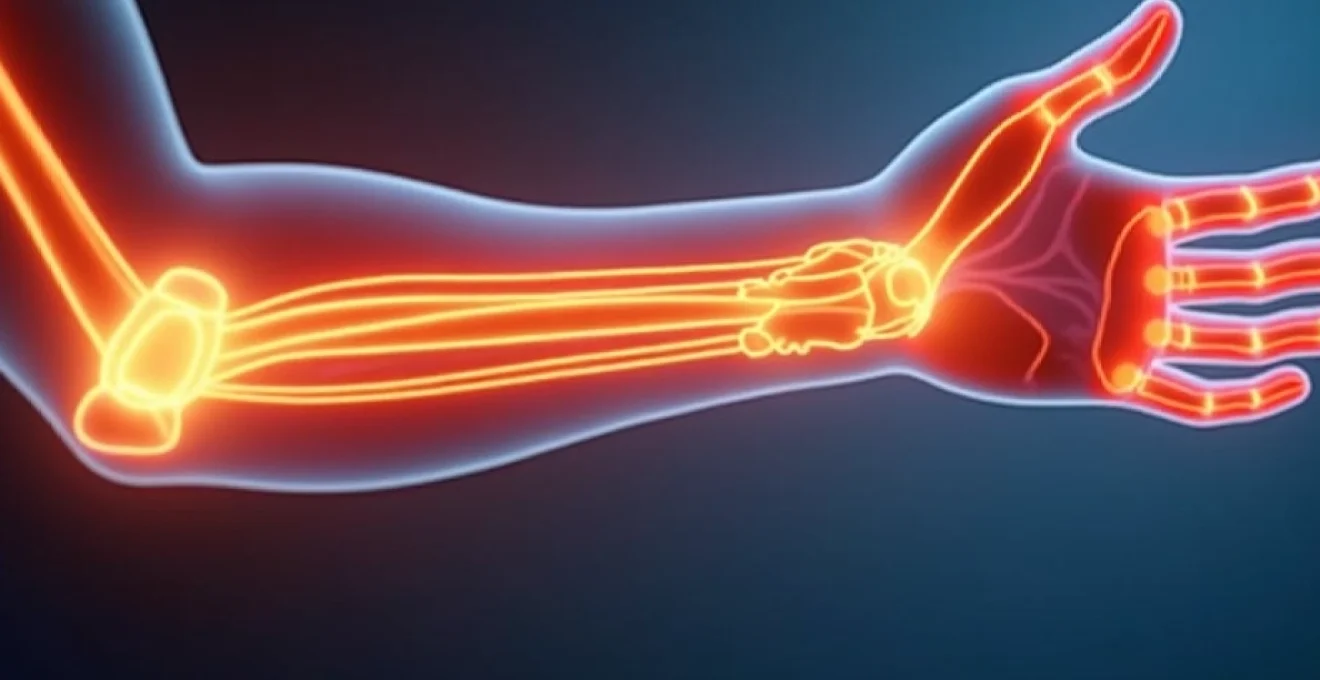
A burning sensation in the left forearm can be an alarming symptom that disrupts daily activities and causes significant discomfort. This distinctive type of pain, often described as a searing or electric-like feeling, typically indicates nerve involvement rather than simple muscle strain. Understanding the underlying causes is crucial for proper diagnosis and treatment, as the sensation can stem from various neurological, vascular, musculoskeletal, or systemic conditions. The complexity of the forearm’s anatomy, which includes multiple nerve pathways, blood vessels, muscles, and connective tissues, means that identifying the precise cause requires careful consideration of accompanying symptoms and thorough clinical evaluation.
Neurological conditions affecting the median and ulnar nerve pathways
Neurological disorders represent the most common cause of burning sensations in the forearm, as nerve dysfunction directly produces neuropathic pain characterised by burning, tingling, and electric shock-like sensations. The forearm contains several major nerve pathways that can become compressed, inflamed, or damaged, leading to characteristic burning pain patterns.
Carpal tunnel syndrome and median nerve compression symptoms
Carpal tunnel syndrome occurs when the median nerve becomes compressed as it passes through the carpal tunnel at the wrist. This compression can cause burning pain that radiates from the wrist up into the forearm, particularly along the thumb side. The burning sensation typically affects the thumb, index, middle, and half of the ring finger, but can extend proximally into the forearm and even reach the shoulder in severe cases. Symptoms often worsen during nighttime hours and may be accompanied by numbness, tingling, and weakness in grip strength.
The condition frequently develops in individuals who perform repetitive wrist movements, such as typing, assembly work, or playing musical instruments. Pregnancy-related fluid retention can also contribute to median nerve compression, as can underlying conditions like diabetes or rheumatoid arthritis that cause tissue swelling.
Cubital tunnel syndrome and ulnar nerve entrapment manifestations
Cubital tunnel syndrome involves compression of the ulnar nerve at the elbow, where it passes through a narrow passageway called the cubital tunnel. This condition produces burning pain along the pinky side of the forearm, extending from the elbow towards the wrist. The burning sensation is often accompanied by numbness and tingling in the ring and little fingers, with symptoms typically worsening when the elbow is bent for extended periods.
Activities that involve prolonged elbow flexion, such as sleeping with the arm bent under the pillow or holding a phone to the ear for extended periods, can exacerbate symptoms. Professional drivers and office workers who frequently rest their elbows on armrests are particularly susceptible to developing this condition.
Thoracic outlet syndrome and brachial plexus compression
Thoracic outlet syndrome occurs when blood vessels or nerves in the space between the collarbone and first rib become compressed. This compression can affect the brachial plexus, a network of nerves that controls arm and hand function, resulting in burning pain throughout the forearm and hand. The condition often develops following trauma, repetitive overhead activities, or anatomical variations such as cervical ribs.
Symptoms may include burning pain that worsens with overhead arm positions, along with weakness, numbness, and colour changes in the affected arm. The burning sensation can be particularly intense during activities that require raising the arms above shoulder level, making everyday tasks like brushing hair or reaching overhead shelves challenging.
Cervical radiculopathy C6-C8 nerve root irritation
Cervical radiculopathy occurs when nerve roots in the neck become compressed or irritated, often due to herniated discs, bone spurs, or spinal stenosis. Compression of the C6, C7, or C8 nerve roots can produce burning pain that radiates down the arm into the forearm and hand. The pain pattern varies depending on which nerve root is affected, with C6 radiculopathy typically causing burning pain along the thumb side of the forearm.
This condition often develops gradually and may be associated with neck pain, headaches, and muscle weakness in specific distribution patterns. Age-related degenerative changes in the cervical spine are common contributors, though acute injuries such as whiplash can also cause nerve root irritation and subsequent burning sensations in the forearm.
Vascular disorders and circulatory dysfunction in the forearm
Vascular disorders affecting blood flow to the forearm can produce burning sensations through ischaemic mechanisms or inflammatory processes within blood vessel walls. These conditions often present with distinctive patterns of pain that may worsen with activity or specific positions.
Peripheral arterial disease and ischaemic pain patterns
Peripheral arterial disease (PAD) occurs when arteries become narrowed or blocked due to atherosclerotic plaque buildup, reducing blood flow to the extremities. Although PAD more commonly affects the legs, it can also involve the arteries of the upper extremities, including those supplying the forearm. When arterial blood flow becomes insufficient to meet tissue demands, particularly during physical activity, ischaemic pain can develop.
The burning sensation associated with upper extremity PAD typically occurs during activities that require sustained arm use, such as overhead work or repetitive motions. The pain usually subsides with rest as oxygen demands decrease. Risk factors for PAD include diabetes, smoking, hypertension, and hyperlipidaemia, with symptoms often developing gradually over months or years.
Deep vein thrombosis and venous insufficiency symptoms
Deep vein thrombosis (DVT) in the upper extremities, while less common than lower extremity DVT, can cause burning pain and swelling in the affected arm. The burning sensation results from inflammatory processes around the clot and impaired venous return. Upper extremity DVT may develop following central venous catheter placement, trauma, or in association with thoracic outlet syndrome.
Chronic venous insufficiency can also produce burning sensations in the forearm, particularly after prolonged periods of arm elevation or repetitive activities. The burning pain is often accompanied by swelling, heaviness, and visible varicose veins. Healthcare workers and individuals who frequently perform overhead activities may be at increased risk for developing venous insufficiency symptoms.
Raynaud’s phenomenon and vasospastic disorders
Raynaud’s phenomenon involves episodic vasospasm of small arteries and arterioles in response to cold exposure or emotional stress. During vasospastic episodes, affected fingers and hands may experience burning pain as blood flow returns during the rewarming phase. The burning sensation can extend into the forearm and is often accompanied by characteristic colour changes progressing from white to blue to red.
Primary Raynaud’s phenomenon occurs without underlying disease, while secondary Raynaud’s is associated with conditions such as systemic lupus erythematosus, scleroderma, or rheumatoid arthritis. The burning pain during rewarming phases can be particularly intense and may persist for several minutes after normal circulation is restored.
Arteriovenous malformations and vascular compression
Arteriovenous malformations (AVMs) in the forearm, though rare, can cause burning sensations due to abnormal blood flow patterns and potential compression of surrounding structures. These congenital vascular anomalies create direct connections between arteries and veins, bypassing the normal capillary bed and potentially leading to tissue hypoxia and neuropathic pain.
The burning sensation associated with AVMs may be constant or intermittent and can worsen with activities that increase blood flow. Large AVMs may also compress nearby nerves, contributing to neuropathic pain patterns. Diagnosis typically requires specialised imaging such as magnetic resonance angiography or conventional angiography to characterise the vascular anatomy.
Musculoskeletal pathologies and repetitive strain injuries
Musculoskeletal disorders affecting the forearm can produce burning sensations through various mechanisms, including inflammation of tendons, muscles, and fascial planes, as well as secondary compression of neural structures. These conditions often develop gradually through repetitive use patterns or acute trauma.
Lateral epicondylitis and extensor tendon inflammation
Lateral epicondylitis, commonly known as tennis elbow, involves inflammation of the extensor tendons that attach to the lateral epicondyle of the humerus. This condition can produce burning pain that radiates from the elbow down the outer aspect of the forearm, particularly during gripping activities or wrist extension movements. The burning sensation results from inflammatory mediators affecting local pain receptors and potential compression of the posterior interosseous nerve.
The condition frequently develops in individuals who perform repetitive wrist extension and gripping activities, including tennis players, carpenters, painters, and computer users. Eccentric loading activities , where muscles lengthen while contracting, are particularly likely to aggravate symptoms and intensify the burning sensation along the extensor muscle group.
Pronator teres syndrome and flexor compartment disorders
Pronator teres syndrome occurs when the median nerve becomes compressed as it passes through or near the pronator teres muscle in the proximal forearm. This condition can produce burning pain along the thumb side of the forearm, similar to carpal tunnel syndrome but with a more proximal location of nerve compression. The burning sensation may worsen with repetitive pronation and supination movements of the forearm.
Flexor compartment syndrome, though more common in the lower extremities, can occasionally affect the forearm following trauma or intense muscular activity. The condition involves increased pressure within the fascial compartment containing the flexor muscles, potentially compromising blood flow and nerve function. Acute compartment syndrome represents a medical emergency requiring immediate surgical decompression to prevent permanent damage.
Intersection syndrome and de quervain’s tenosynovitis
Intersection syndrome occurs where the thumb extensor tendons cross over the wrist extensor tendons, approximately 4-6 centimetres proximal to the wrist. This condition can produce burning pain and swelling in the distal forearm, often accompanied by audible creaking or squeaking sounds during wrist and thumb movements. The burning sensation results from inflammatory changes in the tendon sheaths and surrounding tissues.
De Quervain’s tenosynovitis involves inflammation of the tendons on the thumb side of the wrist and can cause burning pain that extends up the forearm. The condition commonly affects new mothers due to repetitive lifting and positioning of infants, as well as individuals who perform repetitive thumb and wrist movements. Finkelstein’s test , involving passive ulnar deviation of the wrist while the thumb is held in flexion, typically reproduces the burning pain in affected individuals.
Myofascial pain syndrome and trigger point activation
Myofascial pain syndrome involves the development of trigger points within muscle fibres, which can refer pain to distant locations including the forearm. Active trigger points in muscles such as the scalenes, pectoralis minor, or upper extremity muscles can produce burning sensations that radiate into the forearm through complex neurological mechanisms.
Trigger points develop through various mechanisms including muscular overuse, trauma, stress, and postural dysfunction. The referred burning pain can be reproduced by palpating specific trigger points and often follows characteristic referral patterns. Myofascial release techniques and trigger point injections can provide significant relief from burning sensations caused by this mechanism.
Systemic inflammatory conditions and autoimmune disorders
Various systemic conditions can manifest with burning sensations in the forearm through inflammatory or autoimmune mechanisms affecting nerves, blood vessels, or connective tissues. These conditions often present with multiple system involvement and require comprehensive evaluation for proper diagnosis.
Diabetic neuropathy represents one of the most common systemic causes of burning pain in the extremities. Prolonged hyperglycaemia damages peripheral nerves through multiple mechanisms, including advanced glycation end products formation, oxidative stress, and microvascular dysfunction. The burning sensation typically begins in the hands and feet but can progress to involve the forearms as the neuropathy advances. Tight glycaemic control is essential for preventing progression and may help improve existing symptoms.
Rheumatoid arthritis and other inflammatory arthritides can cause burning sensations in the forearm through several mechanisms. Joint inflammation may compress adjacent neural structures, while systemic inflammation can directly affect peripheral nerves. Additionally, medications used to treat these conditions, particularly certain disease-modifying antirheumatic drugs, can occasionally cause peripheral neuropathy with burning sensations.
Autoimmune conditions such as systemic lupus erythematosus and vasculitis can affect peripheral nerves directly, causing inflammatory neuropathies that present with burning pain, numbness, and weakness in affected extremities.
Thyroid disorders, particularly hypothyroidism, can cause peripheral neuropathy with burning sensations in the forearms and hands. The mechanism involves metabolic dysfunction affecting nerve conduction and myelin integrity. Correction of thyroid hormone levels often leads to improvement in neuropathic symptoms, though recovery may be gradual over months.
Vitamin deficiencies, particularly B12, B6, and thiamine deficiency, can cause peripheral neuropathy with burning pain. These vitamins are essential for proper nerve function and myelin maintenance. Alcoholism, malabsorption syndromes, and certain medications can contribute to vitamin deficiencies and subsequent neuropathic symptoms.
Diagnostic approaches and clinical assessment methods
Accurate diagnosis of burning sensations in the left forearm requires a systematic approach combining detailed history taking, physical examination, and appropriate diagnostic testing. The diagnostic process must consider the complex anatomy of the forearm and the multiple potential causes of neuropathic pain.
The clinical history should focus on the onset, duration, and characteristics of the burning sensation, including any precipitating factors, associated symptoms, and response to previous treatments. Important details include the exact location and distribution of symptoms, relationship to activities or positions, and presence of accompanying neurological symptoms such as numbness, weakness, or muscle atrophy.
Physical examination should include assessment of neurological function, including sensory testing, motor strength evaluation, and reflex testing. Specific provocative tests such as Tinel’s sign, Phalen’s test, and nerve compression tests can help localise the source of nerve dysfunction. Vascular examination should assess pulse quality, capillary refill, and presence of bruits or other signs of vascular disease.
Electrodiagnostic studies, including nerve conduction studies and electromyography, provide objective evidence of nerve dysfunction and can help localise the site of nerve injury or compression.
Advanced imaging studies may be necessary to identify structural abnormalities contributing to nerve compression or vascular dysfunction. Magnetic resonance imaging can visualise soft tissue structures, nerve pathways, and vascular anatomy, while ultrasound examination can assess nerve morphology and blood flow in real-time. Specialised techniques such as nerve-specific MRI sequences or high-resolution ultrasound can provide detailed information about nerve structure and function.
Laboratory studies may be indicated when systemic conditions are suspected. These might include glucose tolerance testing for diabetes, thyroid function studies, vitamin levels, inflammatory markers, and autoimmune antibody testing. The specific tests ordered should be guided by clinical suspicion based on history and physical examination findings.
Treatment protocols and therapeutic interventions
Treatment of burning sensations in the left forearm must be tailored to the underlying cause, with approaches ranging from conservative management to surgical intervention depending on the severity and aetiology of symptoms. A multimodal approach often provides the best outcomes for patients experiencing neuropathic pain.
Conservative management forms the foundation of treatment for most cases of forearm burning sensations. Rest and activity modification can reduce inflammatory processes and allow healing of overused structures. Ergonomic modifications in the workplace or during recreational activities can prevent further aggravation of symptoms and promote recovery.
Pharmacological interventions for neuropathic pain include several classes of medications with different mechanisms of action. Anticonvulsants such as gabapentin and pregabalin are often first-line treatments for neuropathic pain, working by modulating calcium channels and reducing abnormal nerve firing. Tricyclic antidepressants like amitriptyline and nortriptyline can be effective for neuropathic pain through their effects on neurotransmitter reuptake.
Topical agents can provide localized relief for burning sensations in the forearm. Capsaicin cream works by depleting substance P from nerve terminals, reducing pain signal transmission. Lidocaine patches or gels can provide temporary numbing relief, while menthol-based preparations may offer cooling sensations that counteract burning pain through gate control mechanisms.
Physical therapy represents a cornerstone of treatment for many causes of forearm burning sensations. Therapeutic exercises can address muscle imbalances, improve nerve mobility, and reduce compression on neural structures. Nerve mobilization techniques such as median nerve gliding exercises can help restore normal nerve movement and reduce adhesions that may contribute to burning sensations.
Manual therapy techniques, including soft tissue mobilization and joint manipulation, can address biomechanical factors contributing to nerve compression and improve overall upper extremity function.
Injection therapies may be beneficial for specific conditions causing forearm burning sensations. Corticosteroid injections can reduce inflammation around compressed nerves, while trigger point injections can address myofascial sources of referred pain. Platelet-rich plasma injections are emerging as a treatment option for tendon-related conditions that may contribute to burning sensations through secondary nerve involvement.
Surgical interventions are reserved for cases where conservative management fails to provide adequate relief or when there is evidence of progressive nerve damage. Carpal tunnel release, cubital tunnel decompression, and thoracic outlet syndrome surgery can address specific sites of nerve compression. The timing of surgical intervention is crucial, as prolonged nerve compression can lead to irreversible changes and permanent symptoms.
Complementary therapies such as acupuncture, transcutaneous electrical nerve stimulation (TENS), and biofeedback may provide additional relief for some patients. While evidence for these modalities varies, they can be valuable adjuncts to conventional treatment, particularly for patients seeking non-pharmacological approaches. Mindfulness-based stress reduction and cognitive behavioral therapy can help patients develop coping strategies for chronic neuropathic pain conditions.
Patient education plays a vital role in successful treatment outcomes. Understanding the underlying condition, proper ergonomics, and recognition of symptom patterns can help prevent symptom progression and improve treatment compliance. Regular follow-up appointments allow for treatment adjustments and monitoring of symptom evolution, ensuring optimal management of burning sensations in the left forearm.