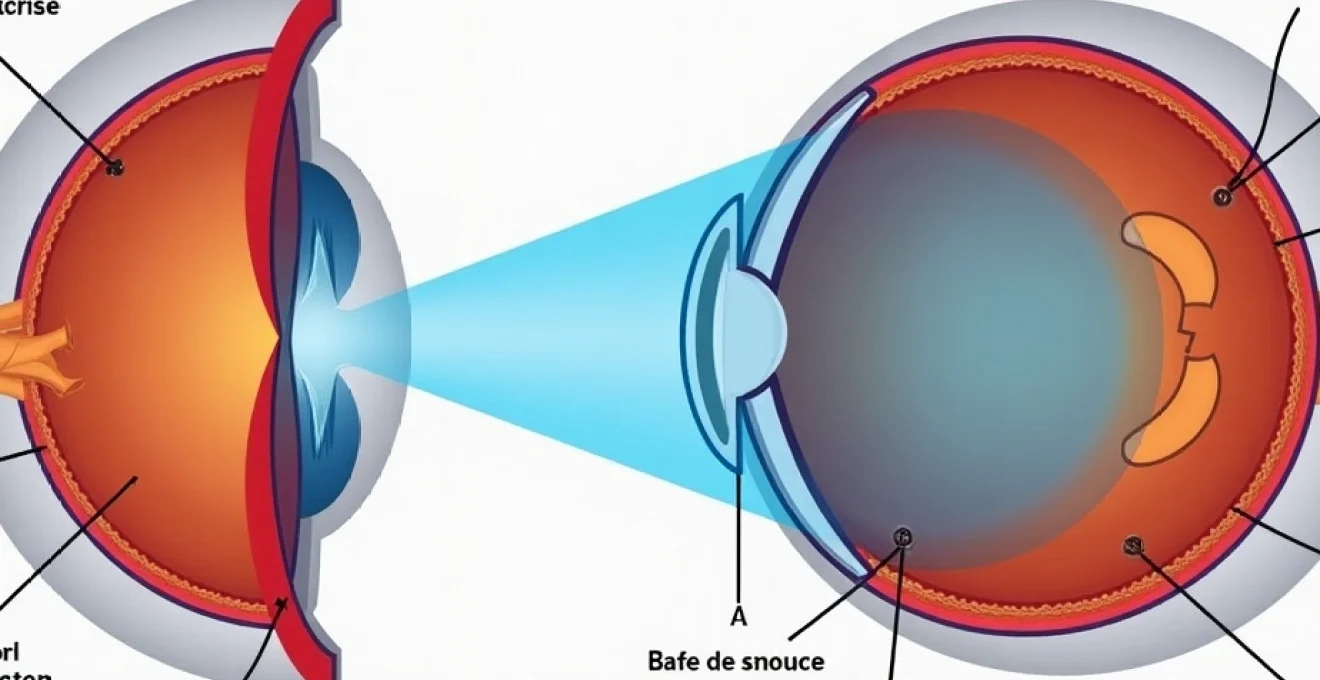
Laser in-situ keratomileusis (LASIK) surgery has transformed millions of lives by providing clear vision without the need for glasses or contact lenses. However, like any surgical procedure, LASIK can sometimes result in unexpected complications, with double vision—medically termed diplopia—being one of the most concerning post-operative symptoms patients may experience. Understanding the various mechanisms behind diplopia following LASIK surgery is crucial for both patients and practitioners to recognise potential issues early and implement appropriate treatment strategies.
The development of double vision after LASIK can significantly impact a patient’s quality of life, affecting their ability to drive, work, and perform daily activities safely. While this complication is relatively rare, occurring in less than 1% of LASIK procedures, its effects can be profound and require immediate attention from qualified eye care professionals. Modern LASIK techniques have dramatically reduced the incidence of such complications, yet the complex nature of corneal healing and individual patient factors means that diplopia remains a possibility that requires comprehensive understanding.
Corneal flap complications leading to diplopia Post-LASIK
The creation and management of the corneal flap represents one of the most critical aspects of LASIK surgery, and complications in this area frequently contribute to post-operative double vision. The precision required in flap creation, positioning, and healing cannot be understated, as even minor irregularities can significantly impact visual outcomes and binocular vision function.
Irregular flap adherence and microstriae formation
When the corneal flap fails to adhere properly to the underlying stromal bed, microscopic folds known as microstriae can develop across the flap surface. These tiny wrinkles create optical irregularities that scatter light in unpredictable patterns, leading to ghosting effects and monocular diplopia. The formation of microstriae often occurs within the first 24-48 hours post-surgery when patients inadvertently rub their eyes or experience trauma to the surgical site.
The severity of microstriae-induced diplopia varies considerably depending on the location and density of these folds. Central microstriae typically produce more pronounced visual symptoms than peripheral ones, as they interfere with the primary visual axis. Treatment often involves lifting the flap and smoothing out the irregularities, though this may require multiple interventions in complex cases.
Buttonhole perforations during microkeratome creation
Although rare with modern femtosecond laser technology, buttonhole perforations during flap creation can occur when using mechanical microkeratomes. These perforations create irregular optical zones that fundamentally alter light transmission through the cornea, resulting in complex visual aberrations including diplopia. The irregular edges of buttonhole perforations act as miniature prisms, splitting incoming light rays and creating multiple images.
Recovery from buttonhole-related diplopia often requires extended healing periods and may necessitate additional surgical interventions. Some patients require specialty contact lenses to mask the irregular optics created by the perforation, while others may benefit from subsequent corneal transplantation procedures in severe cases.
Epithelial ingrowth beneath the LASIK flap
Epithelial ingrowth occurs when surface epithelial cells migrate beneath the corneal flap interface, creating optical irregularities that can produce diplopia and reduced visual acuity. This complication typically manifests several weeks to months after surgery and appears as grey, lace-like opacities beneath the flap edge. The irregular surface created by epithelial ingrowth disrupts normal light refraction patterns, leading to image distortion and potential double vision.
Modern femtosecond laser LASIK has significantly reduced the incidence of primary epithelial ingrowth to nearly zero percent. However, enhancement procedures carry a slightly higher risk of this complication, with mild ingrowth potentially requiring flap lifting and mechanical removal of the aberrant epithelial tissue.
Flap displacement and Wrinkle-Induced optical aberrations
Traumatic flap displacement, whether from eye rubbing, sports injuries, or other physical trauma, can create significant optical aberrations leading to diplopia. When a flap becomes displaced, it often develops wrinkles or folds that act as cylindrical lenses, creating irregular astigmatism and splitting images. The prismatic effect of displaced flap edges can particularly contribute to vertical or oblique diplopia patterns.
Emergency repositioning of displaced flaps is crucial for optimal outcomes, though some degree of residual optical irregularity may persist even after successful repositioning. The timing of intervention plays a critical role in determining the final visual outcome and resolution of diplopia symptoms.
Refractive error overcorrection and undercorrection mechanisms
Accurate prediction of post-operative refractive outcomes remains one of the most challenging aspects of LASIK surgery, and refractive errors can significantly contribute to post-surgical diplopia. The complex interplay between individual healing responses, preoperative measurements, and surgical execution means that achieving perfect refractive outcomes requires careful consideration of multiple variables.
Hyperopic shift following myopic LASIK treatment
Hyperopic shift after myopic LASIK treatment can create significant accommodative demands that overwhelm the visual system’s ability to maintain single binocular vision. When patients experience unexpected hyperopic shifts, their accommodation system must work harder to achieve clear focus, potentially leading to convergence insufficiency and associated diplopia symptoms. This is particularly problematic in patients over 40 years old who may have limited accommodative reserves.
The mechanism behind hyperopic shift often involves regression of the initial refractive correction due to epithelial hyperplasia or stromal remodelling. Some patients may experience variable hyperopic shifts between eyes, creating anisometropia that further complicates binocular vision and can manifest as intermittent diplopia, particularly during near work or when fatigued.
Residual astigmatism from incomplete cylindrical correction
Residual astigmatism following LASIK can contribute to diplopia through several mechanisms, particularly when the residual cylinder differs significantly between the two eyes. Uncorrected astigmatism creates focal distortion that can manifest as vertical or oblique diplopia, especially in patients with sensitive binocular vision systems. The irregular light focusing patterns created by residual astigmatism can overwhelm the brain’s ability to fuse images from both eyes effectively.
Asymmetric astigmatism correction between eyes poses particular challenges for binocular vision. When one eye has significantly more residual astigmatism than the other, the resulting differences in image quality and orientation can trigger diplopia symptoms. This complication often requires enhancement procedures or specialty contact lens fitting to achieve optimal binocular vision outcomes.
Anisometropia development between treated eyes
Post-LASIK anisometropia, particularly when exceeding 1.5 dioptres difference between eyes, can severely compromise binocular vision and lead to diplopia symptoms. The brain’s ability to fuse images from both eyes depends on relatively similar image sizes and qualities reaching each retina. Significant anisometropia creates image size differences that can overwhelm fusional mechanisms, particularly in patients with limited binocular vision reserves.
Research indicates that anisometropia greater than 2.5 dioptres following LASIK surgery significantly increases the risk of persistent diplopia and binocular vision dysfunction, often requiring additional surgical correction or specialty lens solutions.
The development of anisometropia may result from asymmetric healing responses, differences in corneal biomechanics between eyes, or variations in the accuracy of ablation profiles. Some patients develop anisometropia months after initially successful surgery due to differential regression patterns between eyes.
Spherical aberration induction by excessive ablation depth
Excessive ablation depth, particularly in high myopic corrections, can induce significant spherical aberrations that contribute to diplopia and reduced visual quality. When ablation depths exceed safe parameters relative to residual stromal thickness, the resulting corneal shape changes can create complex optical aberrations. These aberrations often manifest as halos, ghosting, and double vision, particularly under low-light conditions when pupils dilate.
The induction of spherical aberrations following aggressive ablations creates a situation where different parts of the cornea focus light at varying distances from the retina. This multi-focal effect can overwhelm the accommodation system and create symptoms similar to monocular diplopia, where patients perceive multiple overlapping images from a single eye.
Higher-order aberrations and wavefront disturbances
The induction of higher-order aberrations represents a significant mechanism by which LASIK surgery can contribute to post-operative diplopia. These complex optical irregularities extend beyond simple refractive errors and can create sophisticated patterns of light distortion that challenge the visual system’s ability to maintain clear, single vision. Understanding the relationship between specific aberration types and diplopia symptoms is crucial for effective post-surgical management.
Coma aberration from decentred excimer laser ablation
Decentred excimer laser ablation patterns frequently result in coma aberrations, which create characteristic comet-tail visual effects that can manifest as diplopia. When the optical centre of the ablation zone fails to align with the pupil centre or visual axis, asymmetric tissue removal creates irregular corneal curvature patterns. These patterns cause light rays entering different parts of the pupil to focus at different points, creating multiple overlapping images that the brain may perceive as diplopia.
The severity of coma-induced diplopia often correlates with the degree of ablation decentration and the patient’s pupil size under various lighting conditions. Patients with larger pupils are particularly susceptible to coma-related visual disturbances, as more of the irregular ablation zone contributes to their visual experience. Treatment strategies may include pupil-constricting eye drops or, in severe cases, ablation zone enlargement procedures .
Trefoil aberrations following irregular corneal healing
Trefoil aberrations, characterised by three-fold asymmetric optical distortions, can develop following irregular corneal healing patterns after LASIK surgery. These aberrations create complex image distortions that may manifest as multiple overlapping images or significant image blur that resembles diplopia. The three-petalled pattern of trefoil aberrations often results from asymmetric epithelial healing or irregular stromal remodelling processes.
Patients experiencing trefoil-induced visual disturbances often report symptoms that worsen under specific lighting conditions or when viewing high-contrast targets. The irregular light focusing patterns created by trefoil aberrations can particularly impact night vision and may contribute to difficulties with activities such as driving in low-light conditions. Treatment typically requires wavefront-guided enhancement procedures to address the specific aberration patterns.
Spherical aberration increase in large pupil patients
Patients with naturally large pupils face increased risks of spherical aberration-induced diplopia following LASIK surgery, particularly when conventional ablation profiles extend beyond the treatment zone boundaries. Large pupils allow light to enter through peripheral corneal areas that may have experienced edge effects from the laser treatment, creating complex optical interactions. These interactions can produce multiple focal points that contribute to ghosting effects and apparent diplopia .
The relationship between pupil size and spherical aberration becomes particularly problematic in mesopic conditions when pupils dilate beyond the effective optical zone created during surgery. Modern aspheric ablation profiles have reduced this complication significantly, yet patients with pupils exceeding 7mm in diameter remain at elevated risk for spherical aberration-related visual disturbances.
Secondary astigmatism from asymmetric tissue removal
Asymmetric tissue removal during LASIK can induce secondary astigmatism patterns that differ significantly from pre-operative astigmatism measurements. This newly induced astigmatism can create focal irregularities that manifest as diplopia, particularly when the induced cylinder axis differs from any pre-existing astigmatism. The complex interaction between induced and residual astigmatism can create irregular focusing patterns that overwhelm the visual system’s compensatory mechanisms.
Secondary astigmatism often results from factors such as uneven hydration during surgery, irregular laser delivery patterns, or biomechanical responses that vary across the corneal surface. Some patients develop progressive secondary astigmatism over months following surgery as corneal remodelling processes continue, requiring long-term monitoring and potential enhancement procedures.
Dry eye syndrome impact on Post-LASIK visual quality
Dry eye syndrome represents one of the most common complications following LASIK surgery and can significantly contribute to diplopia symptoms through multiple mechanisms. The disruption of corneal innervation during flap creation reduces tear production and alters tear film stability, creating optical irregularities that can manifest as visual disturbances including double vision. Understanding the relationship between dry eye and diplopia is essential for comprehensive post-operative care.
The pathophysiology of post-LASIK dry eye involves several interconnected mechanisms that directly impact visual quality. Severed corneal nerves reduce both tear production and blink reflex sensitivity, leading to decreased tear film volume and stability. The resulting irregular tear film surface creates variable optical properties across the cornea, causing light to focus inconsistently and potentially creating multiple overlapping images that resemble diplopia .
Tear film instability particularly affects visual function during activities requiring sustained attention, such as computer work or reading. The rapid breakdown of the tear film between blinks creates fluctuating refractive conditions that can cause intermittent diplopia or ghosting effects. Many patients report that their diplopia symptoms worsen throughout the day as tear film stability decreases with prolonged visual tasks and reduced blink rates.
Clinical studies demonstrate that severe dry eye following LASIK can reduce contrast sensitivity by up to 40% and contribute to persistent diplopia symptoms in approximately 15% of affected patients, particularly those with pre-existing dry eye conditions.
The temporal pattern of dry eye-related diplopia often follows predictable patterns, with symptoms typically worsening during afternoon and evening hours when tear film stability naturally decreases. Environmental factors such as air conditioning, wind exposure, and digital device use can exacerbate symptoms significantly. Treatment approaches focus on restoring tear film stability through artificial tears, punctal plugs, and in severe cases, prescription medications such as cyclosporine or lifitegrast.
Long-term management of post-LASIK dry eye requires ongoing attention to environmental modifications and lifestyle adjustments. Patients often benefit from humidifying their work and home environments, taking regular breaks during visual tasks, and using preservative-free artificial tears multiple times daily. Some patients require more advanced treatments including autologous serum tears or specialty contact lenses designed to maintain tear film stability.
Neuroadaptation failure and binocular vision disruption
The success of LASIK surgery depends not only on achieving optimal corneal shape changes but also on the visual system’s ability to adapt to these new optical conditions. Neuroadaptation failure represents a significant but often overlooked mechanism contributing to post-LASIK diplopia. The brain’s visual processing centres must recalibrate to accommodate the altered optical properties of the surgically modified cornea, and this adaptation process can sometimes fail or proceed incompletely.
Binocular vision disruption following LASIK often occurs when pre-existing compensatory mechanisms become inadequate for the new optical environment. Many patients with successful LASIK outcomes in terms of visual acuity may still experience binocular vision dysfunction (BVD) due to subtle changes in image quality, contrast sensitivity, or higher-order aberrations between the two eyes. These changes can overwhelm previously adequate fusional reserves and trigger diplopia symptoms.
The phenomenon of decompensated phoria represents a particularly common mechanism of post-LASIK diplopia. Patients who maintained comfortable single vision pre-operatively despite underlying eye alignment issues may find that the optical changes induced by surgery push their binocular vision system beyond its compensatory limits. The altered visual input from surgically modified eyes can disrupt the delicate balance required for comfortable binocular fusion, leading to manifest strabismus and associated diplopia.
Age-related factors significantly influence neuroadaptation success following LASIK surgery. Younger patients typically demonstrate greater neuroplasticity and more successful adaptation to post-surgical optical changes, while patients over 45 years old may experience more difficulty adapting to altered binocular vision conditions. This age-related difference in adaptation capacity partly explains why presbyopic patients undergoing monovision LASIK may experience higher rates of diplopia and binocular vision complications.
Treatment of neuroadaptation failure often requires comprehensive binocular vision therapy programs designed to retrain the visual system to function effectively with post-surgical optical conditions. Vision therapy exercises targeting convergence, divergence, and accommodative function can help patients develop new compensatory strategies for maintaining comfortable single vision. Some patients benefit from prism glasses during
the adaptation period, while others may require enhancement procedures to optimise their binocular vision outcomes.
Convergence insufficiency represents another common manifestation of neuroadaptation failure following LASIK surgery. The altered accommodative demands created by refractive changes can disrupt the normal relationship between accommodation and convergence, leading to eye strain and diplopia during near work. Patients may experience difficulty maintaining single vision when reading or working on computers, with symptoms often worsening throughout the day as the visual system fatigues.
Rare complications: keratectasia and corneal haze development
While the majority of post-LASIK diplopia cases result from more common complications, rare but serious conditions such as keratectasia and significant corneal haze can also contribute to severe visual disturbances including double vision. These complications, though occurring in less than 0.5% of LASIK procedures, represent some of the most challenging post-operative scenarios that can fundamentally alter corneal optics and visual function.
Post-LASIK keratectasia, also known as corneal ectasia, occurs when the structural integrity of the cornea becomes compromised following excessive tissue removal or in patients with underlying corneal weakness. The progressive bulging and irregular steepening of the cornea creates complex optical aberrations that can manifest as severe diplopia, ghosting, and visual distortion. The irregular corneal surface acts like a warped mirror, splitting and distorting incoming light rays in unpredictable patterns that overwhelm the brain’s ability to process coherent visual information.
The development of keratectasia typically occurs months to years after surgery, making it particularly concerning for both patients and surgeons. Early signs may include progressive myopia, increasing irregular astigmatism, and complaints of ghosting or diplopia that gradually worsen over time. The condition often affects one eye more severely than the other, creating significant anisometropia and binocular vision dysfunction that can be debilitating for affected patients.
Advanced corneal topography studies reveal that post-LASIK keratectasia creates irregular corneal curvature patterns with elevation changes exceeding 5 dioptres across the corneal surface, resulting in complex diplopia patterns that cannot be corrected with conventional spectacles.
Treatment options for keratectasia-induced diplopia focus primarily on stabilising the corneal structure and optimising optical function. Corneal collagen crosslinking has emerged as the gold standard for halting ectasia progression, while specialty contact lenses, particularly scleral lenses, can effectively mask the irregular optics and restore single vision in many patients. Severe cases may require corneal transplantation procedures, though these carry their own risks and extended recovery periods.
Corneal haze development, while less dramatic than keratectasia, can also contribute to diplopia through light scattering mechanisms that create ghosting effects and reduced image quality. Significant haze typically results from aggressive ablation profiles, healing complications, or infections during the recovery period. The cloudy appearance of hazy corneas disrupts normal light transmission patterns, creating multiple light pathways that can manifest as overlapping images or monocular diplopia symptoms.
The impact of corneal haze on visual function extends beyond simple light scattering, as the irregular distribution of hazy areas across the corneal surface can create localised optical irregularities. These irregularities function as microscopic prisms and lenses, bending light in various directions and contributing to complex visual aberrations. Patients with significant corneal haze often report that their diplopia symptoms vary with lighting conditions, typically worsening in bright environments where light scattering becomes more pronounced.
Management of haze-related diplopia involves addressing both the underlying haze formation and its optical consequences. Topical corticosteroids remain the primary treatment for reducing corneal haze, particularly when initiated early in the haze development process. More established haze may require phototherapeutic keratectomy (PTK) to physically remove the hazy tissue and restore corneal clarity. Some patients benefit from specialty contact lenses that create a new optical surface over the hazy cornea, effectively bypassing the light scattering effects.
Prevention strategies for these rare complications focus on careful patient selection and conservative treatment parameters. Thorough preoperative screening including corneal topography, pachymetry, and biomechanical assessment can identify patients at higher risk for keratectasia. Similarly, appropriate ablation depth calculations and post-operative monitoring protocols can minimise the risk of significant haze development and its associated visual complications.
The psychological impact of rare complications leading to diplopia cannot be understated, as patients often experience significant distress when faced with persistent visual disturbances following what they expected to be a routine procedure. Comprehensive counselling and support services become essential components of treatment, helping patients understand their condition and available treatment options while maintaining realistic expectations for visual recovery outcomes.
Long-term follow-up care for patients experiencing rare complications requires coordination between multiple specialists, including corneal surgeons, contact lens specialists, and vision therapy professionals. The complex nature of these complications often necessitates individualised treatment approaches that may evolve over time as the patient’s condition changes or as new treatment modalities become available. Regular monitoring remains essential to detect any progression of the underlying condition and to optimise treatment strategies accordingly.