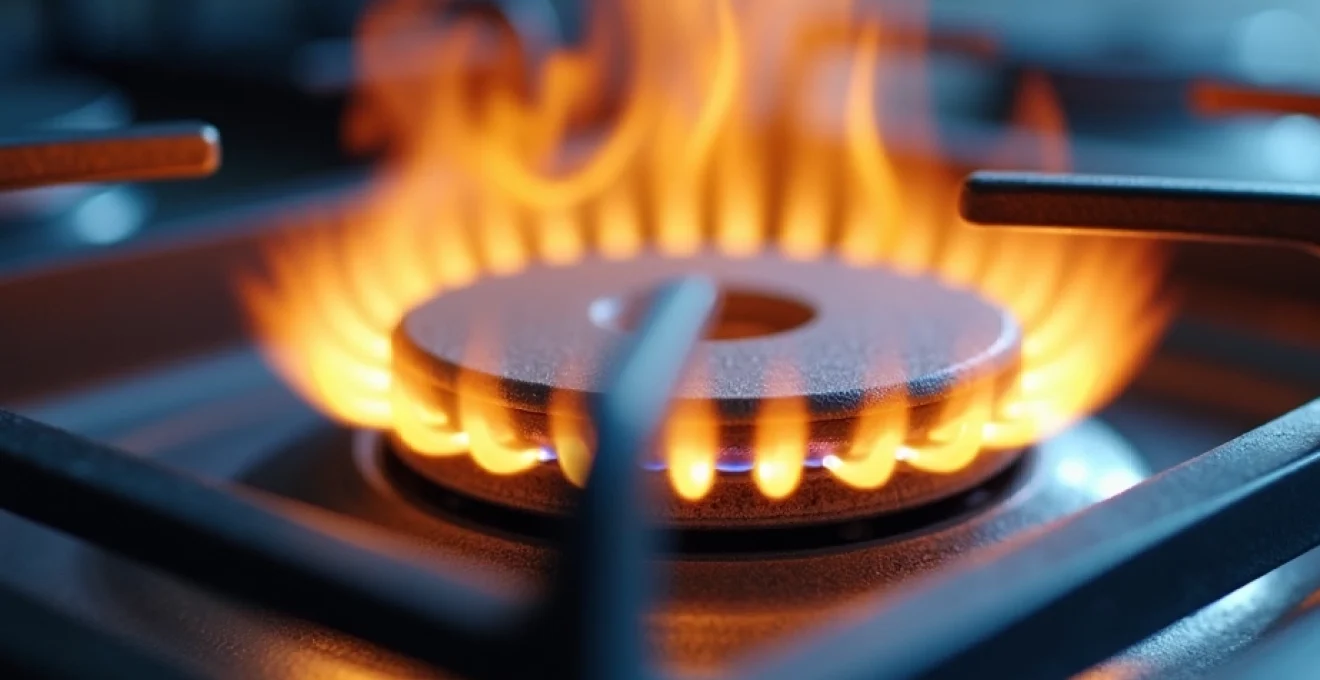
The familiar blue flame of a gas stove has been a staple in kitchens worldwide for generations, providing reliable cooking heat and precise temperature control. However, recent scientific research has begun to illuminate a concerning reality lurking beneath the convenience of gas cooking. When you ignite that burner, you’re not just generating heat—you’re potentially releasing a cocktail of harmful chemicals into your home’s air. Among these emissions, benzene stands out as particularly alarming due to its established links to blood cancers, including leukaemia and lymphomas.
The implications of these findings extend far beyond individual health concerns, touching on broader public health policies and environmental regulations. As more than a third of households in the United States rely on gas stoves for cooking, understanding the potential cancer risks associated with these appliances has become increasingly critical. The conversation has evolved from simple cooking preferences to complex discussions about indoor air quality, regulatory oversight, and the future of residential energy use.
Nitrogen dioxide and formaldehyde emissions from natural gas combustion
Natural gas combustion in residential settings produces a complex array of chemical compounds, with nitrogen dioxide and formaldehyde representing two of the most concerning emissions from a health perspective. When natural gas burns, the high-temperature combustion process inevitably creates nitrogen dioxide as a byproduct of the reaction between nitrogen and oxygen present in the air. This colourless gas, whilst odourless at low concentrations, becomes a significant indoor air pollutant that can accumulate to dangerous levels in poorly ventilated spaces.
Formaldehyde emissions from gas stoves occur through incomplete combustion processes, particularly when the air-to-fuel ratio isn’t optimal. This volatile organic compound is classified as a known human carcinogen by the International Agency for Research on Cancer, making its presence in residential environments particularly troubling. The concentration of formaldehyde can vary significantly depending on factors such as burner adjustment, gas quality, and the age of the appliance, but even well-maintained stoves consistently produce measurable quantities during operation.
Benzene and toluene release during gas stove operation
Recent Stanford University research has revealed that benzene formation during gas stove operation reaches levels that should concern any household using these appliances. The study found that running a single burner on high heat for just 45 minutes can elevate indoor benzene concentrations to levels exceeding those found in secondhand tobacco smoke. This finding is particularly alarming given that benzene exposure has no safe threshold—any amount increases cancer risk, with particular concern for blood cell cancers such as leukaemia.
Toluene, another aromatic hydrocarbon released during gas combustion, often accompanies benzene emissions. Whilst toluene is considered less carcinogenic than benzene, it still poses health risks, particularly regarding neurological function and reproductive health. The combined presence of these aromatic compounds creates a more complex toxicological profile than previously understood, suggesting that the health impacts of gas stove use may be more severe than earlier assessments indicated.
Particulate matter 2.5 generation in residential kitchen environments
Gas stoves generate fine particulate matter (PM2.5) through both direct combustion processes and secondary formation from gaseous precursors. These microscopic particles, measuring less than 2.5 micrometres in diameter, can penetrate deep into lung tissue and even cross into the bloodstream. The generation of PM2.5 from gas stoves is often overlooked compared to outdoor sources, yet indoor concentrations can exceed outdoor levels significantly during cooking periods.
The composition of PM2.5 from gas combustion includes carbonaceous particles, trace metals, and adsorbed organic compounds, creating a complex mixture with varying toxicological properties. Research indicates that kitchen-generated PM2.5 can remain suspended in indoor air for hours after cooking, continuing to pose inhalation risks long after the stove is turned off. This persistence is particularly concerning in homes with inadequate ventilation systems.
Carbon monoxide production from incomplete gas combustion
Carbon monoxide represents one of the most immediately dangerous emissions from gas stoves, particularly when combustion is incomplete due to poor maintenance, inadequate air supply, or burner malfunction. This odourless, colourless gas binds to haemoglobin more readily than oxygen, effectively reducing the blood’s oxygen-carrying capacity. Whilst carbon monoxide poisoning from gas stoves is relatively rare in properly maintained appliances, chronic low-level exposure remains a concern.
The production of carbon monoxide increases significantly when gas stoves operate with insufficient ventilation or when burners become clogged or misaligned. Even small amounts of carbon monoxide can contribute to cardiovascular stress and may exacerbate existing health conditions. The cumulative effect of repeated exposure, even at levels below acute toxicity thresholds, warrants careful consideration in assessing the overall health impact of gas stove use.
Polycyclic aromatic hydrocarbon formation at high temperature cooking
High-temperature cooking processes, particularly those involving direct flame contact or prolonged heating, can lead to the formation of polycyclic aromatic hydrocarbons (PAHs). These complex organic compounds form when organic matter undergoes incomplete combustion or pyrolysis at elevated temperatures. Whilst some PAH formation is inevitable during certain cooking methods, gas flames can contribute additional PAHs beyond those generated by food preparation alone.
Several PAHs are classified as probable or possible human carcinogens, with benzo[a]pyrene being perhaps the most well-studied example. The formation of these compounds is influenced by cooking temperature, duration, and the specific characteristics of the gas flame. Understanding PAH generation from gas cooking is essential for comprehensively assessing cancer risk, as these compounds can contribute to both respiratory and gastrointestinal cancer development through inhalation and ingestion pathways.
Epidemiological studies linking indoor air pollution to respiratory cancers
The relationship between indoor air pollution from gas appliances and respiratory cancer development has been the subject of increasing scientific scrutiny over the past decade. Large-scale epidemiological studies have begun to establish connections between long-term exposure to indoor combustion pollutants and various forms of respiratory cancer. These studies face unique challenges in isolating gas stove contributions from other indoor and outdoor pollution sources, yet emerging patterns suggest a meaningful association that warrants serious consideration.
Population-based cohort studies have tracked hundreds of thousands of individuals over extended periods, documenting cooking fuel usage alongside health outcomes. The results consistently indicate elevated respiratory cancer rates among populations with prolonged gas stove exposure compared to those using electric alternatives. However, the complexity of cancer causation means that researchers must carefully account for confounding variables such as socioeconomic status, outdoor air quality, smoking history, and occupational exposures.
Harvard T.H. chan school Meta-Analysis on childhood leukaemia risk
A comprehensive meta-analysis conducted by researchers affiliated with the Harvard T.H. Chan School of Public Health has provided some of the most compelling evidence linking gas stove use to childhood leukaemia risk. The analysis, which examined data from multiple international studies, found a statistically significant association between household gas stove use and increased childhood leukaemia incidence. The risk appeared most pronounced for acute lymphoblastic leukaemia, the most common form of childhood blood cancer.
The meta-analysis revealed that children in households using gas stoves showed approximately 20% higher rates of leukaemia compared to those in homes with electric cooking appliances. This finding is particularly significant because it represents one of the largest systematic reviews on this topic to date. The researchers emphasised that whilst the relative risk increase may seem modest, the absolute impact could be substantial given the widespread use of gas stoves globally.
Stanford university research on benzene exposure levels
Stanford University’s groundbreaking research on benzene emissions from gas stoves has fundamentally changed our understanding of indoor air pollution from cooking appliances. The study measured benzene concentrations in 87 homes across California and Colorado, using advanced monitoring equipment to capture real-time emissions during various cooking activities. The findings revealed that even routine cooking tasks could generate benzene levels exceeding established health guidelines.
The research demonstrated that benzene emissions occur consistently across different stove brands and models, suggesting this is an inherent characteristic of gas combustion rather than a problem with specific appliances. Particularly concerning was the finding that benzene concentrations could remain elevated throughout homes for up to six hours after cooking, indicating that the exposure extends well beyond the immediate cooking period. This persistence means that family members not directly involved in cooking still face significant exposure risks.
International agency for research on cancer classification updates
The International Agency for Research on Cancer (IARC) has progressively strengthened its classifications regarding several compounds commonly emitted by gas stoves. Benzene maintains its Group 1 classification as a definitive human carcinogen, based on sufficient evidence from both human and animal studies. This classification places benzene alongside other well-established carcinogens such as asbestos and tobacco smoke, underscoring the seriousness of exposure risks.
Formaldehyde, another significant gas stove emission, has also been classified as a Group 1 human carcinogen by IARC, specifically linked to nasopharyngeal cancer and leukaemia. The agency’s periodic reviews of available evidence continue to reinforce concerns about indoor combustion pollutants. These official classifications provide regulatory agencies and public health organisations with the scientific foundation needed to develop appropriate exposure guidelines and risk mitigation strategies.
Norwegian institute of public health longitudinal cohort findings
The Norwegian Institute of Public Health has contributed valuable longitudinal data through its extensive population registry system, tracking cooking fuel usage and cancer outcomes across multiple decades. The Norwegian cohort studies benefit from exceptionally detailed exposure assessment and comprehensive health outcome tracking, providing insights into long-term cancer development patterns. Their findings suggest that cumulative exposure to indoor combustion pollutants may be more significant than previously recognised.
The Norwegian research has been particularly valuable in examining dose-response relationships, showing that cancer risk appears to increase with longer duration and higher intensity of gas stove use. The studies also highlighted important interactions with other risk factors, such as smoking status and occupational exposures. This work has informed European regulatory approaches to indoor air quality and appliance safety standards.
Carcinogenic pathways and cellular damage mechanisms
Understanding how gas stove emissions contribute to cancer development requires examining the complex molecular mechanisms through which these pollutants interact with cellular systems. The carcinogenic pathways activated by compounds such as benzene, formaldehyde, and polycyclic aromatic hydrocarbons involve multiple steps, from initial cellular uptake through DNA damage and ultimately to malignant transformation. These processes can occur over extended timeframes, making the connection between exposure and disease development challenging to establish definitively.
The cellular damage mechanisms operate through several interconnected pathways, including direct DNA interaction, oxidative stress induction, and disruption of normal cellular repair processes. Different compounds show varying affinities for specific cellular targets, which helps explain why gas stove emissions are associated with particular cancer types. Critical to understanding these mechanisms is recognising that even low-level chronic exposure can gradually overwhelm cellular defence systems, leading to accumulated genetic damage over time.
DNA adduct formation from aromatic hydrocarbon exposure
Aromatic hydrocarbons from gas combustion, particularly benzene and its metabolites, can form DNA adducts through enzymatic activation pathways. These adducts represent chemical modifications to DNA bases that can disrupt normal replication and transcription processes. The formation of DNA adducts is considered a crucial early step in chemical carcinogenesis, as these modifications can lead to mutations if not properly repaired by cellular mechanisms.
Research has identified specific DNA adduct patterns associated with aromatic hydrocarbon exposure, providing biomarkers that can help track exposure levels and assess cancer risk. The persistence of certain DNA adducts means that even intermittent exposure can result in cumulative genetic damage. Understanding adduct formation has also helped researchers identify individuals who may be particularly susceptible to gas stove emissions due to genetic variations in metabolic enzymes.
Oxidative stress response in bronchial epithelial cells
Bronchial epithelial cells, which line the respiratory tract, represent the first line of defence against inhaled pollutants from gas stoves. These cells respond to chemical exposure by activating oxidative stress pathways, generating reactive oxygen species that can damage cellular components including DNA, proteins, and lipids. Whilst this response initially serves a protective function, chronic activation can overwhelm cellular antioxidant systems and contribute to carcinogenesis.
The oxidative stress response varies significantly between individuals based on genetic factors, age, and overall health status. Some people possess more robust antioxidant systems that can better handle the oxidative burden from gas stove emissions. However, continuous exposure can gradually deplete these protective mechanisms, leaving cells increasingly vulnerable to damage. This helps explain why cancer risk appears to increase with longer duration of gas stove use.
P53 tumour suppressor gene mutations from chronic exposure
The p53 tumour suppressor gene, often called the “guardian of the genome,” plays a crucial role in preventing cancer development by detecting DNA damage and either facilitating repair or triggering cell death. Chronic exposure to gas stove emissions can lead to mutations in the p53 gene, compromising this essential protective mechanism. When p53 function is impaired, cells with genetic damage may survive and proliferate, potentially leading to cancer development.
Studies have identified specific p53 mutation patterns associated with exposure to aromatic hydrocarbons and aldehydes commonly found in gas stove emissions. These mutations can serve as molecular signatures of exposure, helping researchers understand the causal relationships between indoor air pollution and cancer development. The loss of p53 function is particularly concerning because it affects the cell’s ability to respond appropriately to future toxic exposures.
Ventilation systems and indoor air quality mitigation strategies
Effective ventilation represents the most practical immediate solution for reducing exposure to harmful emissions from gas stoves, yet many homes lack adequate ventilation systems or fail to use them properly. The efficiency of kitchen ventilation depends on numerous factors including hood design, fan capacity, ductwork configuration, and user behaviour. Traditional range hoods often recirculate air rather than exhausting it outdoors, providing minimal protection against toxic emissions. Even high-quality exhaust systems may not eliminate all pollutants, particularly those that disperse quickly throughout the home.
Modern ventilation strategies must account for the specific characteristics of gas stove emissions, including their rapid dispersion and persistence in indoor air. Research indicates that benzene and other volatile compounds can migrate from kitchens to bedrooms and other living spaces within minutes of cooking, highlighting the need for whole-house ventilation approaches. Mechanical ventilation systems that provide continuous air exchange offer superior protection compared to intermittent exhaust fan use, though they require careful design to avoid creating negative pressure that could affect other combustion appliances.
The effectiveness of different ventilation strategies varies considerably based on home construction, climate, and existing HVAC systems. Newer, more airtight homes may trap pollutants more effectively, requiring more robust ventilation solutions. Conversely, older homes with natural air leakage may experience better pollutant dilution but potentially higher energy costs. Optimising ventilation requires balancing air quality improvements with energy efficiency and cost considerations. Professional assessment of existing ventilation systems can identify specific improvements needed for individual homes.
Good ventilation helps reduce pollutant concentrations, but exhaust fans were often ineffective at eliminating benzene exposure, highlighting the limitations of current mitigation strategies.
Induction cooktop technology as alternative cooking method
Induction cooking technology offers a compelling alternative to gas stoves, completely eliminating combustion-related emissions whilst providing superior cooking performance in many applications. Unlike gas stoves that generate heat through combustion, induction cooktops use electromagnetic fields to heat cookware directly, producing no direct emissions of benzene, nitrogen dioxide, formaldehyde, or other harmful compounds. This fundamental difference in heating mechanism represents the most effective way to eliminate cooking-related indoor air pollution.
The transition to induction cooking has accelerated as technology costs have decreased and performance has improved. Modern induction cooktops offer precise temperature control that often exceeds what gas stoves can provide, with instant responsiveness and energy efficiency that can reduce overall cooking costs. However, the transition requires compatible cookware and may involve electrical system upgrades in some homes. Government incentive programmes increasingly support induction cooktop adoption, recognising both health and climate benefits.
Consumer acceptance of induction technology has grown significantly as awareness of gas stove health risks has increased. Professional chefs, once staunch advocates for gas cooking, increasingly embrace induction for its precision and cleanliness. The absence of open flames also reduces fire risk and eliminates the need for continuous pilot lights, further improving safety. As manufacturing scales increase, induction cooktops have become cost-competitive with high-end gas ranges, removing economic barriers to adoption.
Installation considerations for induction cooktops include electrical capacity requirements and potential need for circuit upgrades. Most standard residential electrical systems can accommodate induction
cooktops, though high-powered units may benefit from dedicated circuits. The long-term reliability of induction systems has proven excellent, with fewer moving parts than gas systems and no exposure to corrosive combustion byproducts. Professional installation ensures optimal performance and compliance with electrical codes, though many units can be installed as straightforward appliance replacements.
Regulatory framework and safety standards for residential gas appliances
The regulatory landscape governing residential gas appliances has evolved significantly in response to mounting scientific evidence about health risks, yet current standards may not adequately address newly identified concerns such as benzene emissions. In the United States, the Consumer Product Safety Commission (CPSC) oversees gas appliance safety, while the Department of Energy sets efficiency standards that indirectly influence emission levels. However, these regulations were developed primarily to address immediate safety concerns like carbon monoxide poisoning and explosion risks, rather than long-term health effects from chronic exposure to carcinogenic compounds.
Recent legislative efforts have attempted to strengthen oversight of gas appliances, though political resistance has complicated implementation. The Biden administration’s proposed efficiency standards for new stoves would likely eliminate many high-emission models from the market, potentially reducing health risks for future buyers. State-level initiatives have proven more successful, with several jurisdictions implementing building codes that favour electric appliances in new construction. These regulatory approaches reflect growing recognition that current standards may be insufficient to protect public health.
International regulatory frameworks often provide more stringent oversight of indoor air quality from gas appliances. European standards increasingly emphasise emission limits and ventilation requirements that exceed typical U.S. practices. The World Health Organization’s updated guidelines for indoor air pollutants specifically address compounds commonly emitted by gas stoves, providing regulatory agencies with science-based targets for developing protective standards. How might these international approaches inform future domestic policy development?
Enforcement of existing gas appliance regulations remains inconsistent, with many installations lacking proper inspection or maintenance oversight. Professional installation standards vary significantly between jurisdictions, and regular safety inspections are not required in most areas. This regulatory gap means that even well-intentioned safety standards may not provide adequate protection if appliances are improperly installed, maintained, or operated. Industry self-regulation has proven insufficient to address these systemic issues, suggesting that stronger governmental oversight may be necessary.
The economic implications of stricter gas appliance regulations extend beyond individual consumers to include impacts on gas utilities, appliance manufacturers, and construction industries. Transition costs could be substantial, particularly for lower-income households who may struggle to afford appliance replacement or electrical system upgrades. Targeted support programmes and extended implementation timelines could help address these equity concerns while still achieving public health objectives. The challenge lies in balancing immediate health protection with practical implementation considerations that don’t disproportionately burden vulnerable populations.