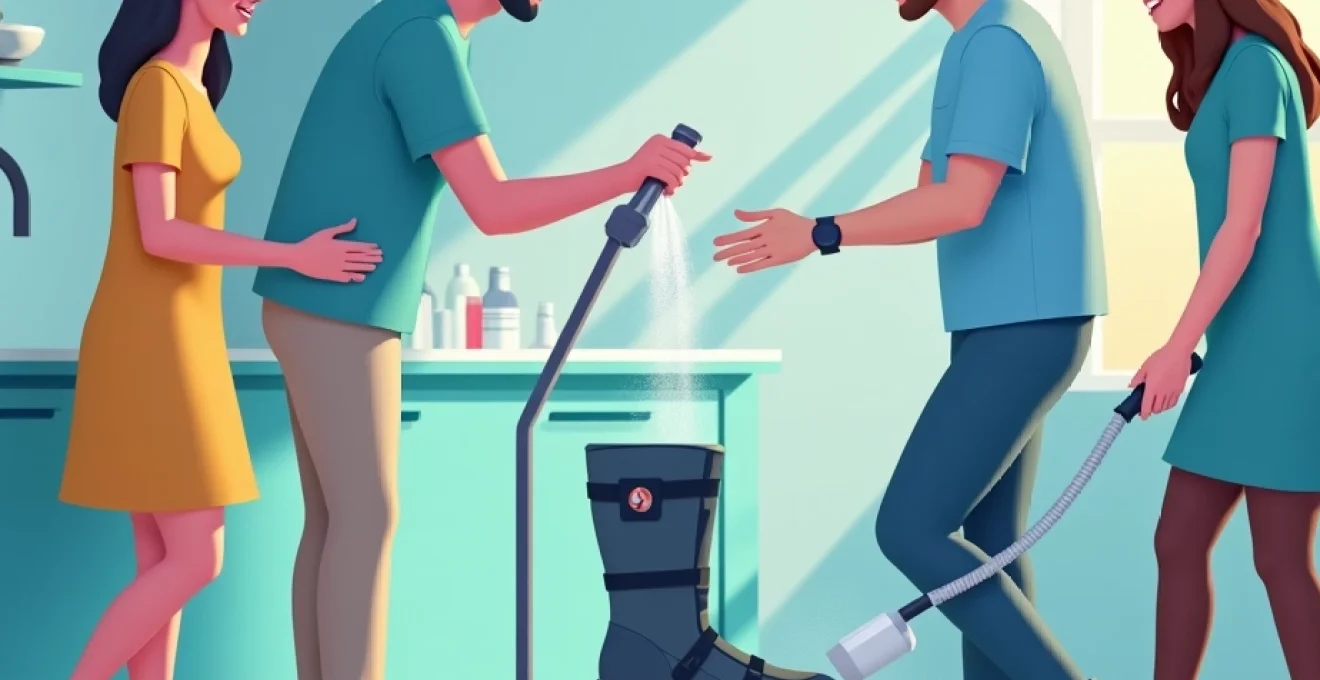
Medical walking boots represent a critical intersection between healthcare technology and patient mobility, serving as essential recovery tools for individuals managing foot and ankle injuries. These sophisticated orthopedic devices, ranging from simple post-surgical protection boots to complex adjustable fracture walkers, require meticulous maintenance protocols to ensure both patient safety and device longevity. The complexity of modern walking boots, incorporating thermoplastic shells, adjustable strapping systems, and specialised cushioning materials, demands a comprehensive understanding of proper cleaning methodologies that preserve structural integrity while maintaining optimal hygiene standards.
The healthcare industry has witnessed a significant evolution in walking boot technology, with manufacturers like Aircast, DonJoy, and CAM Walker developing increasingly sophisticated designs that accommodate diverse patient needs. However, proper maintenance of these devices extends far beyond simple surface cleaning , requiring healthcare professionals and patients alike to understand the intricate balance between thorough disinfection and material preservation.
Essential Pre-Cleaning assessment for medical walking boots
Before initiating any cleaning protocol, conducting a comprehensive assessment of the walking boot’s current condition ensures both safety and effectiveness of the cleaning process. This preliminary evaluation serves as the foundation for determining appropriate cleaning methods and identifying potential complications that could arise during maintenance procedures.
Identifying boot materials: plastic, fabric, and metal components
Modern walking boots incorporate a diverse array of materials, each requiring specific cleaning approaches to prevent damage and maintain functionality. The outer shell typically consists of high-density polyethylene or polypropylene thermoplastic, which exhibits excellent chemical resistance but can be susceptible to stress cracking when exposed to extreme temperatures or harsh solvents. Understanding these material properties is crucial for selecting appropriate cleaning agents that effectively disinfect without compromising structural integrity.
Fabric components, including inner linings, strapping materials, and cushioning elements, often utilise moisture-wicking synthetic fibres or antimicrobial-treated textiles. These materials require gentle handling to preserve their therapeutic properties while ensuring thorough decontamination. Metal components, such as buckles, hinges, and adjustment mechanisms, typically feature corrosion-resistant coatings that can deteriorate when exposed to incompatible cleaning solutions or abrasive cleaning techniques.
Manufacturer-specific cleaning guidelines for aircast and DonJoy models
Each manufacturer provides detailed maintenance specifications that healthcare professionals must follow to maintain warranty coverage and ensure optimal device performance. Aircast walking boots, renowned for their pneumatic air cell technology, require particular attention to valve integrity and air chamber cleanliness. The manufacturer recommends using mild soap solutions with temperatures not exceeding 40°C to prevent damage to the pneumatic system and thermoplastic components.
DonJoy models, featuring advanced hinge mechanisms and telescoping designs, necessitate specific attention to moving parts and adjustment points. The company’s technical documentation emphasises the importance of avoiding petroleum-based products that can degrade rubber seals and compromise the device’s adjustability over time.
Documentation of wear patterns and damage before cleaning
Systematic documentation of pre-existing wear patterns, stress points, and visible damage provides essential baseline information for monitoring device deterioration and planning replacement schedules. This assessment should include photographic documentation of high-stress areas, measurement of sole wear patterns, and evaluation of strap integrity. Such documentation proves invaluable for insurance claims, warranty considerations, and clinical decision-making regarding continued device use.
Healthcare facilities should maintain detailed logs documenting cleaning frequency, methods employed, and any observed changes in device condition. This systematic approach enables identification of accelerated wear patterns that may indicate inappropriate cleaning techniques or excessive use beyond recommended parameters.
Temperature sensitivity evaluation for thermoplastic components
Thermoplastic components exhibit varying degrees of temperature sensitivity, with some materials becoming malleable at temperatures as low as 60°C. This characteristic necessitates careful temperature monitoring during cleaning procedures to prevent unwanted deformation or structural changes. Professional-grade infrared thermometers provide accurate temperature readings that ensure cleaning solutions remain within manufacturer-specified parameters throughout the process.
Environmental factors, including ambient temperature and humidity levels, can significantly influence the cleaning process effectiveness and drying times. Facilities should establish climate-controlled cleaning environments that maintain consistent conditions conducive to optimal cleaning outcomes while preventing thermal stress on sensitive components.
Professional disinfection protocols for medical footwear
Healthcare-associated infections represent a persistent challenge in medical device maintenance, with walking boots serving as potential vectors for pathogen transmission between patients and healthcare environments. Professional disinfection protocols must address this risk while maintaining device functionality and patient safety. The selection of appropriate antimicrobial agents requires careful consideration of efficacy spectrums, contact time requirements, and material compatibility to ensure comprehensive pathogen elimination without device degradation.
Epa-approved antimicrobial solutions for healthcare equipment
The Environmental Protection Agency maintains a comprehensive list of approved antimicrobial solutions specifically validated for healthcare equipment disinfection. Quaternary ammonium compounds, such as didecyl dimethyl ammonium chloride, provide broad-spectrum antimicrobial activity while maintaining compatibility with most thermoplastic materials used in walking boot construction. These solutions typically require contact times of 30 seconds to 10 minutes, depending on the target pathogen and solution concentration.
Alcohol-based disinfectants containing 70% isopropyl alcohol offer rapid pathogen inactivation and quick evaporation rates that minimise moisture exposure to sensitive components. However, prolonged exposure to alcohol-based solutions can cause plasticiser migration in certain thermoplastic formulations, potentially leading to brittleness and premature failure of critical structural elements.
Healthcare facilities should maintain detailed protocols specifying approved disinfectants, application methods, and contact times for each walking boot model in their inventory to ensure consistent and effective decontamination procedures.
Contact time requirements for staphylococcus and MRSA elimination
Staphylococcus aureus and methicillin-resistant Staphylococcus aureus (MRSA) represent particularly concerning pathogens in healthcare settings due to their prevalence and resistance characteristics. Standard quaternary ammonium disinfectants require minimum contact times of 5-10 minutes for reliable MRSA elimination, while chlorine-based solutions can achieve equivalent efficacy in 30 seconds to 2 minutes, depending on concentration and pH levels.
The surface porosity and texture of walking boot components significantly influence required contact times, with textured surfaces and fabric materials necessitating extended exposure periods to ensure complete pathogen penetration and elimination. Healthcare professionals must account for these variables when developing facility-specific disinfection protocols that balance thorough decontamination with practical time constraints and patient flow requirements.
UV-C sterilisation methods for Non-Removable components
Ultraviolet-C radiation at wavelengths of 254 nanometres provides effective pathogen inactivation without chemical exposure, making it particularly suitable for delicate components that cannot tolerate traditional disinfectants. Professional UV-C sterilisation systems deliver controlled doses ranging from 10-100 millijoules per square centimetre, achieving log-4 reduction of common healthcare-associated pathogens in exposure times of 5-15 minutes.
The effectiveness of UV-C sterilisation depends critically on direct radiation exposure, requiring proper positioning and rotation of walking boots to ensure comprehensive coverage of all surfaces. Shadow areas created by complex geometries or overlapping components may harbour surviving pathogens, necessitating supplementary chemical disinfection or extended exposure times with multiple positioning configurations.
Chlorhexidine gluconate application techniques for deep sanitisation
Chlorhexidine gluconate solutions provide sustained antimicrobial activity and excellent tissue compatibility, making them particularly suitable for walking boots that come into direct contact with patient skin. The optimal concentration range of 2-4% chlorhexidine gluconate in aqueous solution provides broad-spectrum activity against bacteria, fungi, and enveloped viruses while maintaining material compatibility with most walking boot components.
Application techniques should emphasise thorough wetting of all surfaces followed by mechanical agitation using soft-bristled brushes to enhance penetration into textured surfaces and crevices. The residual antimicrobial activity of chlorhexidine gluconate provides ongoing protection against recontamination for several hours after application, making it particularly valuable in high-turnover clinical environments.
Mechanical cleaning techniques for walking boot components
Effective mechanical cleaning serves as the foundation for all subsequent disinfection procedures, with physical removal of bioburden and debris being essential for antimicrobial agent efficacy. Professional cleaning protocols must address the diverse component materials and complex geometries characteristic of modern walking boots while avoiding damage to sensitive mechanisms and therapeutic features.
The selection of appropriate cleaning tools requires careful consideration of material hardness, surface texture, and component accessibility. Soft-bristled nylon brushes provide effective debris removal without surface scratching, while microfibre cloths excel at capturing fine particles and residual cleaning solutions. Ultrasonic cleaning systems offer superior penetration into complex geometries and can be particularly effective for removable components that can be fully immersed.
Systematic cleaning protocols should progress from gross debris removal through increasingly refined cleaning stages, with each step building upon the previous to achieve comprehensive decontamination. Initial dry brushing removes loose dirt and debris that could interfere with subsequent chemical cleaning, followed by pre-treatment with appropriate cleaning solutions to break down biofilms and organic matter.
The application of cleaning solutions requires controlled techniques that ensure adequate contact time while preventing oversaturation of porous materials or infiltration into sealed components. Spray application provides excellent coverage control and minimal waste, while immersion techniques may be appropriate for certain removable components that can tolerate full submersion.
Mechanical agitation enhances cleaning effectiveness by disrupting biofilms and improving penetration of cleaning agents into textured surfaces. However, excessive force can damage delicate components or drive contaminants deeper into porous materials, necessitating careful technique development and staff training to achieve optimal results.
Professional cleaning protocols should incorporate quality control measures, including visual inspection and periodic microbiological sampling, to validate cleaning effectiveness and identify areas requiring protocol refinement.
Drying and moisture management systems
Proper drying techniques represent a critical component of walking boot maintenance, as residual moisture can promote microbial growth, accelerate material degradation, and compromise device functionality. Professional drying systems must accommodate the diverse materials and complex internal geometries characteristic of modern walking boots while maintaining temperature and humidity parameters that preserve device integrity.
Forced-air drying systems provide controlled airflow and temperature regulation that ensures rapid moisture removal without thermal stress on thermoplastic components. These systems typically operate at temperatures between 40-60°C with adjustable airflow rates that can be optimised for different boot designs and material compositions. Advanced systems incorporate humidity monitoring and automatic cycle termination to prevent over-drying that could lead to material brittleness or dimensional changes.
The internal geometry of walking boots creates multiple dead air spaces and moisture traps that require specific attention during the drying process. Removable components, including insoles, padding elements, and liner materials, should be separated and dried individually to ensure complete moisture elimination and prevent the development of anaerobic conditions conducive to pathogen growth.
Desiccant-based drying systems offer an alternative approach that removes moisture through chemical absorption rather than thermal evaporation. These systems operate at ambient temperatures and can be particularly suitable for boots containing temperature-sensitive components or those that cannot tolerate the mechanical stress of forced-air circulation. Professional-grade desiccant systems utilise regenerable materials that provide consistent performance over extended periods with minimal maintenance requirements.
Monitoring systems should track both surface and internal moisture levels throughout the drying process, with completion criteria based on quantitative measurements rather than subjective assessment. Moisture metres designed for medical device applications provide accurate readings that ensure thorough drying while preventing unnecessary exposure to drying conditions that could compromise material properties. The establishment of validated drying cycles for different boot models ensures consistent results and optimal device longevity while maintaining efficient throughput in high-volume facilities.
Post-cleaning inspection and functionality testing
Comprehensive post-cleaning inspection protocols ensure that maintenance procedures have achieved their intended objectives without compromising device safety or functionality. These evaluations must address both visible cleanliness and functional performance, with documented procedures that provide traceability and support quality assurance objectives.
Visual inspection protocols should systematically examine all surfaces, joints, and mechanisms for residual contamination, cleaning agent residues, or signs of damage that may have occurred during the cleaning process. Magnification tools and appropriate lighting conditions enhance inspection effectiveness, particularly for identifying subtle changes in material appearance or surface integrity that could indicate cleaning-related damage.
Functional testing procedures must verify that all adjustment mechanisms, fasteners, and therapeutic features operate within manufacturer specifications following cleaning and disinfection. This includes verification of strap tension, buckle engagement, hinge operation, and any electronic components or sensors that may be integrated into advanced boot designs. Standardised testing protocols ensure consistent evaluation and provide baseline data for monitoring device degradation over time.
Documentation requirements for post-cleaning inspection include photographic records of any identified defects, quantitative measurements of wear indicators, and certification that the device meets safety and performance criteria for continued clinical use. These records support clinical decision-making regarding device replacement, warranty claims, and regulatory compliance obligations.
Quality control sampling programmes should incorporate periodic microbiological testing to validate cleaning effectiveness and identify potential protocol deficiencies. Statistical sampling plans based on device volume and risk assessment provide cost-effective monitoring while maintaining confidence in cleaning outcomes. Results from these programmes inform continuous improvement efforts and support evidence-based refinements to cleaning protocols.
The integration of cleaning and inspection data into comprehensive device management systems enables predictive maintenance strategies that optimise device utilisation while ensuring patient safety. Advanced systems can identify patterns in device degradation, predict optimal replacement timing, and support inventory management decisions that balance cost considerations with clinical requirements. These data-driven approaches represent the future of medical device maintenance, where sophisticated analytics enhance traditional cleaning and inspection protocols to deliver superior outcomes for both patients and healthcare facilities.