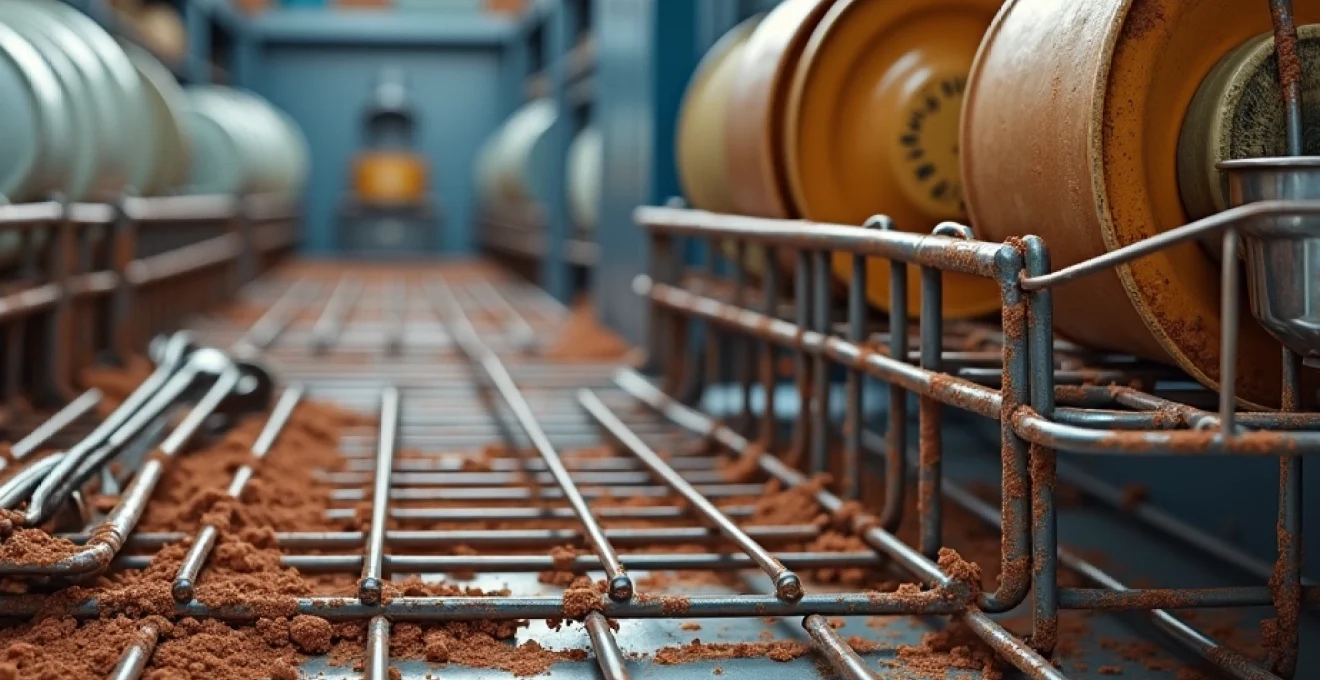
The sight of rust forming on dishwasher racks has become an increasingly common concern for homeowners worldwide. With millions of dishwashers operating daily in kitchens across the globe, the degradation of protective coatings on rack systems presents both immediate health considerations and long-term appliance functionality issues. Understanding the mechanisms behind rust formation, its potential health implications, and effective restoration techniques has never been more crucial for maintaining both food safety and equipment longevity.
Modern dishwasher racks represent sophisticated engineering solutions designed to withstand extreme conditions including high temperatures, aggressive detergents, and constant moisture exposure. However, even the most advanced coating systems eventually succumb to wear and environmental stresses. The exposed metal beneath these protective layers creates an ideal environment for oxidation processes that can compromise both the structural integrity of the rack and the cleanliness of your dishware.
Rust formation mechanisms in dishwasher rack coating systems
The development of rust in dishwasher racks follows predictable patterns influenced by multiple environmental and mechanical factors. Understanding these mechanisms provides essential insight into both prevention strategies and repair methodologies that can extend rack lifespan significantly.
Vinyl coating degradation and exposure points
Vinyl coatings applied to dishwasher racks serve as the primary barrier against moisture penetration and oxidation. These polymer-based protective systems typically consist of multiple layers including primers, base coats, and topcoats designed to create a seamless barrier. However, constant thermal cycling between ambient and elevated temperatures causes expansion and contraction that gradually weakens the molecular bonds within the coating matrix.
The most vulnerable areas for coating failure occur at stress concentration points such as wire intersections, tine tips, and areas subjected to repeated impact from dishware. When dishes slide across rack surfaces or experience sudden movement during wash cycles, the resulting abrasion creates microscopic fractures in the vinyl coating. These initial breach points allow moisture infiltration, beginning the oxidation process that eventually manifests as visible rust spots.
Galvanic corrosion in mixed metal components
Many dishwasher racks incorporate multiple metal types within their construction, creating conditions conducive to galvanic corrosion. When dissimilar metals such as steel wire racks and stainless steel components remain in electrical contact within the highly conductive environment of dishwasher operations, electrochemical reactions accelerate the corrosion process beyond normal oxidation rates.
The presence of dissolved salts and minerals in wash water enhances the electrolytic conductivity of the dishwasher environment, effectively creating a battery-like system where less noble metals sacrifice themselves to protect more noble components. This phenomenon explains why certain areas of dishwasher racks experience preferential corrosion patterns that seem disproportionate to their exposure levels or mechanical wear.
Phosphate coating breakdown under High-Temperature cycles
Phosphate conversion coatings applied as intermediate layers between the base metal and vinyl topcoat provide crucial adhesion and corrosion resistance properties. These coatings undergo chemical transformation when exposed to the alkaline conditions and elevated temperatures characteristic of intensive wash cycles. The breakdown products of phosphate coatings can create localised pH variations that accelerate the degradation of surrounding protective layers.
Research indicates that phosphate coating degradation becomes particularly pronounced when dishwashers operate consistently above 70°C, a temperature range common in sanitising cycles. The resulting coating delamination creates pathways for moisture infiltration that compromise the entire protective system, leading to accelerated rust formation in affected areas.
Chloride-induced pitting corrosion from dishwasher salt
Dishwasher salt used for water softening introduces chloride ions into the wash environment, creating conditions that promote pitting corrosion even in areas where coating systems remain intact. Chloride ions possess the unique ability to penetrate protective films and establish localised corrosion cells that propagate inward from the surface.
Pitting corrosion represents one of the most insidious forms of dishwasher rack degradation because it occurs beneath apparently intact coating surfaces. The resulting subsurface corrosion eventually causes coating failure from beneath, creating blister-like formations that burst to reveal extensive rust damage. This mechanism explains why some dishwasher racks develop sudden, widespread rust problems despite appearing well-maintained.
Health implications of iron oxide exposure through contaminated dishware
The transfer of rust particles from dishwasher racks to dishware presents several potential health considerations that warrant careful evaluation. While the actual health risks associated with typical exposure levels remain relatively low, understanding these implications enables informed decision-making regarding rack maintenance and replacement strategies.
Tetanus risk assessment from rust particle contact
The association between rust and tetanus infection represents one of the most persistent misconceptions in popular understanding of rust-related health risks. Tetanus bacteria (Clostridium tetani) thrive in anaerobic environments and commonly inhabit soil, dust, and organic matter rather than rust itself. However, rusty surfaces often harbour the types of environmental contaminants that can contain tetanus spores.
In the context of dishwasher operations, the risk of tetanus transmission through rust particle contact remains extremely low due to the sanitising effects of high-temperature wash cycles and alkaline detergent solutions. The oxidising environment within dishwashers creates conditions hostile to anaerobic bacterial survival, effectively eliminating most pathogenic organisms that might be associated with rust contamination.
Heavy metal leaching into food contact surfaces
Modern dishwasher racks typically consist of steel wire coated with protective materials rather than alloys containing significant quantities of toxic heavy metals. However, some older rack designs may incorporate coatings or base materials containing elements such as chromium, nickel, or zinc that could theoretically leach into the dishwasher environment under specific conditions.
The alkaline pH and elevated temperatures characteristic of dishwasher operations can accelerate the dissolution of certain metallic compounds, potentially leading to trace amounts of these elements depositing on dishware surfaces. While regulatory standards ensure that such concentrations remain well below harmful levels, individuals with specific metal sensitivities may wish to consider replacement strategies for heavily corroded racks as a precautionary measure.
Respiratory concerns from airborne rust particles during unloading
The process of unloading dishes from dishwashers with extensively rusted racks can generate small quantities of airborne iron oxide particles, particularly when dishes scrape against corroded surfaces. These particles, while generally considered nuisance dust rather than toxic substances, can potentially cause respiratory irritation in sensitive individuals or those with pre-existing respiratory conditions.
Iron oxide particles in the size range typically generated by dishwasher rack abrasion (generally 1-10 micrometers) can penetrate into the upper respiratory tract but rarely reach the deep lung regions where more serious health effects might occur. The intermittent nature of exposure during dishwasher unloading further reduces any potential health significance. However, individuals with asthma or other respiratory sensitivities should consider addressing visible rust problems promptly to minimise exposure.
Gastrointestinal impact of ingested iron oxide compounds
Iron oxide, the primary component of rust, exhibits relatively low toxicity when ingested in small quantities typical of dishware contamination scenarios. The human digestive system processes iron oxide similarly to other iron compounds, with most material passing through the gastrointestinal tract without significant absorption or adverse effects.
However, individuals with haemochromatosis or other iron metabolism disorders should exercise additional caution regarding rust contamination on dishware. While the quantities involved in typical exposure scenarios remain minimal, the cumulative effect of regular exposure to additional iron compounds could potentially contribute to iron overload in susceptible individuals. Regular inspection and maintenance of dishwasher racks helps ensure that rust particle transfer remains at negligible levels.
Chemical analysis of dishwasher detergent interactions with corroded steel
The complex chemical environment within dishwashers creates numerous opportunities for interactions between detergent formulations and corroded steel surfaces. Understanding these interactions provides crucial insight into both the acceleration of corrosion processes and the potential for chemical contamination of the wash environment.
Modern dishwasher detergents contain sophisticated blends of surfactants, enzymes, builders, and oxidising agents designed to remove food residues while maintaining material compatibility. However, when these formulations contact exposed steel surfaces, they can initiate or accelerate corrosion processes through several mechanisms. Alkaline builders such as sodium carbonate and sodium silicate create high-pH conditions that dissolve protective oxide films on steel surfaces, exposing fresh metal to oxidation.
Chlorine-based bleaching agents commonly found in dishwasher detergents represent particularly aggressive corrosion promoters when they contact exposed steel surfaces. These compounds can establish pitting corrosion sites that propagate rapidly even after the initial exposure event. The resulting electrochemical cells continue operating throughout subsequent wash cycles, creating self-sustaining corrosion processes that compromise rack integrity progressively.
Enzyme formulations designed to break down protein and starch residues can also interact with iron compounds formed during the corrosion process. Some proteolytic enzymes demonstrate unexpected catalytic activity in the presence of iron ions, potentially accelerating the breakdown of remaining protective coatings on rack surfaces. This synergistic effect explains why some dishwasher racks experience rapid deterioration once initial coating failures occur, even in areas not directly exposed to mechanical wear.
Recent analytical studies have demonstrated that the interaction between modern detergent formulations and corroded steel surfaces can generate complex chemical species that deposit on dishware surfaces in quantities detectable through sensitive analytical techniques.
FDA and HACCP compliance standards for food contact surface maintenance
Food safety regulations established by the Food and Drug Administration (FDA) and Hazard Analysis and Critical Control Points (HACCP) protocols provide specific guidance regarding the maintenance of food contact surfaces in commercial and domestic environments. These standards directly apply to dishwasher rack maintenance and establish clear criteria for determining when replacement becomes necessary rather than optional.
FDA guidelines specify that food contact surfaces must be smooth, non-absorbent, and easily cleanable to prevent bacterial contamination and ensure effective sanitisation. Rusted dishwasher racks fail to meet these criteria in multiple ways: the rough texture of corroded surfaces provides harbourage sites for bacterial growth, iron oxide deposits can absorb organic materials that resist standard cleaning procedures, and the irregular surface topology prevents effective contact with sanitising solutions.
HACCP protocols require systematic evaluation of potential contamination sources within food preparation and cleaning environments. In the context of dishwasher operations, this evaluation must consider the potential for rust particles to transfer to clean dishware, creating a contamination pathway that could compromise food safety. The critical control point analysis for dishwasher operations typically identifies rack condition as a significant factor requiring regular monitoring and corrective action protocols.
Commercial food service operations operating under HACCP plans must document their rack inspection procedures and maintain records demonstrating compliance with established maintenance standards. While domestic kitchens don’t face the same regulatory requirements, applying similar standards provides a practical framework for maintaining food safety and determining appropriate replacement intervals for deteriorated dishwasher racks.
Rack restoration techniques using naval jelly and rust converter products
Professional restoration of dishwasher racks requires careful selection and application of appropriate chemical treatments designed to remove existing corrosion while providing renewed protection against future oxidation. The choice between different restoration approaches depends on the extent of corrosion damage, the base metal composition, and the intended service life of the restored rack.
Evapo-rust application for wire rack rehabilitation
Evapo-Rust represents a water-based, non-acidic rust removal system that offers significant advantages for dishwasher rack restoration applications. Unlike traditional acid-based rust removers that can damage surrounding materials and create disposal challenges, Evapo-Rust selectively removes iron oxide without affecting base metals or sound coating materials. The chelation-based chemistry safely dissolves rust deposits while leaving protective conversion coatings intact.
The application process involves complete immersion of affected rack sections in Evapo-Rust solution for periods ranging from several hours to overnight, depending on the extent of corrosion present. The solution requires no mixing or activation and can be reused multiple times until its rust removal capacity becomes exhausted. This approach proves particularly effective for wire rack rehabilitation where complex geometries make mechanical cleaning methods impractical.
Following Evapo-Rust treatment, restored surfaces require thorough rinsing with clean water to remove treatment residues before applying protective coatings. The chelation process leaves steel surfaces in an activated state that readily accepts primer and coating materials, often producing superior adhesion compared to mechanically prepared surfaces.
Corroseal Water-Based rust converter treatment protocols
Corroseal rust converter provides an alternative approach that combines rust removal and protective coating application in a single treatment step. This water-based system chemically converts existing rust into a protective magnetite coating while simultaneously applying a primer layer that prepares surfaces for topcoat application.
The conversion process requires application of Corroseal directly to rusted surfaces using brush, roller, or spray methods. The chemical reaction begins immediately upon contact, converting red iron oxide (rust) into black magnetite while simultaneously depositing a protective primer layer. This dual-function approach proves particularly valuable for rack restoration projects where complete rust removal presents practical challenges.
Optimal results require surface preparation that removes loose rust and contaminants while leaving adherent rust in place for conversion. Wire brushing or light sanding typically provides adequate preparation, though care must be taken to avoid damaging sound coating materials in adjacent areas. The converted surface provides an excellent foundation for vinyl coating systems specifically designed for dishwasher rack applications.
Plastidip vinyl coating systems for Re-Protection
PlastiDip vinyl coating systems offer versatile solutions for re-protecting restored dishwasher rack surfaces. These liquid vinyl formulations can be applied by dipping, brushing, or spraying to create seamless protective barriers that resist moisture penetration and provide excellent adhesion to properly prepared substrates.
The dipping application method proves particularly effective for wire rack restoration because it ensures complete coverage of complex geometries including wire intersections and tine assemblies. The self-levelling properties of liquid vinyl create smooth, uniform coatings that eliminate stress concentration points where coating failures typically initiate. Multiple thin coats generally provide superior performance compared to single thick applications.
Curing requirements vary depending on environmental conditions, but typical installations require 24-48 hours before restored racks can return to service. The resulting vinyl coating provides excellent chemical resistance to dishwasher detergents and maintains flexibility throughout normal thermal cycling. Proper application techniques can achieve coating performance comparable to original equipment specifications.
Preventive maintenance strategies for dishwasher rack longevity
Implementing systematic preventive maintenance protocols significantly extends dishwasher rack service life while maintaining optimal performance throughout the equipment lifecycle. These strategies focus on early identification and correction of conditions that promote corrosion development, thereby preventing minor issues from progressing to major failures requiring extensive restoration or replacement.
Regular visual inspections represent the foundation of effective rack maintenance programs. Monthly examinations should focus on identifying early signs of coating degradation, particularly at high-stress locations such as tine tips, wire intersections, and areas subjected to repeated dishware contact. Early detection of coating damage enables prompt repair using touch-up materials before moisture penetration initiates corrosion processes.
Water quality management plays a crucial role in rack longevity, particularly in areas with high mineral content or aggressive water chemistry. Installing appropriate water treatment systems reduces the concentration of corrosive species such as chlorides and sulfates while maintaining proper pH levels for optimal detergent performance. Regular testing of water quality parameters enables timely adjustment of treatment protocols to address changing conditions.
Loading technique optimisation reduces mechanical stress on rack components while ensuring effective cleaning performance. Proper spacing of dishware prevents excessive contact forces during wash cycles, while strategic positioning minimises sliding and impact damage to coating surfaces. Training household members on appropriate loading techniques represents a cost-effective strategy for extending rack service life.
Detergent selection and usage protocols significantly influence rack corrosion rates and coating longevity. Choosing formulations specifically designed for the local water conditions and dishwasher model optimises cleaning performance while minimising aggressive chemical interactions with rack materials. Following manufacturer recommendations for detergent quantities prevents overdosing that can accelerate coating degradation through excessive alkalinity or oxidising agent concentrations.
Environmental controls within the dishwasher compartment help maintain conditions conducive to long rack service life. Ensuring proper ventilation during and after wash cycles reduces moisture exposure time, while maintaining
appropriate temperature controls reduces thermal stress on coating materials. Regular cleaning of dishwasher filters and spray arms maintains proper water circulation patterns that prevent stagnant areas where corrosive conditions might develop.
Protective treatments applied to vulnerable areas can significantly extend coating service life before visible wear develops. Specialised tine tip protectors and wire intersection covers provide mechanical barriers that absorb impact forces and abrasion that would otherwise damage primary coating systems. These preventive accessories prove particularly valuable in households with heavy dishwasher usage or aggressive loading practices.
Documentation of maintenance activities enables tracking of rack performance trends and optimisation of replacement schedules. Recording inspection dates, identified issues, and corrective actions provides valuable data for predicting future maintenance requirements and evaluating the effectiveness of different preventive strategies. This systematic approach helps identify patterns that might indicate underlying water quality issues or operational factors requiring adjustment.
Seasonal maintenance protocols address environmental factors that influence corrosion rates throughout the year. Higher humidity levels during summer months may require more frequent inspections and enhanced ventilation practices, while winter conditions with increased heating system operation can affect dishwasher compartment humidity levels. Adjusting maintenance frequency and focus areas based on seasonal conditions optimises protection strategies for varying environmental stresses.
The implementation of these comprehensive preventive maintenance strategies requires initial investment in time and materials but provides substantial long-term benefits through extended rack service life and maintained food safety standards. Regular assessment and refinement of maintenance protocols ensures continued effectiveness as equipment ages and operating conditions evolve. Modern dishwasher racks can achieve service lives exceeding ten years when properly maintained, compared to typical replacement intervals of 3-5 years for neglected units.