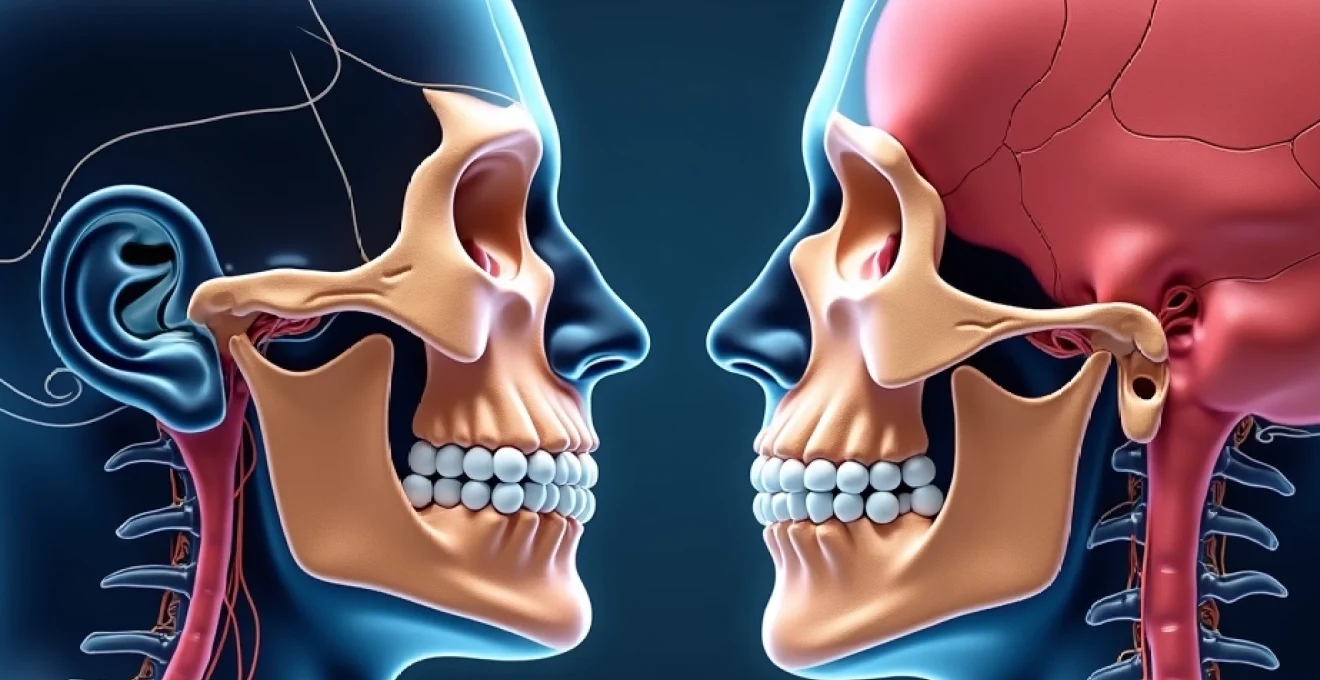
The intricate relationship between temporomandibular joint (TMJ) dysfunction and Ménière’s disease represents one of the most compelling examples of how seemingly unrelated anatomical structures can profoundly influence each other. Recent research has illuminated remarkable connections between jaw disorders and vestibular symptoms, challenging traditional diagnostic approaches that treat these conditions in isolation. This emerging understanding offers hope for patients who have endured years of debilitating symptoms without finding effective relief through conventional treatments.
Understanding these interconnections requires examining the complex web of neurological, vascular, and mechanical relationships that exist between the temporomandibular system and the vestibular apparatus. The proximity of these structures, combined with their shared innervation patterns and vascular supply, creates multiple pathways through which dysfunction in one system can cascade into problems affecting the other.
Anatomical connections between temporomandibular joint and vestibular system
The anatomical relationship between the TMJ and the inner ear structures extends far beyond their physical proximity. These systems share fundamental developmental origins and maintain intricate connections throughout life that can significantly impact their respective functions. The temporal bone serves as a crucial housing structure for both the TMJ and the inner ear, creating a direct mechanical pathway for force transmission between these regions.
The petrotympanic fissure, a narrow cleft in the temporal bone, provides a direct anatomical bridge between the TMJ space and the middle ear cavity. Through this fissure, mechanical forces generated by jaw movement and muscle tension can directly influence middle ear pressure dynamics. This connection becomes particularly significant when considering how TMJ dysfunction might contribute to the pressure irregularities characteristic of Ménière’s disease.
Trigeminal nerve pathway integration with vestibular nuclei
The trigeminal nerve system demonstrates remarkable integration with vestibular processing centres within the brainstem. The mesencephalic nucleus of the trigeminal nerve receives proprioceptive input from the TMJ capsule and masticatory muscles, while simultaneously maintaining connections with vestibular nuclei responsible for balance and spatial orientation. This neural convergence creates opportunities for cross-sensitisation between jaw-related sensory input and vestibular processing.
Research has demonstrated that approximately 80% of patients with TMJ disorders experience ear-related symptoms, including vertigo, tinnitus, and aural fullness. The trigeminal-vestibular convergence occurs primarily within the spinal trigeminal nucleus, where nociceptive fibres from the TMJ region synapse alongside vestibular afferents. This anatomical arrangement explains why jaw dysfunction can trigger vestibular symptoms and why patients often experience simultaneous improvement in both conditions when TMJ issues are addressed.
Shared vascular supply through maxillary and vertebrobasilar arteries
The vascular networks supplying the TMJ and inner ear structures demonstrate significant overlap, particularly through branches of the maxillary artery and connections to the vertebrobasilar circulation. The anterior tympanic artery, a branch of the maxillary artery, supplies both the TMJ region and portions of the middle ear. Vascular compromise or inflammation in this shared circulation can simultaneously affect both the temporomandibular system and auditory-vestibular function.
Studies utilising advanced imaging techniques have revealed that patients with both TMJ dysfunction and Ménière’s disease often exhibit altered blood flow patterns in these shared vascular territories. The internal auditory artery, which supplies the inner ear structures, maintains collateral connections with vessels serving the TMJ region. When chronic muscle tension or inflammation affects local circulation, both systems may experience compromised vascular supply, leading to the development of symptoms in both regions.
Cervical spine proprioceptive input affecting both TMJ and inner ear function
The cervical spine contributes crucial proprioceptive information for both jaw function and vestibular processing. The upper cervical segments, particularly C1-C3, send proprioceptive fibres that converge with both trigeminal and vestibular inputs within the brainstem. This tripartite integration means that cervical dysfunction can simultaneously disrupt both TMJ function and vestibular processing, creating a complex web of interconnected symptoms.
Clinical observations consistently demonstrate that patients with cervical spine disorders show increased prevalence of both TMJ dysfunction and vestibular symptoms. The cervico-collic reflex and cervico-ocular reflex pathways share neural substrates with systems controlling jaw position and inner ear function. When cervical proprioception becomes compromised, compensatory mechanisms often lead to increased muscle tension in the masticatory system, potentially triggering both TMJ symptoms and vestibular disturbances.
Fascial continuity from masseter muscle to temporal bone structures
The fascial system provides another crucial connection between the TMJ and inner ear regions. The masseter muscle fascia demonstrates direct continuity with the temporoparietal fascia, which attaches to the temporal bone housing the inner ear structures. This fascial continuity allows mechanical forces generated by chronic muscle tension or dysfunction to be transmitted directly to the temporal bone, potentially affecting the delicate structures within.
Myofascial research has identified trigger points within the masseter and temporalis muscles that can refer pain and dysfunction to the ear region. These trigger points often develop secondary to TMJ dysfunction and can create sustained mechanical stress on the temporal bone. The resulting fascial tension may alter the mechanical properties of the temporal bone, affecting the function of the vestibular organs housed within. This mechanism helps explain why manual therapy techniques targeting the masticatory muscles often provide relief for both TMJ symptoms and certain types of vestibular dysfunction.
Neurophysiological mechanisms linking TMJ dysfunction to ménière’s disease symptoms
The neurophysiological connections between TMJ dysfunction and Ménière’s disease involve sophisticated mechanisms of neural integration and cross-sensitisation within the central nervous system. These pathways demonstrate how localised dysfunction in the temporomandibular system can produce widespread effects on vestibular function, auditory processing, and autonomic regulation. Understanding these mechanisms provides crucial insights into why traditional approaches focusing solely on inner ear pathology often fail to provide lasting relief for many patients.
Central sensitisation represents one of the most significant mechanisms linking TMJ dysfunction to vestibular symptoms. When nociceptive input from the TMJ region becomes chronic, it can lead to heightened sensitivity throughout interconnected neural networks, including those processing vestibular information. This phenomenon explains why patients with longstanding TMJ disorders often develop progressively worsening vestibular symptoms that seem disproportionate to their original jaw problems.
Central sensitisation effects on Trigeminal-Vestibular convergence
Central sensitisation within the trigeminal-vestibular convergence zones creates a state of heightened neural excitability that can transform normally innocuous stimuli into symptom-producing events. The spinal trigeminal nucleus, where trigeminal and vestibular pathways converge, becomes hyperexcitable in response to chronic nociceptive input from TMJ structures. This hyperexcitability manifests as allodynia and hyperalgesia affecting both jaw function and vestibular processing.
Research has demonstrated that central sensitisation can alter the normal inhibitory mechanisms that prevent cross-talk between sensory modalities. In healthy individuals, robust inhibitory systems prevent jaw-related sensory input from interfering with vestibular processing. However, chronic TMJ dysfunction can overwhelm these inhibitory mechanisms, leading to abnormal sensory integration that produces vertigo, imbalance, and other vestibular symptoms in response to jaw movement or muscle tension.
Myofascial trigger points in pterygoid muscles affecting eustachian tube function
The medial and lateral pterygoid muscles play crucial roles in both jaw function and eustachian tube regulation. Trigger points within these muscles can significantly impact eustachian tube opening mechanisms, leading to middle ear pressure irregularities that contribute to Ménière’s disease symptomatology. The medial pterygoid muscle, in particular, maintains fascial connections with the tensor veli palatini muscle, which is responsible for eustachian tube opening during swallowing.
Clinical studies have shown that patients with active pterygoid trigger points demonstrate reduced eustachian tube function on tympanometric testing. These trigger points often develop secondary to TMJ dysfunction, creating a cascade of effects that begin with jaw dysfunction and culminate in middle ear pressure abnormalities. The resulting pressure imbalances can contribute to the endolymphatic hydrops thought to underlie Ménière’s disease, suggesting that addressing pterygoid muscle dysfunction might provide therapeutic benefits for certain patients with vestibular symptoms.
Autonomic nervous system dysregulation through sympathetic chain involvement
The autonomic nervous system demonstrates significant involvement in both TMJ dysfunction and Ménière’s disease through complex interactions between sympathetic, parasympathetic, and enteric divisions. The superior cervical ganglion, a key component of the sympathetic chain, provides innervation to both TMJ structures and inner ear blood vessels. Dysfunction in this system can simultaneously affect jaw muscle function and inner ear circulation, creating conditions conducive to both TMJ disorders and vestibular symptoms.
Autonomic dysregulation manifests in multiple ways that can contribute to Ménière’s disease symptomatology. Sympathetic hyperactivity can reduce inner ear blood flow, potentially contributing to endolymphatic hydrops development. Simultaneously, this same autonomic imbalance can increase muscle tension throughout the masticatory system, perpetuating TMJ dysfunction. The resulting cycle of sympathetic hyperactivity, reduced circulation, increased muscle tension, and worsening symptoms can become self-perpetuating without appropriate intervention.
Nociceptive input modulation via rostral ventromedial medulla pathways
The rostral ventromedial medulla (RVM) serves as a critical hub for nociceptive processing and pain modulation, with direct connections to both trigeminal and vestibular processing centres. Chronic nociceptive input from TMJ structures can alter RVM function, leading to changes in descending pain modulation that affect multiple sensory systems simultaneously. This alteration in central pain processing can sensitise vestibular pathways, making them more responsive to normally sub-threshold stimuli.
Research has identified specific populations of RVM neurons that respond to both trigeminal and vestibular inputs. These convergent neurons can become hyperactive in response to chronic TMJ-related nociception, leading to enhanced responses to vestibular stimuli and the development of symptoms such as motion sensitivity, imbalance, and vertigo. The RVM also maintains connections with autonomic centres, explaining how TMJ dysfunction can simultaneously affect pain processing, vestibular function, and autonomic regulation through this central integration hub.
Clinical evidence and diagnostic correlations in TMJ-Ménière’s comorbidity
The clinical evidence supporting connections between TMJ dysfunction and Ménière’s disease has grown substantially over the past two decades, with multiple research studies demonstrating significant correlations between these conditions. Large-scale epidemiological studies have revealed that patients diagnosed with Ménière’s disease show a remarkably higher prevalence of TMJ disorders compared to the general population, with some studies reporting rates as high as 80% comorbidity. These findings suggest that the relationship between these conditions extends far beyond coincidental co-occurrence.
Diagnostic correlations become particularly evident when examining the symptom overlap between TMJ dysfunction and Ménière’s disease. Both conditions commonly present with ear fullness, tinnitus, hearing fluctuations, and balance disturbances. However, patients with both conditions often report that their symptoms fluctuate together, with TMJ flare-ups coinciding with worsening vestibular symptoms. This temporal correlation provides important clinical evidence for underlying mechanistic connections between the two conditions.
Prevalence studies using research diagnostic criteria for temporomandibular disorders
Large-scale prevalence studies utilising standardised Research Diagnostic Criteria for Temporomandibular Disorders (RDC/TMD) have revealed striking correlations between TMJ dysfunction and Ménière’s disease. A comprehensive study of 138 patients with inner ear disorders found that 79.7% demonstrated pathological findings in the temporomandibular system, with 43.5% meeting criteria for TMJ syndrome. These prevalence rates far exceed those found in the general population, where TMJ disorders affect approximately 5-15% of adults.
Follow-up studies tracking patients who received TMJ treatment have shown remarkable improvements in Ménière’s disease symptoms. In one controlled study, 56.6% of patients who received recommended dental treatment showed improvement in their otological symptoms. These findings suggest that TMJ dysfunction may represent a significant contributing factor to symptoms traditionally attributed solely to inner ear pathology, highlighting the importance of comprehensive evaluation that includes assessment of the temporomandibular system.
Electrocochleography findings in patients with concurrent TMJ disorders
Electrocochleography (ECochG) represents a sophisticated diagnostic tool that can reveal important correlations between TMJ dysfunction and inner ear pathology. Patients with both TMJ disorders and Ménière’s disease often demonstrate characteristic ECochG patterns that differ from those seen in patients with Ménière’s disease alone. These patterns typically include enhanced summating potential to action potential ratios, suggesting increased endolymphatic pressure that may be influenced by TMJ-related factors.
Particularly intriguing are studies showing that ECochG abnormalities in patients with TMJ-related Ménière’s symptoms often improve following successful TMJ treatment. These improvements in objective electrophysiological measures provide strong evidence that TMJ dysfunction can directly influence inner ear function through physiological mechanisms rather than simply causing symptom overlap. The ability to track these objective changes offers valuable tools for monitoring treatment progress and validating the effectiveness of TMJ-focused interventions.
Cervical vestibular evoked myogenic potential abnormalities
Cervical vestibular evoked myogenic potentials (cVEMP) testing has revealed important abnormalities in patients with both TMJ dysfunction and vestibular symptoms. These tests evaluate the function of the saccule and its connections to cervical muscles, providing insights into vestibular pathway integrity. Patients with TMJ-related vestibular symptoms often demonstrate altered cVEMP thresholds, asymmetries, or absent responses that suggest compromised vestibular function.
The pattern of cVEMP abnormalities in TMJ patients often correlates with the severity and duration of their jaw dysfunction. Patients with chronic, severe TMJ disorders tend to show more pronounced cVEMP abnormalities, suggesting that prolonged dysfunction can lead to progressive deterioration in vestibular pathway function. Importantly, some studies have reported improvements in cVEMP parameters following successful TMJ treatment, indicating potential for functional recovery when underlying TMJ issues are addressed.
Mandibular movement analysis through digital jaw tracking technology
Advanced digital jaw tracking technology has revolutionised the ability to objectively assess TMJ function and its relationship to vestibular symptoms. These systems can precisely measure jaw movement patterns, muscle activity, and joint sounds, revealing subtle abnormalities that might not be apparent during clinical examination. Patients with both TMJ dysfunction and Ménière’s disease often demonstrate characteristic movement patterns, including reduced range of motion, asymmetric movement patterns, and increased muscle activity during jaw function.
Particularly valuable are studies correlating jaw movement abnormalities with vestibular symptom severity. Patients with more severe movement restrictions and muscle hyperactivity tend to report more frequent and intense vestibular episodes. Digital tracking also allows for objective monitoring of treatment progress, with improvements in jaw function often paralleling reductions in vestibular symptoms. This technology provides crucial objective data supporting the clinical observation that TMJ function and vestibular symptoms are intimately connected.
Therapeutic interventions targeting TMJ-Related ménière’s disease management
Therapeutic approaches that simultaneously address TMJ dysfunction and Ménière’s disease represent a paradigm shift from traditional single-system treatments. These integrated interventions recognise the interconnected nature of these conditions and aim to address underlying mechanistic links rather than simply managing symptoms in isolation. The most successful therapeutic protocols typically combine multiple modalities, including occlusal therapy, physical rehabilitation, and comprehensive muscle rebalancing techniques.
Disclusion Time Reduction (DTR) therapy has emerged as a particularly promising approach for patients with TMJ-related Ménière’s symptoms. This computer-guided occlusal adjustment technique focuses on eliminating prolonged tooth contacts during jaw movement, thereby reducing excessive muscle activation and joint stress. Studies have shown that DTR therapy can significantly reduce both TMJ symptoms and associated vestibular complaints, with many patients experiencing substantial improvements in vertigo frequency, tinnitus intensity, and overall symptom severity.
The success of integrated treatment approaches suggests that many cases of Ménière’s disease may actually represent manifestations of complex temporomandibular dysfunction rather than primary inner ear pathology.
Comprehensive treatment protocols often include multiple therapeutic modalities working synergistically
to create lasting improvements in both temporomandibular function and vestibular symptoms. Physical therapy protocols specifically designed for TMJ-vestibular comorbidity typically include cervical spine mobilisation, masticatory muscle relaxation techniques, and vestibular rehabilitation exercises tailored to address the unique needs of patients with both conditions.
Neuromuscular dentistry approaches have shown remarkable success in treating patients with TMJ-related Ménière’s symptoms. These techniques utilise advanced diagnostic tools including electromyography and jaw tracking to identify optimal jaw positioning that minimises muscle tension and joint stress. Custom oral appliances designed using these neuromuscular principles can provide significant relief from both TMJ symptoms and associated vestibular complaints by promoting proper jaw alignment and reducing excessive muscle activity.
Manual therapy techniques targeting the cervical spine and masticatory muscles represent another crucial component of integrated treatment protocols. Skilled practitioners can address myofascial restrictions, joint dysfunction, and muscle imbalances that contribute to both TMJ and vestibular symptoms. These interventions often include trigger point therapy, craniosacral techniques, and specific mobilisation procedures designed to restore normal function to the interconnected systems affecting both jaw and inner ear function.
Pharmaceutical interventions for TMJ-related Ménière’s disease often require a nuanced approach that considers the multisystem nature of these conditions. Traditional Ménière’s disease medications such as diuretics and vestibular suppressants may provide symptomatic relief, but they rarely address underlying TMJ-related contributing factors. More effective approaches often include muscle relaxants, anti-inflammatory medications, and neuropathic pain medications that can address both the muscular and neurological aspects of TMJ dysfunction while simultaneously reducing vestibular symptoms.
Differential diagnosis considerations in TMJ-associated vestibular symptoms
Accurate differential diagnosis represents one of the most challenging aspects of managing patients with potential TMJ-related vestibular symptoms. The symptom overlap between classic Ménière’s disease and TMJ-associated vestibular dysfunction can be substantial, making it essential for healthcare providers to develop sophisticated diagnostic approaches that can distinguish between these conditions or identify their coexistence. Traditional diagnostic criteria for Ménière’s disease may need revision to account for the growing recognition of TMJ-related factors in vestibular symptom development.
The temporal relationship between jaw function and vestibular symptoms often provides crucial diagnostic clues. Patients with TMJ-related vestibular symptoms frequently report that their balance problems, vertigo, or hearing changes correlate with jaw pain flare-ups, dental work, or periods of increased jaw muscle tension. This temporal correlation is rarely seen in classic Ménière’s disease, where vestibular episodes typically occur independently of jaw-related factors.
Comprehensive diagnostic evaluation should include detailed assessment of both temporomandibular function and vestibular system integrity. This multisystem approach requires collaboration between various healthcare disciplines, including otolaryngology, dentistry, neurology, and physical therapy. Advanced imaging studies may reveal structural abnormalities affecting both systems, while sophisticated functional testing can identify subtle correlations between jaw dysfunction and vestibular impairment that might otherwise go unrecognised.
Response to therapeutic interventions can provide valuable diagnostic information regarding the underlying mechanisms contributing to vestibular symptoms. Patients whose vestibular complaints improve significantly following TMJ treatment likely have a substantial TMJ-related component to their condition, even if they also meet criteria for classic Ménière’s disease. Conversely, patients who show minimal improvement with comprehensive TMJ therapy may have primarily inner ear pathology with secondary TMJ involvement due to pain and muscle tension.
The development of standardised diagnostic protocols that systematically evaluate both TMJ function and vestibular system integrity represents an important area for future clinical development. These protocols should include specific criteria for identifying TMJ-related vestibular symptoms, guidelines for determining when TMJ treatment should be considered as part of the management plan, and objective measures for monitoring treatment response. Such standardisation could significantly improve diagnostic accuracy and treatment outcomes for patients suffering from these complex, interconnected conditions.
Emerging research continues to refine our understanding of the intricate relationships between temporomandibular dysfunction and vestibular symptoms. As this knowledge evolves, it becomes increasingly clear that many patients diagnosed with Ménière’s disease may actually be experiencing symptoms related to complex temporomandibular dysfunction rather than primary inner ear pathology. This recognition opens new therapeutic possibilities for patients who have struggled with traditional Ménière’s disease treatments and highlights the importance of comprehensive, multisystem diagnostic approaches.
The future of managing TMJ-related vestibular symptoms lies in continued research into the underlying mechanisms connecting these systems, development of more sophisticated diagnostic tools, and refinement of integrated treatment approaches that address the complex interconnections between jaw function and vestibular health. For patients suffering from these challenging conditions, this evolving understanding offers hope for more effective treatments and improved quality of life through addressing the root causes rather than simply managing symptoms.