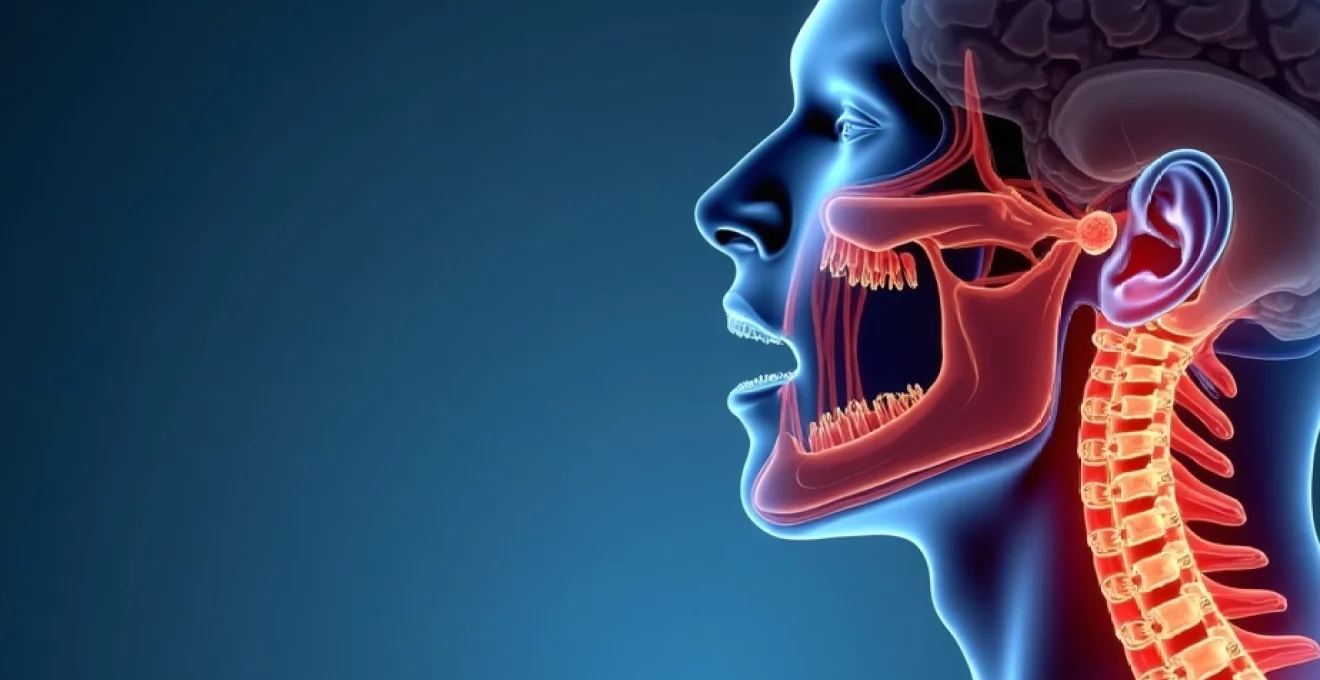
The seemingly simple act of yawning can transform into an unexpectedly painful experience when neck discomfort strikes. This phenomenon affects millions of individuals worldwide, ranging from occasional mild stiffness to debilitating cervical pain that significantly impacts daily activities. Understanding the complex interplay between yawning mechanics and cervical spine anatomy provides crucial insights into why this common reflex can trigger such intense discomfort. The relationship between mandibular depression during yawning and subsequent neck pain involves intricate muscular, neurological, and structural components that warrant detailed examination for effective treatment approaches.
Anatomical mechanisms behind Yawning-Induced neck pain
The physiological process of yawning involves a complex coordination of multiple anatomical structures, creating a cascade of mechanical changes throughout the cervical region. When you yawn, the mandible drops significantly, creating tension patterns that extend far beyond the oral cavity into the neck and shoulder girdle.
Temporomandibular joint dysfunction and cervical spine interaction
The temporomandibular joint (TMJ) maintains intimate connections with cervical spine mechanics through shared muscular attachments and neural pathways. During excessive mandibular opening, such as occurs during prolonged or forceful yawning, the TMJ experiences increased loading forces that can propagate tension into the cervical musculature. This biomechanical coupling explains why individuals with existing TMJ dysfunction often experience heightened neck pain during yawning episodes.
Research indicates that approximately 60% of TMJ disorder patients report concurrent cervical spine symptoms, highlighting the interconnected nature of these anatomical regions. The trigeminal-cervical nucleus complex serves as a neurological bridge, facilitating pain transmission between jaw and neck structures. When TMJ inflammation occurs, this shared neural pathway can amplify pain perception throughout the cervical region, particularly during activities that stress both systems simultaneously.
Sternocleidomastoid muscle strain during mandibular depression
The sternocleidomastoid muscle, spanning from the mastoid process to the sternum and clavicle, experiences significant lengthening and tension during deep yawning. This bilateral muscle group plays a crucial role in head positioning and cervical stability, making it particularly vulnerable to strain during extreme mandibular depression. When you yawn forcefully, the sternocleidomastoid must accommodate increased cervical extension while maintaining head control, creating a biomechanical challenge that can result in muscle overload.
Clinical observations reveal that sternocleidomastoid trigger points frequently develop following repeated episodes of yawning-induced strain. These myofascial trigger points can refer pain patterns extending from the mastoid region down to the clavicular attachments, creating the characteristic neck pain experienced during yawning. Effective treatment often requires addressing these specific trigger point patterns rather than general neck pain approaches.
Suboccipital triangle compression and neural impingement
The suboccipital triangle, formed by the rectus capitis posterior major and the superior and inferior oblique muscles, houses critical neurovascular structures including the vertebral artery and suboccipital nerve. During yawning, the extreme cervical extension can compress these structures, leading to pain referral patterns and potential neurological symptoms. This anatomical region is particularly sensitive to position changes, making it a common source of yawning-related discomfort.
Greater occipital nerve irritation often occurs when suboccipital muscle tension increases during yawning episodes. This nerve, emerging between the atlas and axis, can become entrapped within tight muscular tissue, producing sharp, shooting pains that radiate from the suboccipital region into the posterior neck and sometimes extending toward the temporal region. Understanding this neural pathway helps explain why some individuals experience headache-like symptoms accompanying their neck pain during yawning.
Levator scapulae trigger point activation patterns
The levator scapulae muscle, connecting the cervical vertebrae to the medial border of the scapula, frequently develops trigger points that become activated during yawning-induced cervical movements. This muscle’s unique anatomical position makes it susceptible to overload when the neck extends and the shoulders elevate simultaneously, as commonly occurs during vigorous yawning. The characteristic pain pattern from levator scapulae trigger points includes sharp, localised discomfort at the superior medial scapular border with referral into the posterior and lateral neck regions.
Studies demonstrate that levator scapulae dysfunction affects approximately 30% of individuals with chronic neck pain, with yawning frequently cited as an aggravating factor. The muscle’s dual role in both scapular elevation and cervical side-bending creates complex loading patterns during yawning that can overwhelm its capacity, particularly in individuals with existing postural dysfunction or muscle imbalances.
Pathophysiological conditions causing cervical pain during yawning
Understanding the underlying pathophysiology behind yawning-induced neck pain requires examining specific conditions that predispose individuals to this phenomenon. These conditions often interact synergistically, creating complex clinical presentations that demand comprehensive assessment approaches.
Cervical radiculopathy and C1-C2 atlantoaxial joint dysfunction
Cervical radiculopathy, particularly affecting the upper cervical segments, can significantly increase sensitivity to yawning-induced pain. The atlantoaxial joint complex, responsible for approximately 50% of cervical rotation, becomes particularly vulnerable during the extreme positioning required for deep yawning. When C1-C2 joint dysfunction exists, the normal biomechanical patterns become disrupted, leading to compensatory stress on surrounding structures.
The proximity of cervical nerve roots to the atlantoaxial joint means that any inflammatory process or mechanical dysfunction can directly impact neural tissue. During yawning, the increased cervical extension can narrow intervertebral foramina, potentially compressing already irritated nerve roots. This compression mechanism explains why individuals with existing radiculopathy often experience sharp, electric-like pain sensations that radiate into the upper extremities during yawning episodes.
Myofascial pain syndrome in upper trapezius and scalene muscles
Myofascial pain syndrome affecting the upper trapezius and scalene muscle groups creates a particularly challenging scenario for yawning-related neck pain. The upper trapezius, with its extensive attachments from the occiput to the lateral clavicle, experiences significant tension changes during mandibular depression. When myofascial trigger points exist within this muscle, the mechanical stress of yawning can activate these points, producing intense referred pain patterns.
The scalene muscles, responsible for first rib elevation and cervical lateral flexion, often develop trigger points in individuals with chronic neck dysfunction. These muscles’ intimate relationship with the brachial plexus means that scalene trigger point activation during yawning can produce not only local neck pain but also numbness and tingling sensations in the upper extremities. Research indicates that approximately 40% of individuals with myofascial pain syndrome report yawning as a significant aggravating factor for their symptoms.
Cervical disc herniation at C5-C6 and C6-C7 levels
Cervical disc herniation, most commonly occurring at the C5-C6 and C6-C7 levels, creates mechanical and inflammatory conditions that significantly increase yawning-related pain. The biomechanical stress placed on these motion segments during extreme cervical extension can exacerbate existing disc pathology, leading to increased pain and potential neurological symptoms. The posterior annular fibres of cervical discs are particularly vulnerable to the extension forces generated during vigorous yawning.
Clinical studies demonstrate that individuals with cervical disc herniation often report a specific quality of pain during yawning, described as deep, aching discomfort that may be accompanied by upper extremity symptoms. The inflammatory cascade associated with disc herniation can sensitise surrounding neural structures, making them more responsive to mechanical provocations such as yawning-induced cervical movements. This sensitisation explains why some patients experience disproportionately severe pain relative to the seemingly minor mechanical stress of yawning.
Eagle syndrome and styloid process elongation impact
Eagle syndrome, characterised by elongation of the styloid process or calcification of the stylohyoid ligament, presents a unique mechanism for yawning-induced neck pain. The elongated styloid process can impinge upon surrounding structures during the extreme cervical positioning required for yawning, creating sharp, stabbing pain sensations that may radiate to the ear, throat, or lateral neck regions. This condition affects approximately 4% of the population, though many cases remain undiagnosed.
The styloid process’s proximity to critical neurovascular structures, including the carotid artery and glossopharyngeal nerve, means that elongation can create complex symptom patterns. During yawning, the mandibular depression and cervical extension can position these structures in direct contact with the elongated styloid process, producing the characteristic sharp, lancinating pain associated with Eagle syndrome.
Understanding this anatomical variant is crucial for clinicians evaluating patients with unexplained yawning-related neck pain that fails to respond to conventional treatments.
Differential diagnosis through clinical assessment methods
Accurate diagnosis of yawning-induced neck pain requires systematic clinical assessment using validated examination techniques. The complexity of potential underlying conditions demands a comprehensive approach that can differentiate between various pathophysiological mechanisms while identifying specific tissue involvement patterns.
Spurling’s test and cervical compression manoeuvres
Spurling’s test remains a cornerstone examination technique for identifying cervical radiculopathy in patients presenting with yawning-related neck pain. This provocative manoeuvre involves passive cervical extension, lateral flexion, and axial compression, replicating the mechanical stress patterns that occur during yawning. A positive test, characterised by reproduction of the patient’s familiar pain with possible upper extremity radiation, suggests nerve root compression or irritation.
The sensitivity and specificity of Spurling’s test vary depending on the population studied, with reported sensitivity ranging from 40-60% and specificity approaching 85-95%. When evaluating yawning-induced neck pain, modifications of the traditional Spurling’s test can provide additional diagnostic information. Performing the manoeuvre with the patient’s mouth held open in a yawning position can help identify specific mechanical relationships between mandibular positioning and cervical spine symptom reproduction.
Active range of motion testing in flexion and extension
Active range of motion assessment provides crucial information about functional limitations and pain patterns associated with yawning-induced neck pain. Cervical flexion and extension testing should be performed systematically, noting any reproduction of the patient’s familiar symptoms during specific ranges of motion. The quality of movement, presence of protective muscle guarding, and identification of painful arcs can provide insights into underlying pathophysiological mechanisms.
Quantitative measurement of cervical range of motion using inclinometry or goniometry can establish baseline values and track treatment progress. Normal cervical extension ranges from 70-80 degrees, with significant individual variation based on age, gender, and constitutional factors. Patients with yawning-induced neck pain often demonstrate restricted extension range of motion with early onset of familiar symptoms, suggesting mechanical sensitivity within the posterior cervical structures.
Palpation techniques for identifying muscular trigger points
Systematic palpation of cervical and upper thoracic musculature forms an essential component of the diagnostic assessment for yawning-related neck pain. Trigger point identification requires specific palpation techniques that can distinguish between active and latent trigger points while identifying characteristic referral patterns. The examiner should assess muscle texture, tenderness, and trigger point characteristics using standardised pressure applications.
Key muscles requiring assessment include the suboccipital group, upper trapezius, levator scapulae, sternocleidomastoid, and scalene muscles. Each muscle group demonstrates specific trigger point patterns that can be correlated with the patient’s reported symptom distribution during yawning episodes. Documentation of trigger point locations, intensity ratings, and referral patterns provides valuable information for developing targeted treatment strategies.
Neurological screening using upper limb tension tests
Upper limb tension tests (ULTT) provide valuable information about neural tissue sensitivity and potential nerve involvement in yawning-induced neck pain. These tests apply controlled tension to the neural structures of the upper extremity while monitoring for symptom reproduction or neurological signs. ULTT 1, targeting the median nerve, and ULTT 3, focusing on the radial nerve, are particularly relevant for cervical spine-related complaints.
The interpretation of upper limb tension tests requires careful consideration of symptom location, intensity, and structural differentiation. Positive tests suggest increased neural mechanosensitivity, which can contribute to pain amplification during activities such as yawning that create mechanical stress on the cervical spine.
Integration of ULTT findings with other clinical assessment data helps establish the neurological component of yawning-induced neck pain and guides appropriate treatment selection.
Evidence-based treatment protocols for Yawning-Related neck pain
Contemporary treatment approaches for yawning-induced neck pain emphasise evidence-based interventions targeting the specific pathophysiological mechanisms identified through comprehensive assessment. The heterogeneity of underlying conditions requires individualised treatment protocols that address both acute symptom management and long-term prevention strategies. Systematic reviews consistently demonstrate superior outcomes when treatment protocols incorporate multiple therapeutic modalities rather than relying on single-intervention approaches.
Conservative management strategies form the foundation of evidence-based treatment, with research indicating that 80-90% of patients with mechanical neck pain respond favourably to non-invasive interventions. The integration of manual therapy techniques, therapeutic exercise, and patient education creates synergistic effects that address both tissue-specific pathology and functional movement patterns. Recent meta-analyses highlight the importance of early intervention, with studies showing significantly improved outcomes when treatment begins within the first few weeks of symptom onset.
Pharmacological interventions play a supportive role in managing acute episodes of yawning-related neck pain, though long-term medication use requires careful consideration of risk-benefit ratios. Non-steroidal anti-inflammatory drugs (NSAIDs) demonstrate moderate effectiveness for acute cervical pain, while muscle relaxants may provide short-term relief for patients with significant muscle spasm components. However, evidence supporting long-term pharmaceutical management remains limited, emphasising the importance of addressing underlying mechanical and functional contributors to the condition.
Emerging treatment modalities, including dry needling, instrument-assisted soft tissue mobilisation, and neuromuscular re-education techniques, show promising results in preliminary studies. These interventions target specific aspects of yawning-related neck pain pathophysiology, such as trigger point deactivation and proprioceptive enhancement. The integration of these newer techniques with established treatment approaches requires careful consideration of patient-specific factors and treatment goals to optimise outcomes while maintaining safety standards.
Manual therapy interventions and mobilisation techniques
Manual therapy techniques form a cornerstone of evidence-based treatment for yawning-induced neck pain, with systematic reviews demonstrating significant improvements in pain intensity, range of motion, and functional outcomes. The selection of appropriate manual therapy techniques depends on the specific clinical presentation, underlying pathophysiology, and patient tolerance factors. Joint mobilisation and manipulation techniques target mechanical restrictions within the cervical spine, while soft tissue techniques address muscular and fascial components of the pain syndrome.
Cervical spine mobilisation techniques, graded according to Maitland’s classification system, provide controlled mechanical input to hypomobile joint segments commonly associated with yawning-related pain. Grade III and IV mobilisations applied to the upper cervical segments (C0-C2) demonstrate particular effectiveness for patients with atlantoaxial dysfunction. The application of sustained pressure combined with oscillatory movements helps restore normal joint mechanics while reducing pain sensitivity through neurophysiological mechanisms including gate control theory activation.
Soft tissue mobilisation techniques target the myofascial components frequently involved in yawning-induced neck pain. Trigger point release techniques, applied to commonly affected muscles such as the upper trapezius, levator scapulae, and suboccipital group, demonstrate significant efficacy in reducing local tenderness and referred pain patterns. The application of sustained pressure (30-90 seconds) to identified trigger points, combined with passive stretching, creates optimal conditions for trigger point deactivation and tissue length restoration.
Recent research emphasises the importance of treatment individualisation based on clinical reasoning rather than protocol-driven approaches. The integration of patient response to initial manual therapy interventions guides progression and modification of treatment techniques. Patients demonstrating central sensitisation features may require gentler techniques with emphasis on graded exposure, while those with primary mechanical dysfunction can tolerate more aggressive interventions targeting specific tissue restrictions.
| Manual Therapy Technique | Target Structure | Evidence Level | Treatment Frequency |
|---|
Neural mobilisation techniques represent an emerging intervention for patients with yawning-induced neck pain demonstrating neurological components. These techniques apply controlled mechanical forces to neural structures, promoting improved nerve mobility and reducing mechanosensitivity. Upper limb neural mobilisation exercises, targeting the median, radial, and ulnar nerve pathways, can address neural tension contributing to cervical pain patterns during yawning episodes.
Preventative strategies and ergonomic modifications
Prevention of yawning-induced neck pain requires a comprehensive approach addressing both environmental factors and individual biomechanical predispositions. Workplace ergonomic modifications play a crucial role, particularly for individuals spending extended periods in forward head posture positions that predispose them to cervical dysfunction. Research indicates that ergonomic interventions can reduce neck pain incidence by up to 40% when implemented systematically across workplace settings.
Postural awareness training forms the foundation of preventative strategies, focusing on maintaining optimal cervical spine alignment during daily activities. The implementation of regular postural breaks, occurring every 30-45 minutes during prolonged sitting activities, significantly reduces accumulated tissue stress that contributes to yawning-related pain episodes. Simple postural correction exercises, performed throughout the day, help maintain optimal muscle length-tension relationships and prevent the development of dysfunctional movement patterns that increase vulnerability to yawning-induced pain.
Sleep positioning modifications represent another critical preventative strategy, with pillow selection and mattress firmness directly impacting cervical spine alignment during rest periods. The ideal pillow maintains the natural cervical lordosis while providing adequate support for the head and neck. Individuals who sleep in prone positions face increased risk of cervical dysfunction due to prolonged rotation and extension positioning required to maintain airway patency throughout the night.
Stress management techniques address the psychosocial components that can contribute to increased muscle tension and yawning frequency. Chronic stress leads to elevated muscle tension in the cervical and upper thoracic regions, creating predisposing conditions for yawning-induced pain episodes. Progressive muscle relaxation techniques, mindfulness meditation, and controlled breathing exercises help reduce baseline muscle tension while improving overall stress resilience.
The integration of ergonomic modifications with individualised exercise programs creates the most effective prevention strategy, addressing both environmental risk factors and personal biomechanical vulnerabilities that contribute to yawning-induced neck pain.
Nutritional considerations also play a supporting role in prevention strategies, with adequate hydration and anti-inflammatory dietary patterns supporting tissue health and recovery capacity. Dehydration can contribute to increased muscle tension and reduced tissue elasticity, while inflammatory dietary patterns may exacerbate underlying tissue sensitivity. The incorporation of omega-3 fatty acids, antioxidants, and adequate protein intake supports tissue repair mechanisms and reduces inflammatory mediator production.
Technology-assisted prevention strategies, including smartphone applications that provide postural reminders and exercise prompts, demonstrate promising results in improving adherence to preventative protocols. These digital tools help individuals maintain consistent implementation of preventative strategies while providing objective feedback about postural habits and movement patterns. The integration of wearable technology with biofeedback capabilities offers additional opportunities for real-time postural monitoring and correction.
Exercise prescription for prevention focuses on addressing common movement impairments and muscle imbalances that predispose individuals to yawning-induced neck pain. Deep neck flexor strengthening exercises target the longus colli and longus capitis muscles, which often demonstrate weakness in individuals with forward head posture and cervical dysfunction. These exercises help restore optimal cervical spine stabilisation patterns while reducing excessive loading on posterior cervical structures during yawning episodes.
Regular screening and early intervention protocols help identify individuals at risk for developing yawning-induced neck pain before symptoms become problematic. Workplace health screening programs that include cervical spine assessment and movement screening can identify early signs of dysfunction, allowing for timely intervention before chronic pain patterns develop. The implementation of these screening protocols, combined with targeted education about risk factors and prevention strategies, creates comprehensive prevention programs that significantly reduce the incidence and severity of yawning-related neck pain across populations.