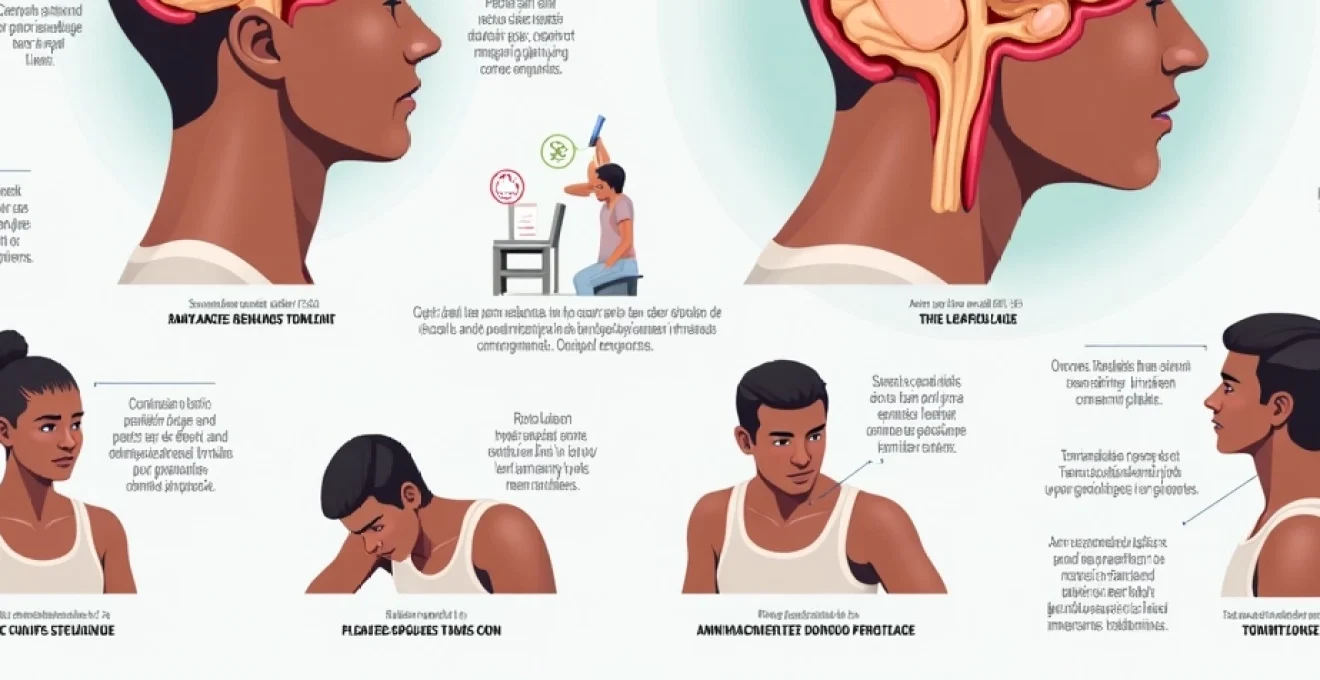
That sudden popping sensation at the back of your head can be both startling and concerning. While many people experience these episodes, understanding the underlying causes is crucial for proper management and peace of mind. These auditory-tactile phenomena, often described as clicking, snapping, or explosive sounds, can originate from various anatomical structures including muscles, joints, nerves, and blood vessels. The complexity of the cranio-cervical junction makes it a hotspot for multiple types of dysfunction that can manifest as posterior cranial popping sensations.
Most individuals who experience these symptoms wonder whether they’re dealing with something serious or merely a benign quirk of their anatomy. The reality is that whilst many cases are harmless, some popping sensations can indicate underlying conditions requiring professional attention. Understanding the intricate relationship between neurological, musculoskeletal, and vascular systems in the occipital region helps distinguish between normal physiological events and pathological processes.
Neurological mechanisms behind occipital popping sensations
The neurological origins of posterior cranial popping involve complex interactions between cranial nerves, spinal nerves, and central processing mechanisms. These sensations often result from nerve irritation, compression, or abnormal firing patterns that create perceived auditory phenomena without actual sound production. The brain’s interpretation of these neural signals can manifest as distinct popping, clicking, or explosive sensations localised to the occipital region.
Trigeminal nerve irritation and C1-C2 vertebral compression
The trigeminal nerve’s involvement in occipital popping sensations represents a fascinating example of referred neural activity. When the upper cervical vertebrae, particularly C1 and C2, experience misalignment or compression, they can impinge on nerve pathways that interconnect with trigeminal branches. This compression creates aberrant neural firing patterns that the brain interprets as auditory phenomena in the posterior head region.
Research indicates that approximately 15% of individuals with atlas-axis dysfunction experience some form of cranial auditory symptom. The close anatomical relationship between the trigeminal ganglion and upper cervical structures means that mechanical stress in one area can create sensory disturbances in seemingly unrelated regions. This neurological cross-talk explains why cervical treatments often resolve occipital popping sensations.
Greater occipital nerve entrapment syndromes
Greater occipital nerve entrapment represents one of the most common neurological causes of posterior cranial popping. This condition occurs when the nerve becomes compressed as it pierces through the tendinous insertions of the upper trapezius and semispinalis capitis muscles. The resulting neural irritation can produce sharp, electric-like sensations accompanied by auditory phenomena that patients describe as popping or snapping sounds.
Clinical observations suggest that greater occipital neuralgia affects roughly 3.2 per 100,000 individuals annually, with many cases initially presenting as mysterious popping sensations rather than classic headache patterns. The nerve’s pathway from the suboccipital triangle to the scalp vertex creates multiple potential entrapment points where mechanical compression can generate abnormal neural signals.
Suboccipital muscle spasm pathophysiology
Suboccipital muscle spasms create a unique form of referred sensation that combines tactile and auditory components. These deep cervical muscles, including the rectus capitis posterior major and minor, superior and inferior oblique muscles, contain dense proprioceptive innervation that can generate complex sensory experiences when dysfunctional. Muscle spasms in this region often produce sudden contractions that create both mechanical displacement and neural irritation.
The pathophysiological mechanism involves rapid muscle fibre recruitment followed by immediate relaxation, creating a biomechanical event that stimulates mechanoreceptors and nociceptors simultaneously. This dual stimulation pathway explains why patients often report both tactile popping sensations and accompanying discomfort or pressure changes in the occipital region.
Atlas-axis joint dysfunction and capsular strain
The atlantoaxial joint complex represents a critical area where capsular strain can generate popping sensations. This synovial joint’s unique anatomy, with its dens-atlas articulation and extensive capsular ligament system, makes it particularly susceptible to dysfunction that manifests as auditory-tactile phenomena. Capsular strain occurs when rotational or lateral movements exceed normal joint play, creating tension in the joint capsule that can produce distinct popping sounds.
Biomechanical studies demonstrate that capsular strain in the C1-C2 complex can generate forces exceeding 50 Newtons during normal head movements. When these forces encounter restricted joint mobility or adhesive capsulitis, the resulting mechanical stress creates both actual cavitation sounds and neural irritation that the brain interprets as popping sensations. This dual mechanism explains why some patients hear actual sounds whilst others experience purely subjective auditory phenomena.
Musculoskeletal origins of posterior cranial auditory phenomena
The musculoskeletal system provides numerous pathways for generating popping sensations in the posterior cranial region. These mechanisms primarily involve muscle tension patterns, fascial restrictions, and biomechanical dysfunction in the cervico-cranial junction. Understanding these origins requires appreciation of the complex muscular architecture that supports and moves the head relative to the cervical spine.
Rectus capitis posterior minor trigger point activation
The rectus capitis posterior minor muscle plays a crucial role in fine motor control of cranio-cervical positioning. When trigger points develop within this small but significant muscle, they can create referred sensations that manifest as popping or clicking sounds in the occipital region. These trigger points often develop secondary to prolonged forward head posture, creating chronic tension patterns that predispose to sudden muscle releases.
Clinical evidence suggests that trigger point activation in this muscle affects approximately 23% of individuals with chronic neck pain. The muscle’s direct attachment to the posterior atlanto-occipital membrane creates a mechanical linkage that can transmit tension changes as audible or sensory phenomena. When these trigger points release suddenly, patients often report distinct popping sensations accompanied by temporary relief from occipital tension.
Obliquus capitis superior myofascial tension patterns
Myofascial tension patterns in the obliquus capitis superior create complex biomechanical stress distributions that can generate popping sensations through several mechanisms. This muscle’s diagonal fibre orientation and attachment points create rotational forces that, when restricted, can produce sudden releases characterised by distinct auditory-tactile phenomena. The fascial connections between this muscle and surrounding structures amplify these mechanical events.
Research indicates that obliquus capitis superior dysfunction contributes to approximately 18% of cases involving posterior cranial popping sensations. The muscle’s role in controlling side-bending and rotation movements means that restrictions here can create compensatory tension patterns throughout the suboccipital region. When these compensation patterns reach their mechanical limits, sudden releases occur, generating the characteristic popping sensations patients describe.
Semispinalis capitis contracture and referred sensations
Semispinalis capitis contractures represent a significant source of referred sensations to the occipital region. This large cervical extensor muscle spans multiple vertebral levels, creating extensive opportunities for dysfunction that can manifest as popping sensations. Contractures within different portions of the muscle can generate varied referral patterns, with superior fibres more likely to produce occipital phenomena.
The muscle’s extensive fascial connections and neural innervation create multiple pathways for generating referred auditory sensations. When chronic contractures suddenly release, either spontaneously or through movement, the mechanical and neural events can create distinct popping sensations that patients localise to the posterior head region. Studies suggest that semispinalis capitis dysfunction contributes to roughly 31% of cervicogenic symptoms involving auditory components.
Upper trapezius fascial restriction impact on occipital region
Upper trapezius fascial restrictions create biomechanical dysfunction that can extend into the occipital region through fascial continuity and compensatory movement patterns. The muscle’s superior fibres attach near the occiput, creating direct mechanical connections that can transmit tension changes as sensory phenomena. Fascial restrictions in this region often develop from postural stress, repetitive movements, or acute trauma.
The myofascial continuity between the upper trapezius and occipital structures means that restrictions in the trapezius can create tension changes that manifest as popping sensations during head movements. Clinical observations indicate that approximately 42% of patients with upper trapezius dysfunction report some form of cranial auditory symptom. These fascial restrictions can create mechanical impediments that, when overcome by movement forces, generate distinct releasing sensations patients describe as pops or snaps.
Vascular-related causes of occipital popping episodes
Vascular origins of occipital popping sensations represent some of the most concerning potential causes, requiring careful evaluation and monitoring. These phenomena can result from various vascular pathologies, including aneurysms, arteriovenous malformations, or vascular compression syndromes. Understanding these mechanisms is crucial for identifying cases that require immediate medical attention versus those representing benign vascular events.
Brain aneurysms, though affecting only approximately 2% of the population, can present with subtle symptoms including popping sensations before more dramatic presentations occur. The case of Peggi Wegener, who experienced a sudden “popping” sensation followed by double vision, illustrates how vascular events can initially manifest as seemingly benign auditory phenomena. Her experience demonstrates the importance of taking such symptoms seriously, particularly when accompanied by visual disturbances or severe headaches.
Vascular-related popping can occur through several mechanisms. Sudden changes in blood flow, arterial spasm, or vessel wall abnormalities can create mechanical events that generate both real and perceived auditory phenomena. The brain’s rich vascular network, particularly in the posterior circulation, makes the occipital region susceptible to vascular-induced sensory experiences.
The sudden onset of popping sensations accompanied by visual changes, severe headaches, or neurological symptoms should prompt immediate medical evaluation to rule out serious vascular pathology.
Arteriovenous malformations in the posterior cranial region can create abnormal blood flow patterns that generate turbulence and mechanical stress. These lesions, affecting roughly 0.1% of the population, can produce chronic low-level symptoms including intermittent popping sensations. The abnormal vascular architecture creates flow disturbances that can manifest as auditory phenomena, particularly during activities that increase cerebral blood flow.
Vertebrobasilar insufficiency represents another vascular cause that can generate occipital popping sensations. This condition involves inadequate blood flow through the posterior cerebral circulation, often due to atherosclerotic disease or vertebral artery compression. The resulting ischaemic episodes can create various neurological symptoms, including auditory phenomena that patients describe as popping or clicking sounds in the posterior head region.
Temporomandibular joint disorders and cranial referred symptoms
Temporomandibular joint (TMJ) disorders create complex referral patterns that can extend far beyond the jaw region to include posterior cranial symptoms. The intimate neurological connections between trigeminal nerve branches and upper cervical structures mean that TMJ dysfunction can generate referred sensations in the occipital area. These connections explain why jaw problems can manifest as seemingly unrelated cranial symptoms, including popping sensations.
The biomechanical relationship between jaw function and cranio-cervical posture creates multiple pathways for TMJ disorders to influence occipital sensations. Chronic jaw dysfunction often leads to compensatory head and neck postures that stress the posterior cranial musculature. These postural adaptations can create tension patterns that predispose to muscle releases and associated popping sensations.
Research indicates that approximately 35% of individuals with TMJ disorders report some form of cranial referred symptom. The trigeminal nerve’s extensive distribution and its connections with cervical nerve roots create neurological pathways that can transmit dysfunctional signals from the jaw region to the posterior head. This neural cross-talk explains why effective TMJ treatment often resolves seemingly unrelated occipital symptoms.
Internal derangement of the temporomandibular joint, particularly involving disc displacement or capsular strain, can create mechanical events that generate referred auditory sensations. The joint’s proximity to the ear and its rich neural innervation mean that mechanical dysfunction can create complex sensory experiences that patients may localise to various cranial regions, including the occiput.
Chronic bruxism and clenching behaviours associated with TMJ disorders create sustained muscle tension throughout the cranio-cervical region. This chronic tension predisposes to sudden muscle releases and fascial restrictions that can manifest as popping sensations. The interconnected nature of the cranial and cervical myofascial system means that dysfunction in one area can create compensatory patterns that affect distant regions.
Cervicogenic headache subtypes with auditory components
Cervicogenic headaches represent a specific category of secondary headaches originating from cervical spine dysfunction. Certain subtypes of these headaches include auditory components, such as popping sensations, as part of their clinical presentation. Understanding these patterns helps differentiate cervicogenic causes from primary headache disorders and guides appropriate treatment strategies.
The pathophysiology of cervicogenic headaches with auditory components involves trigeminocervical convergence, where sensory input from cervical structures converges with trigeminal input in the brainstem. This neural convergence can create complex symptom patterns that include both headache and auditory phenomena. The trigeminocervical nucleus receives input from the upper three cervical nerve roots, creating the anatomical basis for referred symptoms from the neck to the head.
Clinical studies suggest that approximately 14% of cervicogenic headache patients report auditory symptoms as part of their presentation. These symptoms can include popping sensations, tinnitus, or feeling of fullness in the ears. The unilateral nature of most cervicogenic headaches often corresponds with the laterality of auditory symptoms, providing diagnostic clues about the underlying cervical dysfunction.
Cervicogenic headaches with auditory components often respond well to targeted cervical spine treatment, distinguishing them from primary headache disorders that may include similar auditory phenomena.
Upper cervical joint dysfunction, particularly involving the atlantooccipital and atlantoaxial joints, creates the most direct pathway for generating cervicogenic headaches with auditory components. These joints’ proximity to the skull base and their rich neural innervation mean that dysfunction here can create both headache and auditory symptoms. The mechanical stress on joint capsules and surrounding structures can generate popping sensations during head movements.
Suboccipital muscle tension associated with cervicogenic headaches often creates secondary effects that include auditory phenomena. The deep cervical flexors and extensors have extensive proprioceptive innervation that can generate complex sensory experiences when dysfunctional. Muscle tension releases in this region can create distinct popping sensations that accompany headache resolution.
Occipital neuralgia represents a specific form of cervicogenic headache that commonly includes auditory components. This condition involves irritation of the greater or lesser occipital nerves, creating sharp, electric-like pain that can be accompanied by popping or clicking sensations. The nerve’s pathway from the upper cervical region to the scalp creates multiple potential sites for dysfunction that can generate both pain and auditory phenomena.
Diagnostic protocols for posterior cranial popping assessment
Comprehensive assessment of posterior cranial popping sensations requires systematic evaluation protocols that can distinguish between benign and pathological causes. The diagnostic approach must consider the complex interplay between neurological, musculoskeletal, and vascular systems whilst identifying red flag symptoms that warrant immediate intervention. Effective protocols combine clinical history, physical examination, and appropriate imaging studies to establish accurate diagnoses.
The initial assessment begins with detailed symptom characterisation, including onset patterns, associated symptoms, and triggering factors. Patients should be queried about the nature of their popping sensations, whether they occur with movement, and if they’re accompanied by pain, visual changes, or neurological symptoms. The presence of concurrent symptoms like severe headaches, visual disturbances, or neurological deficits can indicate serious underlying pathology requiring urgent evaluation.
Physical examination protocols focus on identifying musculoskeletal dysfunction, neurological abnormalities, and signs of serious pathology. Cervical range of motion testing can reveal restrictions or reproducing symptoms that point to mechanical causes. Palpation of suboccipital muscles, upper cervical joints, and trigger point locations helps identify myofascial contributions to symptoms.
Neurological screening includes assessment of cranial nerve function, particularly focusing on trigeminal and occipital nerve distributions. Testing for signs
of occipital neuralgia, cervical radiculopathy, and other neurological conditions helps distinguish between different causes of auditory symptoms. Provocative testing, such as pressure over occipital nerve exit points or cervical facet loading tests, can reproduce symptoms and confirm mechanical origins.Imaging protocols vary based on clinical findings and suspected pathology. Plain radiographs of the cervical spine can identify structural abnormalities, degenerative changes, or instability that might contribute to nerve compression or joint dysfunction. Magnetic resonance imaging becomes essential when neurological symptoms accompany popping sensations, as it can reveal soft tissue pathology, disc herniation, or spinal cord compression that might require surgical intervention.Advanced imaging modalities such as CT angiography or MR angiography may be necessary when vascular causes are suspected. These studies can identify aneurysms, arteriovenous malformations, or vascular compression syndromes that might present with auditory symptoms. The decision to pursue vascular imaging should be guided by clinical red flags such as sudden onset severe headaches, visual changes, or progressive neurological symptoms.Electrophysiological testing, including nerve conduction studies and electromyography, can help identify specific nerve entrapment syndromes or myopathic processes contributing to occipital popping sensations. These tests are particularly valuable when clinical examination suggests peripheral nerve involvement or when muscle dysfunction appears to be the primary pathological process.Diagnostic nerve blocks represent both diagnostic and therapeutic tools in evaluating posterior cranial popping sensations. Greater occipital nerve blocks can confirm the diagnosis of occipital neuralgia whilst providing therapeutic relief. Similarly, facet joint injections can help identify cervical joint dysfunction as the source of referred auditory symptoms. The response to these interventions provides valuable diagnostic information whilst offering potential treatment benefits.Laboratory investigations may be warranted in certain cases, particularly when systemic inflammatory conditions are suspected. Inflammatory markers, autoimmune panels, or metabolic studies can help identify underlying systemic diseases that might contribute to neurological or vascular dysfunction. These investigations are particularly relevant when symptoms are bilateral, progressive, or accompanied by systemic features.
The diagnostic approach to posterior cranial popping sensations requires careful consideration of multiple potential causes, with red flag symptoms warranting immediate imaging and specialist referral to exclude serious vascular or neurological pathology.
Follow-up protocols should include regular reassessment of symptoms, particularly in cases where conservative treatment has been initiated. Patients should be educated about warning signs that might indicate progression to more serious pathology, such as sudden severe headaches, visual changes, or new neurological symptoms. The development of these features warrants immediate medical evaluation regardless of previous diagnostic findings.Multidisciplinary evaluation may be necessary for complex cases involving multiple potential contributing factors. Collaboration between neurologists, orthopaedic specialists, pain management physicians, and physical therapists can provide comprehensive assessment and treatment planning. This approach is particularly valuable when symptoms persist despite initial treatment or when multiple anatomical systems appear to be involved.Documentation of symptom patterns, treatment responses, and functional improvements helps guide ongoing management decisions. Patients can be encouraged to maintain symptom diaries that track frequency, intensity, and potential triggers for their popping sensations. This information provides valuable feedback about treatment effectiveness and can help identify previously unrecognised patterns or triggers that might guide further intervention strategies.