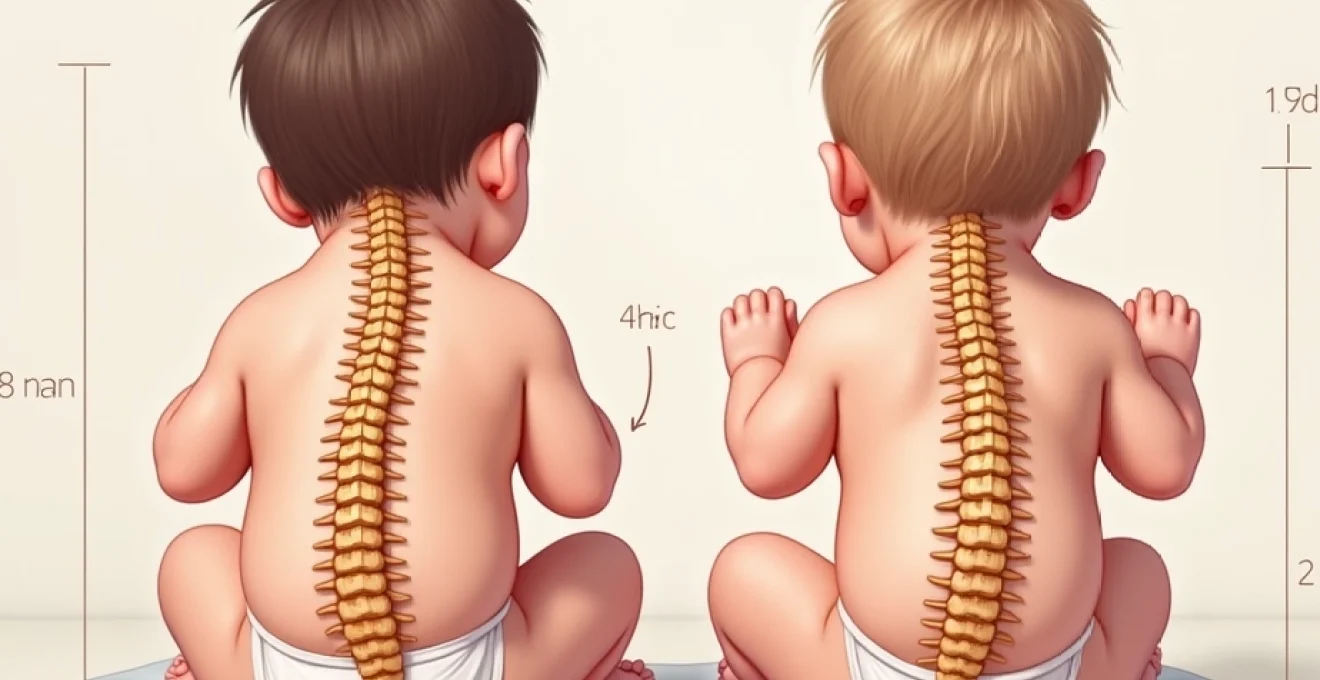
Tethered spinal cord syndrome in infants represents one of the most challenging neurological conditions to diagnose early, yet early recognition is crucial for preventing permanent neurological damage. This condition occurs when the spinal cord becomes abnormally attached to surrounding tissues, restricting its normal movement within the spinal canal. As infants grow rapidly during their first months of life, a tethered cord can stretch like a rubber band, potentially causing irreversible damage to delicate neural structures. The symptoms often manifest subtly at birth, making comprehensive clinical assessment essential for healthcare providers caring for newborns and young infants.
Understanding the diverse presentation of tethered cord syndrome requires recognising that approximately 1 in 2 children with myelomeningocele will develop this condition, whilst others may present with occult spinal dysraphism that becomes apparent only through careful examination. The condition affects both motor and sensory functions, often presenting with a constellation of signs that may initially appear unrelated but collectively point towards spinal cord tethering.
Early neurological manifestations of tethered cord syndrome in neonates
Neurological signs in infants with tethered spinal cord often present as subtle deviations from normal developmental patterns. These manifestations can be particularly challenging to identify in neonates, as the immature nervous system may compensate initially for the underlying pathology. Healthcare providers must maintain heightened awareness for asymmetrical neurological presentations that may indicate cord tethering.
Diminished lower extremity reflexes and hypotonia patterns
One of the earliest indicators of tethered cord syndrome involves alterations in lower extremity reflexes and muscle tone. Infants may present with diminished or absent ankle reflexes , which can be particularly evident during routine neurological examinations. The hypotonia typically affects the lower limbs more than the upper extremities, creating an asymmetrical pattern that experienced clinicians can recognise. This selective weakness often becomes more apparent as infants attempt to bear weight or demonstrate age-appropriate motor milestones.
The hypotonic presentation may manifest as decreased resistance to passive movement, reduced spontaneous leg movements, or difficulty maintaining positions that require lower limb strength. Parents might notice that their infant seems less active with their legs compared to their arms, or that one leg appears weaker than the other. These subtle differences in muscle tone can progress if the underlying tethering remains untreated.
Asymmetrical motor development in hip flexors and extensors
Motor asymmetries affecting hip flexor and extensor muscle groups represent another significant early manifestation of tethered cord syndrome. Infants may demonstrate preferential positioning of one hip in flexion whilst the contralateral hip remains in a more neutral or extended position. This asymmetry can become particularly noticeable during diaper changes or when the infant is placed in prone position for tummy time activities.
The weakness typically follows the distribution of affected nerve roots, with some infants showing greater involvement of hip flexors whilst others demonstrate more prominent extensor weakness. This selective muscle group involvement can lead to compensatory movement patterns that may initially mask the underlying neurological deficit but become more apparent as motor demands increase with development.
Abnormal primitive reflex integration and persistence
Primitive reflexes in infants with tethered cord syndrome may show abnormal patterns of integration or persistence beyond the typical timeframe. The asymmetrical tonic neck reflex, stepping reflex, and placing responses may demonstrate side-to-side differences that correlate with the level and extent of cord tethering. These reflexes serve as important indicators of spinal cord function and can provide valuable diagnostic information when assessed systematically.
Particularly significant is the persistence of primitive reflexes beyond their normal integration period, which may indicate compromised descending motor pathways. The Galant reflex, which involves lateral flexion of the trunk when the paravertebral area is stimulated, may show asymmetrical responses or prolonged persistence in affected infants. Healthcare providers should document any asymmetries in reflex responses, as these can provide important clues about the location and severity of cord tethering.
Delayed moro reflex response and amplitude variations
The Moro reflex, whilst primarily mediated by brainstem mechanisms, can show subtle alterations in infants with tethered cord syndrome. These changes typically manifest as asymmetrical arm or leg responses during the startle reaction, rather than complete absence of the reflex. The lower extremity component of the Moro response may be diminished or delayed on the affected side, particularly if the tethering involves neural elements that contribute to lower limb innervation.
Amplitude variations in the Moro reflex can be particularly subtle but may represent early indicators of neurological compromise. Some infants may demonstrate a normal upper extremity response whilst showing reduced or absent lower extremity extension and abduction. This pattern can be especially relevant when considered alongside other neurological findings and cutaneous markers of spinal dysraphism.
Cutaneous and dermatological indicators of occult spinal dysraphism
The skin overlying the lumbosacral region often provides the most obvious clues to underlying spinal cord tethering in infants. These cutaneous markers, collectively referred to as signs of occult spinal dysraphism, can be present in up to 90% of cases and serve as important screening tools during routine physical examinations. Recognition of these dermatological indicators allows for early referral and diagnostic imaging before neurological symptoms become apparent.
Sacral dimples and their clinical significance in diagnosis
Sacral dimples represent one of the most commonly encountered cutaneous markers of potential spinal dysraphism. However, not all sacral dimples carry equal clinical significance. Simple dimples located within 2.5 centimetres of the anal verge and measuring less than 0.5 centimetres in diameter typically pose minimal risk. Conversely, dimples located higher on the sacrum, those that are large or deep, or dimples from which the base cannot be visualised require immediate attention and imaging evaluation.
The clinical assessment of sacral dimples should include evaluation of their depth, location relative to anatomical landmarks, and associated features such as surrounding pigmentation or hair growth. Deep dimples that cannot be fully visualised may represent dermal sinus tracts that communicate with the spinal canal, potentially providing a pathway for infection or indicating underlying neural tube defects that could be associated with cord tethering.
Lipomatous masses over the lumbosacral junction
Subcutaneous lipomas or fatty masses overlying the lumbosacral region represent significant markers of potential spinal cord tethering. These masses may appear as soft, mobile lumps beneath the skin or as areas of localised fullness that become more apparent as the infant grows. Unlike typical lipomas found elsewhere on the body, lumbosacral lipomas often have connections to deeper structures and may be associated with lipomyelomeningocele or other forms of occult spinal dysraphism.
The presence of lipomatous masses should prompt immediate neurological evaluation and imaging studies. These lesions can vary significantly in size and may not always be immediately apparent at birth. Some may become more prominent as the infant gains weight and subcutaneous fat deposits increase. Parents should be educated about monitoring for any changes in size, consistency, or overlying skin appearance of these masses.
Hypertrichosis patches and hair tuft formations
Localised areas of excessive hair growth, known as hypertrichosis or hair tufts, over the lumbosacral region represent another important cutaneous marker of spinal dysraphism. These hair patches typically appear as areas of coarser, darker, or more abundant hair growth compared to the surrounding skin. The hair may grow in unusual directions or patterns, creating distinctive tufts that are easily recognisable during physical examination.
Hair tufts associated with spinal dysraphism often persist throughout infancy and childhood, unlike the fine lanugo hair that normally covers newborns and gradually disappears. The presence of significant hypertrichosis in the lumbosacral region warrants investigation with spinal imaging, as these markers frequently correlate with underlying neural tube defects and potential cord tethering. Healthcare providers should document the size, location, and characteristics of any unusual hair growth patterns.
Capillary haemangiomas and vascular malformations
Vascular lesions overlying the spine, including capillary haemangiomas, port-wine stains, or other vascular malformations, can indicate underlying spinal dysraphism. These lesions may appear as flat, red or purple discolorations of the skin or as raised, strawberry-like growths. Midline vascular lesions are of particular concern and should prompt immediate evaluation for associated spinal abnormalities.
The relationship between cutaneous vascular malformations and spinal cord tethering reflects the common embryological origin of skin and neural structures during early development. Disruptions in normal developmental processes can affect both the integumentary system and underlying neural structures simultaneously. Therefore, any significant vascular lesion overlying the spine should be considered a potential marker for occult spinal dysraphism until proven otherwise through appropriate imaging studies.
Dermal sinus tract openings and associated risks
Dermal sinus tracts represent abnormal epithelial-lined channels that extend from the skin surface toward the spinal canal. These tracts may appear as small pits, openings, or dimples with visible depth, often accompanied by surrounding pigmentation or hair growth. The presence of a dermal sinus tract carries significant clinical implications, as these structures can provide a direct pathway for bacterial contamination of the central nervous system.
The risk of ascending infection through dermal sinus tracts makes their identification and prompt management crucial. These tracts may be associated with various forms of spinal dysraphism, including cord tethering, and often require surgical intervention even in the absence of neurological symptoms. Parents should be educated about the importance of keeping the area clean and dry whilst awaiting specialist evaluation and definitive treatment.
Orthopaedic deformities associated with spinal cord tethering
Musculoskeletal abnormalities in infants with tethered cord syndrome often represent the earliest visible manifestations of underlying neurological compromise. These deformities result from imbalanced muscle forces, altered innervation patterns, and disrupted normal developmental processes. Early recognition of these orthopaedic signs can facilitate prompt diagnosis and intervention before progressive neurological deterioration occurs.
Congenital talipes equinovarus and unilateral presentations
Clubfoot deformity, particularly when presenting unilaterally or in association with other neurological signs, may indicate underlying spinal cord tethering. Unilateral talipes equinovarus occurs in approximately 15-20% of infants with occult spinal dysraphism, compared to bilateral presentation in idiopathic cases. The foot deformity associated with tethered cord syndrome often demonstrates resistance to conservative treatment methods and may show atypical patterns of correction.
The neurological basis for clubfoot in tethered cord syndrome involves imbalanced muscle forces resulting from selective nerve root involvement. This creates a characteristic pattern of muscle weakness and contracture that differs from idiopathic clubfoot. Healthcare providers should maintain heightened suspicion for underlying neurological causes when encountering unilateral clubfoot, particularly when associated with other signs of spinal dysraphism or neurological compromise.
Hip dysplasia development in asymmetrical cases
Hip dysplasia in infants with tethered cord syndrome typically presents with asymmetrical involvement and may progress despite appropriate treatment for developmental dysplasia of the hip. The underlying neurological compromise affects the normal muscle forces that contribute to proper hip development, leading to persistent instability or progressive subluxation. This neurological hip dysplasia often requires different management approaches compared to typical developmental hip dysplasia.
The muscle imbalance associated with cord tethering can affect hip flexors, extensors, abductors, and adductors differentially, creating complex patterns of deformity. Some infants may demonstrate hip flexion contractures, whilst others show weakness in hip stabilising muscles. These patterns of muscle involvement provide important clues about the level and extent of neurological compromise and can help guide both diagnostic imaging and treatment planning.
Lower limb length discrepancies and growth patterns
Asymmetrical lower limb growth represents another important orthopaedic manifestation of tethered cord syndrome. The neurological compromise can affect normal bone and muscle development, leading to measurable differences in limb length or circumference. These discrepancies may become more apparent as the infant grows and begins to bear weight, but subtle differences may be detectable even in early infancy through careful measurement and comparison.
The growth disturbances associated with cord tethering typically follow the distribution of affected nerve roots, with some infants showing primarily distal involvement whilst others demonstrate more proximal growth problems. Serial measurements of limb segments can help document progression and guide treatment decisions. Parents should be educated about monitoring for asymmetrical growth patterns and reporting any concerns to healthcare providers promptly.
Scoliotic curve progression in early infancy
Infantile scoliosis associated with tethered cord syndrome often demonstrates atypical patterns of progression and may be resistant to conventional treatment approaches. The spinal curvature typically results from asymmetrical muscle forces and altered spinal growth patterns secondary to neurological compromise. Early-onset scoliosis affecting infants under two years of age requires immediate evaluation for underlying neurological causes, particularly when associated with other signs of spinal dysraphism.
The scoliotic curves in tethered cord syndrome may show rapid progression during periods of growth and can be associated with kyphotic or lordotic components that create complex three-dimensional deformities. These curves often require surgical intervention at younger ages compared to idiopathic scoliosis, and addressing the underlying cord tethering is typically necessary for optimal outcomes. Regular monitoring with clinical examination and radiographic imaging is essential for tracking curve progression and planning appropriate interventions.
Urogenital dysfunction patterns in tethered cord infants
Bladder and bowel dysfunction in infants with tethered cord syndrome often presents as subtle alterations in normal elimination patterns that may be initially attributed to other causes. The neurological control of urogenital function involves complex pathways that can be disrupted by cord tethering, leading to various patterns of dysfunction that may not become apparent until toilet training ages. However, careful observation of elimination patterns in infancy can provide early clues to underlying neurological compromise.
Neurogenic bladder dysfunction in tethered cord syndrome typically results from involvement of sacral nerve roots that innervate the detrusor muscle, external sphincter, and pelvic floor muscles. This can create patterns of incomplete bladder emptying, detrusor-sphincter dyssynergia, or reduced bladder sensation that may manifest as recurrent urinary tract infections, abnormal voiding patterns, or persistent dampness. Approximately 60-70% of children with tethered cord syndrome will eventually demonstrate some form of urological dysfunction, making early screening and monitoring essential.
The bowel dysfunction associated with cord tethering often involves both motor and sensory components, affecting normal defecation patterns and continence mechanisms. Infants may demonstrate constipation, reduced anal tone, or abnormal patterns of stool elimination that become more apparent as they mature. The combination of urological and bowel dysfunction, particularly when associated with other neurological signs, should prompt immediate evaluation for spinal cord tethering.
Parents should be educated about monitoring elimination patterns and reporting concerns such as recurrent urinary tract infections, unusual voiding patterns, persistent constipation, or any changes in genital sensation or function. Early recognition and management of neurogenic bladder and bowel dysfunction can prevent serious complications such as renal damage, recurrent infections, and progressive deterioration of urological function.
The key to successful management lies in early recognition before irreversible neurological damage occurs, making awareness of subtle early signs crucial for healthcare providers and parents alike.
Advanced imaging findings on MRI and ultrasound diagnostics
Modern imaging techniques provide essential tools for diagnosing tethered cord syndrome in infants, with different modalities offering unique advantages depending on the patient’s age and clinical presentation. Spinal ultrasound represents the preferred initial imaging method for infants under three months of age, taking advantage of incomplete ossification of the posterior spinal elements that allows excellent visualisation of neural structures. This non-invasive technique can demonstrate cord position, movement, and associated abnormalities without requiring sedation or radiation exposure.
Ultrasound findings suggestive of tethered cord include a
low-lying conus medullaris below the L2-L3 level, thickened or fatty filum terminale, and restricted cord movement during real-time imaging. The ability to observe cord movement dynamically during hip flexion and extension provides valuable functional information about potential tethering that static images cannot reveal.
Magnetic resonance imaging becomes the gold standard for detailed anatomical assessment in infants over three months of age and when ultrasound findings are inconclusive. MRI provides superior soft tissue contrast and multiplanar imaging capabilities that allow comprehensive evaluation of spinal anatomy, cord position, and associated abnormalities. T1-weighted sagittal images excellently demonstrate the conus medullaris position and filum terminale characteristics, whilst T2-weighted sequences can reveal associated syrinx formation or cord signal abnormalities.
Advanced MRI techniques, including diffusion tensor imaging and cine MRI, are increasingly being utilised to assess spinal cord function and movement patterns. These sophisticated imaging methods can demonstrate subtle functional abnormalities even when anatomical findings appear borderline normal. The combination of anatomical and functional imaging information provides clinicians with comprehensive data for treatment planning and prognostic assessment.
Interpretation of imaging findings requires careful correlation with clinical symptoms and physical examination findings. Some infants may demonstrate anatomical features suggestive of tethering without corresponding neurological symptoms, whilst others may present with clinical signs despite relatively subtle imaging abnormalities. This emphasises the importance of comprehensive clinical assessment rather than relying solely on imaging findings for diagnostic and treatment decisions.
Differential diagnosis considerations and mimicking conditions
Establishing an accurate diagnosis of tethered cord syndrome requires careful consideration of various conditions that can present with similar clinical manifestations. The complexity of symptoms and their overlap with other neurological and developmental conditions necessitates a systematic approach to differential diagnosis. Healthcare providers must maintain awareness of conditions that can mimic tethered cord syndrome to avoid misdiagnosis and inappropriate treatment interventions.
Cerebral palsy represents one of the most common conditions that can be confused with tethered cord syndrome, particularly when spasticity affects the lower extremities predominantly. However, cerebral palsy typically demonstrates upper motor neuron signs such as increased reflexes, clonus, and spasticity, contrasting with the lower motor neuron findings often seen in tethered cord syndrome. The presence of primitive reflexes and developmental delays in cerebral palsy also differs from the more selective neurological deficits typically associated with cord tethering.
Spinal muscular atrophy and other anterior horn cell diseases can present with hypotonia and weakness that may initially resemble tethered cord syndrome. However, these conditions typically demonstrate symmetrical involvement, absent reflexes throughout, and progressive weakness that follows specific patterns. Genetic testing and electromyography can help differentiate these conditions from tethered cord syndrome, particularly when clinical presentation remains unclear.
Peripheral neuropathies, whether hereditary or acquired, can occasionally present with symptoms that overlap with tethered cord syndrome. Conditions such as Charcot-Marie-Tooth disease may demonstrate distal weakness, sensory changes, and foot deformities that could be attributed to spinal cord tethering. Nerve conduction studies and careful family history assessment can help distinguish these peripheral conditions from central nervous system pathology.
Metabolic disorders affecting the nervous system can sometimes present with progressive weakness, developmental delays, or other neurological symptoms that might suggest tethered cord syndrome. Conditions such as mitochondrial disorders, glycogen storage diseases, or other inborn errors of metabolism may require specific biochemical testing for accurate diagnosis. The systemic nature of metabolic disorders and associated features such as organomegaly or characteristic facial features can provide important diagnostic clues.
Spinal cord tumours, whilst rare in infants, can occasionally present with symptoms that mimic tethered cord syndrome. Both conditions can cause progressive weakness, sensory changes, and bowel or bladder dysfunction. However, spinal tumours often demonstrate more rapid symptom progression and may be associated with pain patterns that differ from typical tethered cord presentations. Advanced imaging with gadolinium enhancement can help differentiate between these conditions.
Hip dysplasia and other orthopaedic conditions can sometimes be mistaken for neurological causes of lower extremity abnormalities. Developmental dysplasia of the hip, congenital muscular torticollis, or other musculoskeletal conditions may present with asymmetrical movement patterns or positioning that could be attributed to neurological causes. Careful examination of reflexes, muscle tone, and sensation can help distinguish orthopaedic from neurological causes of motor abnormalities.
The diagnostic workup for suspected tethered cord syndrome should include comprehensive neurological assessment, appropriate imaging studies, and consideration of additional testing when clinical presentation suggests alternative diagnoses. Urodynamic studies may be particularly helpful in cases where neurogenic bladder dysfunction is suspected, as these tests can provide objective evidence of neurological involvement of bladder function that supports the diagnosis of tethered cord syndrome.
Multidisciplinary evaluation involving paediatric neurologists, neurosurgeons, urologists, and orthopaedic specialists often provides the most comprehensive assessment for infants with suspected tethered cord syndrome. This collaborative approach ensures that all aspects of the complex presentation are adequately evaluated and that appropriate treatment decisions can be made based on complete clinical information. Early and accurate diagnosis remains crucial for optimising outcomes and preventing irreversible neurological complications in affected infants.