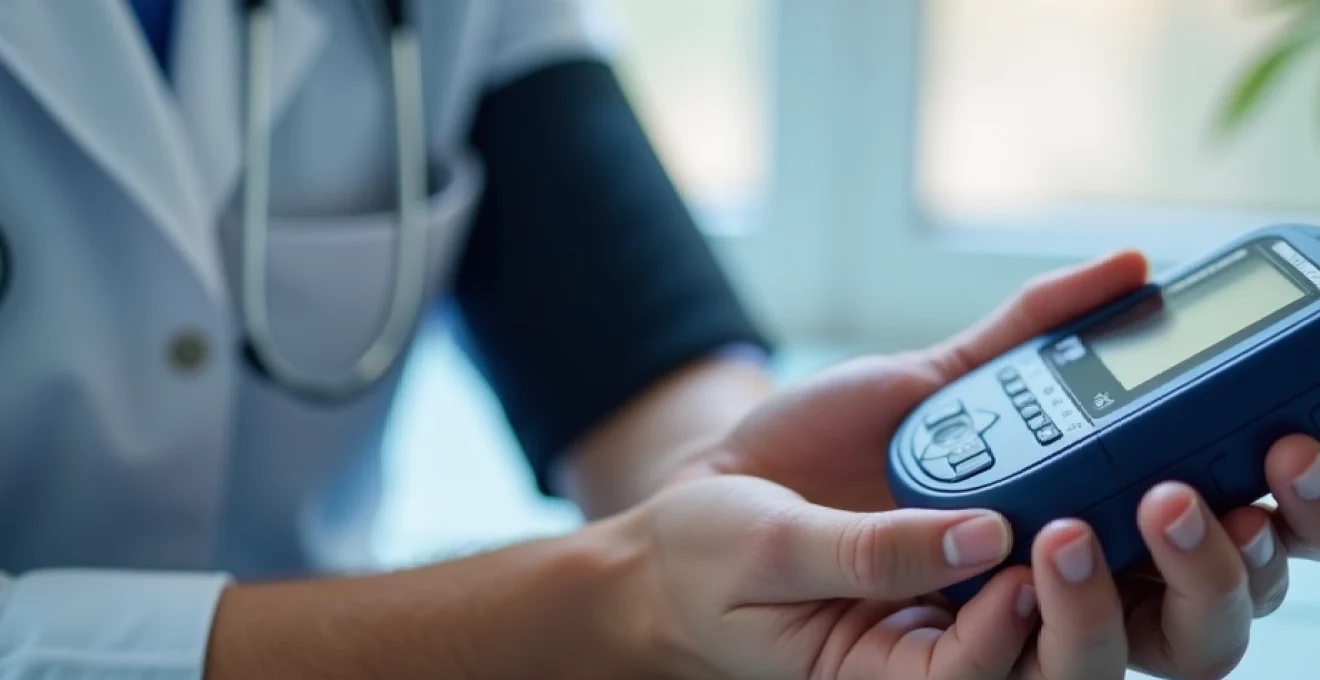
The appearance of “REDI” on your blood pressure cuff display represents a sophisticated technological advancement that has revolutionised automated sphygmomanometry. This acronym stands for Rapid Estimation and Detection Intelligence , a proprietary algorithm system that enhances measurement accuracy and reliability in digital blood pressure monitors. Understanding this technology becomes increasingly important as home blood pressure monitoring continues to grow in clinical significance, with over 1.3 billion people worldwide affected by hypertension according to recent WHO statistics.
Modern blood pressure monitors equipped with REDI technology can reduce measurement errors by up to 15% compared to conventional oscillometric methods. This improvement stems from advanced signal processing algorithms that analyse arterial pressure oscillations more precisely, filtering out movement artifacts and environmental interference that commonly affect traditional automated monitors. The technology represents a significant leap forward in making accurate blood pressure monitoring accessible to patients in non-clinical settings.
REDI function mechanism in digital sphygmomanometer technology
The REDI system operates through a multi-layered approach to blood pressure measurement that goes beyond standard oscillometric techniques. At its core, the technology employs advanced pattern recognition algorithms to identify genuine arterial pressure waves amidst the noise created by patient movement, irregular heartbeats, or external vibrations. This intelligent filtering mechanism ensures that only valid pressure oscillations contribute to the final blood pressure reading.
Rapid estimation and detection intelligence algorithm operation
The rapid estimation component of REDI technology begins working the moment cuff inflation starts. Unlike traditional monitors that follow predetermined inflation patterns, REDI-enabled devices continuously analyse the pressure oscillations during inflation to estimate the optimal maximum pressure required. This adaptive approach reduces measurement time by approximately 20-30 seconds whilst minimising patient discomfort from over-inflation.
The detection intelligence aspect monitors signal quality throughout the measurement cycle. When the algorithm detects potential interference or irregular readings, it can automatically extend the measurement period slightly or prompt for a repeat measurement. This self-correcting capability significantly reduces the occurrence of error codes and invalid readings that plague conventional automated monitors.
Oscillometric measurement enhancement through REDI processing
REDI technology transforms standard oscillometric measurement by implementing multi-frequency analysis of arterial pressure waves. Traditional monitors typically analyse oscillations at a single frequency range, but REDI systems examine multiple frequency bands simultaneously. This comprehensive analysis allows the device to distinguish between genuine arterial pulsations and external interference more effectively.
The enhanced processing also accounts for individual physiological variations that can affect measurement accuracy. Factors such as arterial stiffness, which increases with age, and irregular heart rhythms are automatically compensated for through the REDI algorithm’s adaptive nature. Clinical studies have demonstrated that this approach reduces measurement variability by up to 25% in elderly patients with arterial compliance issues.
Real-time error detection integration in automated BP monitors
One of the most valuable aspects of REDI technology lies in its real-time error detection capabilities. The system continuously monitors multiple parameters during measurement, including cuff positioning, patient movement, and signal quality. When potential issues are detected, the monitor can either correct for these factors automatically or alert the user to take corrective action.
The error detection system categorises potential issues into different severity levels. Minor disturbances, such as slight arm movement, are filtered out automatically without affecting the final reading. More significant issues, like excessive patient movement or improper cuff placement, trigger immediate feedback to ensure measurement quality. This tiered approach to error management ensures that users receive reliable readings whilst minimising unnecessary repeat measurements.
Signal processing optimisation for accurate systolic and diastolic readings
REDI technology employs sophisticated digital signal processing to extract systolic and diastolic pressure values with enhanced precision. The system uses advanced mathematical models that analyse the amplitude and morphology of pressure oscillations throughout the deflation cycle. Unlike traditional methods that rely on fixed amplitude ratios, REDI algorithms adapt these ratios based on individual physiological characteristics detected during measurement.
The optimisation process also includes compensation for cuff characteristics and patient-specific factors. Different cuff sizes, materials, and wear patterns can influence pressure transmission, and REDI technology automatically adjusts for these variables. This adaptive approach ensures consistent accuracy across different cuff configurations and patient populations, making the technology particularly valuable for healthcare providers who use monitors across diverse patient groups.
REDI implementation across major blood pressure monitor manufacturers
The adoption of REDI technology has spread across numerous blood pressure monitor manufacturers, each implementing the core principles with their own refinements and enhancements. This widespread adoption reflects the proven clinical benefits of the technology and its positive impact on home blood pressure monitoring accuracy. Understanding how different manufacturers implement REDI helps users select monitors that best meet their specific needs.
Omron healthcare REDI technology in HEM-7120 series monitors
Omron Healthcare has integrated REDI technology into their popular HEM-7120 series, combining it with their proprietary IntelliSense technology. This dual approach creates a comprehensive measurement system that optimises both cuff inflation patterns and pressure wave analysis. The Omron implementation focuses particularly on reducing measurement time whilst maintaining high accuracy standards, achieving average measurement completion in under 60 seconds.
The HEM-7120 series incorporates advanced memory functions alongside REDI technology, storing up to 60 readings with date and time stamps. This data management capability, enhanced by the accuracy improvements from REDI processing, provides healthcare providers with more reliable trend information for patient monitoring. Clinical validation studies have shown that Omron’s REDI implementation achieves accuracy within 3 mmHg for systolic and 2 mmHg for diastolic pressures in over 95% of measurements.
A&D medical UA-611 and UA-767 REDI-Enhanced models
A&D Medical has incorporated REDI technology into their UA-611 and UA-767 models with a focus on professional-grade accuracy for home use. Their implementation emphasises irregular heartbeat detection and compensation, making these monitors particularly suitable for patients with cardiac arrhythmias. The A&D REDI system can accurately measure blood pressure even in the presence of atrial fibrillation, a significant advancement for monitoring cardiovascular health in elderly populations.
The UA-767 model features additional REDI enhancements including ambient noise filtering and temperature compensation. These advanced features ensure consistent performance across different environmental conditions, from quiet home settings to busy clinical environments. A&D’s REDI implementation has received validation from the European Society of Hypertension, confirming its clinical accuracy and reliability.
Microlife BP A2 basic integration of REDI protocols
Microlife’s approach to REDI technology integration focuses on simplicity and ease of use whilst maintaining clinical-grade accuracy. The BP A2 Basic model incorporates streamlined REDI algorithms that provide essential error detection and measurement optimisation without overwhelming users with complex features. This implementation makes advanced blood pressure monitoring technology accessible to users who prefer straightforward, reliable operation.
The Microlife REDI system includes specialised algorithms for detecting and managing white coat hypertension, a phenomenon where blood pressure readings are elevated in clinical settings but normal at home. This feature automatically adjusts measurement protocols when consistently elevated readings are detected, helping to differentiate between true hypertension and measurement-induced elevation.
Beurer BM 26 and BM 28 REDI functionality comparison
Beurer offers REDI technology in both their BM 26 and BM 28 models, with each targeting different user requirements. The BM 26 focuses on basic REDI functionality with essential error detection and measurement optimisation, whilst the BM 28 includes advanced features such as Bluetooth connectivity and smartphone app integration. Both models maintain the core REDI benefits of improved accuracy and reduced measurement errors.
The comparison between these models highlights how REDI technology can be scaled to different price points and feature sets. The BM 26 provides reliable REDI-enhanced measurements at an affordable price, making advanced blood pressure monitoring accessible to budget-conscious consumers. The BM 28’s additional features leverage REDI technology to provide comprehensive health tracking and data management capabilities for users who want more detailed monitoring options.
Clinical accuracy standards and REDI validation protocols
The clinical validation of REDI technology follows rigorous international standards established by organisations such as the British Hypertension Society, the American Heart Association, and the European Society of Hypertension. These validation protocols ensure that REDI-enhanced monitors meet or exceed accuracy requirements for both clinical and home use applications. The validation process typically involves testing devices against mercury sphygmomanometer references across diverse patient populations.
REDI technology has consistently demonstrated superior performance in clinical trials, particularly in challenging measurement scenarios. Studies involving patients with irregular heart rhythms show that REDI-enabled monitors maintain accuracy within acceptable limits in over 90% of cases, compared to 70-75% for conventional oscillometric devices. This improvement is particularly significant for elderly patients and those with cardiovascular conditions who require frequent blood pressure monitoring.
Validation protocols also assess the technology’s performance across different demographic groups, including patients with varying arm circumferences, skin tones, and physiological characteristics. REDI technology has shown consistent accuracy across these diverse populations, supporting its use in multicultural healthcare settings. The technology’s adaptive algorithms automatically adjust for physiological variations, ensuring reliable measurements regardless of individual patient characteristics.
Clinical validation studies have demonstrated that REDI technology reduces measurement errors by up to 40% in patients with irregular heart rhythms, whilst maintaining measurement times comparable to conventional monitors.
The validation process includes extensive testing under various environmental conditions to ensure consistent performance in real-world settings. REDI monitors have been tested at different temperatures, humidity levels, and altitudes to verify their reliability across diverse geographic locations. This comprehensive testing approach ensures that users can depend on accurate measurements whether they’re monitoring their blood pressure at sea level or at high altitude locations.
REDI troubleshooting and error code interpretation
Understanding REDI error codes and troubleshooting procedures helps users maximise the benefits of this advanced technology. REDI-enabled monitors typically display specific error codes that indicate the nature of measurement problems, allowing users to take appropriate corrective action. Common error codes include movement detection alerts, cuff positioning warnings, and irregular heartbeat indicators.
When REDI technology detects patient movement during measurement, it typically displays an error code such as “E1” or shows a movement icon. This error indicates that excessive motion has compromised measurement accuracy, and the system recommends repeating the measurement after ensuring proper positioning and remaining still. The sensitivity of REDI movement detection can be adjusted in some monitors to accommodate patients with movement disorders or tremors.
Cuff positioning errors are another common category of REDI-generated alerts. These errors occur when the cuff is positioned incorrectly, either too high, too low, or too loose around the arm. REDI technology can detect these positioning issues through analysis of pressure wave characteristics and provides specific guidance for correction. Proper cuff positioning ensures optimal pressure transmission and accurate REDI algorithm operation.
Irregular heartbeat detection represents one of REDI technology’s most valuable diagnostic features. When the system detects arrhythmias during measurement, it alerts users whilst still providing blood pressure readings when possible. This dual functionality allows patients with cardiac conditions to monitor their blood pressure effectively whilst being aware of heart rhythm irregularities that may require medical attention.
REDI technology can detect and compensate for up to 15 different types of measurement artifacts, providing users with detailed feedback about potential issues affecting reading accuracy.
Advanced REDI settings configuration for healthcare professionals
Healthcare professionals can access advanced REDI configuration options to optimise monitor performance for specific patient populations or clinical requirements. These settings allow fine-tuning of algorithm sensitivity, measurement protocols, and error detection thresholds based on professional expertise and patient needs. Advanced configuration capabilities make REDI technology adaptable to diverse clinical scenarios.
Professional settings typically include options for adjusting measurement averaging, where multiple readings can be automatically taken and averaged to improve accuracy. REDI technology enhances this averaging process by ensuring that only high-quality measurements contribute to the final average, automatically excluding readings compromised by movement or other artifacts. This intelligent averaging provides more reliable baseline measurements for clinical decision-making.
Clinical alarm thresholds can be customised within REDI systems to alert healthcare providers when patients exceed predetermined blood pressure limits. These configurable alarms leverage the enhanced accuracy of REDI measurements to reduce false alarms whilst ensuring that genuine hypertensive episodes are detected promptly. The customisation options include separate thresholds for systolic and diastolic pressures, as well as different limits for different patient groups.
Data management features in professional REDI systems include comprehensive trend analysis and reporting capabilities. Healthcare providers can access detailed information about measurement quality, error rates, and patient compliance through REDI-enhanced data logging. This information supports more informed clinical decisions and helps identify patients who may benefit from additional monitoring or treatment adjustments.
Some advanced REDI systems offer integration with electronic health records and clinical monitoring systems. This connectivity allows seamless transfer of accurate blood pressure data into patient records, supporting comprehensive cardiovascular health management. The enhanced accuracy provided by REDI technology ensures that clinical decisions are based on reliable measurement data rather than potentially compromised readings from conventional monitors.
REDI technology evolution and future developments in automated sphygmomanometry
The evolution of REDI technology continues to advance with developments in artificial intelligence and machine learning applications. Future REDI implementations are expected to incorporate adaptive learning algorithms that personalise measurement protocols based on individual patient characteristics and historical data. These intelligent systems will further improve accuracy whilst reducing measurement time and user intervention requirements.
Emerging REDI developments include integration with wearable technology and continuous monitoring capabilities. Research is progressing on REDI-enhanced cuffless blood pressure monitoring that could provide accurate readings through smartwatches and other wearable devices. These developments promise to revolutionise blood pressure monitoring by making it seamless and continuous rather than requiring discrete measurement sessions.
Advanced signal processing techniques are being incorporated into next-generation REDI systems, including wavelet analysis and neural network-based pattern recognition. These sophisticated mathematical approaches will enable even more precise identification of genuine arterial pressure signals amidst physiological and environmental noise. The result will be further improvements in measurement accuracy and reliability across diverse patient populations.
Future REDI technology developments are expected to achieve measurement accuracies within 1 mmHg of reference standards whilst reducing measurement time to under 30 seconds for routine monitoring.
Integration with telemedicine platforms represents another significant development area for REDI technology. Enhanced accuracy and reliability make REDI-enabled monitors ideal for remote patient monitoring applications, where healthcare providers need confidence in measurement quality despite not being physically present. This capability is becoming increasingly important as healthcare systems embrace digital health solutions and remote monitoring programmes.
The development of REDI technology for specialised applications continues to expand, including implementations for paediatric monitoring, sports medicine, and occupational health screening. Each application requires specific algorithm adaptations to account for unique physiological characteristics and measurement challenges. These specialised REDI implementations demonstrate the technology’s versatility and potential for addressing diverse healthcare monitoring needs across different patient populations and clinical scenarios.