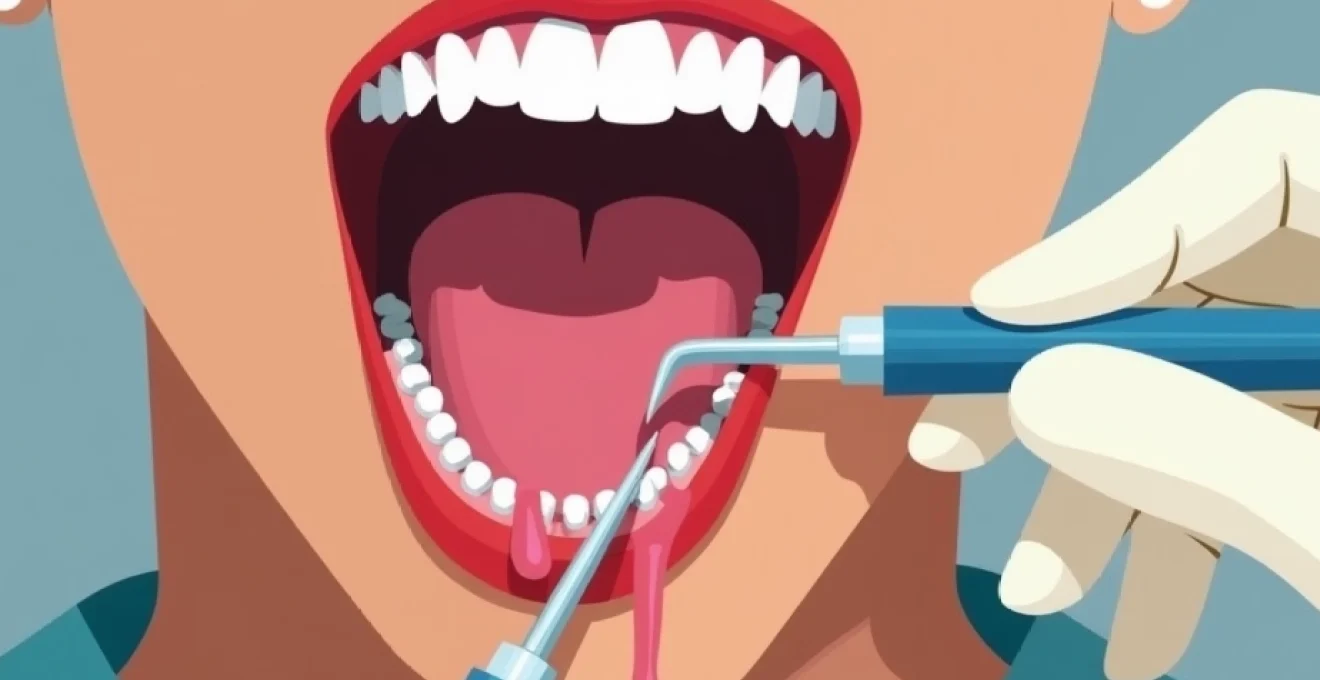
Iatrogenic injuries during dental procedures, whilst relatively uncommon, can have significant implications for both patients and practitioners. When a dentist accidentally cuts your tongue during treatment, the situation requires immediate attention and proper management to prevent complications and ensure optimal healing. The confined working space of the oral cavity, combined with the proximity of powerful dental instruments to delicate soft tissues, creates an inherent risk that even the most skilled practitioners must navigate carefully.
Tongue injuries during dental procedures can range from minor superficial cuts to deep lacerations affecting multiple tissue layers. Understanding the appropriate response protocols, assessment criteria, and treatment options is crucial for managing these incidents effectively. The tongue’s rich blood supply and dense nerve network mean that even minor injuries can appear alarming initially, whilst proper intervention can often prevent long-term complications.
Recent studies indicate that approximately 0.5% to 1.2% of routine dental procedures result in some form of soft tissue injury, with tongue lacerations representing a significant portion of these incidents. The legal and clinical implications of such injuries underscore the importance of having comprehensive management protocols in place.
Immediate medical response following iatrogenic lingual trauma during dental procedures
When a tongue laceration occurs during dental treatment, the immediate response can significantly influence the outcome. The dental team must act swiftly to control bleeding, assess the extent of injury, and provide appropriate emergency care. Time-sensitive interventions are critical, as the tongue’s extensive vascularisation can lead to substantial blood loss if not promptly addressed.
Haemostasis techniques for controlling tongue bleeding in clinical settings
Achieving haemostasis represents the primary concern following lingual trauma. Direct pressure using sterile gauze remains the gold standard initial approach, with pressure applied for a minimum of 10-15 minutes continuously. Cold compresses can provide additional vasoconstriction to reduce bleeding whilst offering pain relief. When conservative measures prove insufficient, topical haemostatic agents such as cellulose-based products or tranexamic acid solutions may be employed.
For more significant bleeding, electrocautery or laser coagulation may be necessary. These techniques require careful application to avoid thermal damage to surrounding tissues. The practitioner must maintain clear visualisation of the bleeding source whilst protecting adjacent structures from inadvertent injury during haemostatic procedures.
Assessment protocol for lingual nerve damage and sensory function loss
Comprehensive neurological assessment should commence once bleeding is controlled. The lingual nerve’s proximity to common surgical sites makes it vulnerable to injury during various dental procedures. Sensory testing should include light touch, sharp-dull discrimination, and two-point discrimination across the affected tongue region.
Early identification of nerve involvement is crucial for prognosis and treatment planning. Patients experiencing numbness, altered taste sensation, or burning sensations may have sustained nerve damage requiring specialist consultation. Documentation of baseline neurological function helps track recovery progress and informs medico-legal considerations.
Emergency antiseptic irrigation methods using chlorhexidine gluconate solutions
Thorough wound irrigation prevents bacterial contamination and removes debris from the injury site. Chlorhexidine gluconate 0.12% provides excellent antimicrobial activity against oral pathogens whilst being gentle on exposed tissues. Irrigation should be performed using gentle pressure to avoid forcing contaminants deeper into the wound.
Saline irrigation may be preferred initially to avoid potential chemical irritation of exposed nerve endings. The wound should be examined carefully for foreign material, including dental instrument fragments or restoration materials that might have been deposited during the incident.
Documentation requirements for dental malpractice and clinical incident reporting
Meticulous documentation serves multiple purposes, including clinical continuity, quality improvement, and legal protection. The clinical record should detail the mechanism of injury, immediate interventions performed, and the patient’s response to treatment. Photographic documentation can provide valuable visual records, though patient consent must be obtained.
Incident reporting protocols vary by jurisdiction but typically require notification to professional indemnity insurers and relevant regulatory bodies. The documentation should remain factual and objective, avoiding speculation about causation or blame attribution. Contemporary records created immediately after the incident carry greater medico-legal weight than retrospective entries.
Clinical classification and severity assessment of Dental-Induced tongue lacerations
Accurate classification of tongue injuries enables appropriate treatment selection and prognostic assessment. The anatomical complexity of the tongue, with its intricate muscular architecture and neurovascular supply, necessitates systematic evaluation approaches. Modern classification systems consider depth, location, associated structures involved, and functional implications when categorising lingual trauma.
Superficial mucosal tears versus deep muscular penetration injuries
Distinguishing between superficial and deep injuries guides treatment decisions and healing expectations. Superficial lacerations affecting only the mucosa typically heal spontaneously within 7-10 days with conservative management. These injuries present minimal bleeding and rarely require suturing unless length exceeds 2 centimetres.
Deep lacerations penetrating the muscular layer require more aggressive intervention. These injuries often gape significantly due to muscle contraction and typically necessitate surgical repair. Muscular involvement can be identified by the wound’s tendency to separate, exposing deeper tissue layers, and may be associated with more significant bleeding patterns.
Anatomical zones of lingual trauma: anterior third, posterior third, and lateral border classifications
The tongue’s anatomical zones exhibit different healing characteristics and complication risks. Anterior third injuries typically heal more rapidly due to excellent blood supply but may affect speech articulation more significantly. The mobile nature of the anterior tongue can complicate wound management and increase dehiscence risk.
Posterior third injuries present unique challenges due to difficult access and proximity to major vessels and nerves. These injuries may affect swallowing function and carry higher infection risks due to reduced visibility for cleaning. Lateral border lacerations often involve taste buds and may result in temporary or permanent taste alterations.
Grading systems for tongue injuries: modified abbreviated injury scale applications
Standardised grading systems provide consistent injury assessment across different practitioners and settings. The modified Abbreviated Injury Scale (AIS) for oral trauma considers multiple factors including depth, length, tissue involvement, and functional impact. Grade I injuries involve superficial mucosa only, whilst Grade V injuries represent near-complete or complete tongue amputation.
Systematic injury grading enables evidence-based treatment decisions and facilitates outcome comparisons across different management approaches.
This classification system helps predict healing timeframes, complication risks, and long-term functional outcomes. Higher-grade injuries typically require specialist referral and may necessitate microsurgical techniques for optimal restoration.
Complications assessment including hypoglossal nerve involvement and vascular compromise
Comprehensive complication assessment extends beyond the visible wound to consider potential systemic and functional impacts. Hypoglossal nerve injury can result in tongue weakness, affecting speech, swallowing, and oral hygiene maintenance. Early identification allows for appropriate referral to speech therapy or neurology specialists.
Vascular compromise may manifest as tissue colour changes, delayed capillary refill, or progressive swelling. Major vessel injury, whilst rare in routine dental procedures, can lead to significant haemorrhage or haematoma formation requiring urgent intervention.
Medical treatment protocols and wound management strategies
Evidence-based treatment protocols ensure optimal outcomes whilst minimising complications. The selection of appropriate interventions depends on injury characteristics, patient factors, and available resources. Modern wound management emphasises tissue preservation, infection prevention, and functional restoration rather than merely achieving wound closure.
Suturing techniques for lingual tissue repair using resorbable materials
When suturing is indicated, technique selection significantly influences healing outcomes. Simple interrupted sutures using 4-0 or 5-0 resorbable materials typically provide adequate tissue approximation for most lingual lacerations. Chromic gut sutures offer good handling characteristics and appropriate absorption timeframes for oral tissues.
Suture placement should achieve hemostasis and tissue approximation without excessive tension that might compromise circulation. The tongue’s muscular nature requires careful attention to anatomical layers, with deeper sutures addressing muscle tissue and superficial sutures managing mucosal alignment.
- Clean and anaesthetise the wound area thoroughly
- Achieve haemostasis through pressure and haemostatic agents if needed
- Place deep sutures to approximate muscle layers without excessive tension
- Close mucosal layer with simple interrupted or running sutures
- Apply topical protective agents and provide post-operative instructions
Antibiotic prophylaxis protocols: Amoxicillin-Clavulanate versus alternative regimens
Antibiotic prophylaxis remains controversial in oral wound management, with current evidence supporting selective rather than routine use. Amoxicillin-clavulanate 875mg/125mg twice daily provides broad-spectrum coverage against common oral pathogens whilst addressing beta-lactamase producing organisms.
Alternative regimens for penicillin-allergic patients include azithromycin or clindamycin, though resistance patterns must be considered. The decision to prescribe antibiotics should account for wound contamination, patient immune status, and injury severity rather than following blanket protocols.
Pain management strategies including topical anaesthetics and systemic analgesics
Multimodal pain management optimises patient comfort whilst supporting healing processes. Topical anaesthetics such as benzocaine or lidocaine gels provide immediate relief for superficial pain. However, prolonged use should be avoided due to potential tissue irritation and delayed healing effects.
Systemic analgesics should follow WHO pain management guidelines, starting with paracetamol and adding NSAIDs as needed. Stronger analgesics may be necessary for extensive injuries, though their sedative effects can complicate early complication recognition.
Follow-up care schedules and healing monitoring protocols
Systematic follow-up protocols ensure early complication detection and optimal healing outcomes. Initial review within 24-48 hours allows assessment of immediate post-treatment status and patient education reinforcement. Subsequent appointments at 1 week and 2 weeks monitor healing progress and suture management needs.
Healing parameters include wound edge approximation, absence of infection signs, pain reduction, and functional improvement. Delayed healing or complication development may necessitate more frequent monitoring or specialist referral.
Legal considerations and patient rights in dental negligence cases
The legal landscape surrounding iatrogenic dental injuries continues to evolve, with patient awareness and expectations driving increased scrutiny of professional practice. Understanding legal frameworks helps practitioners navigate potential claims whilst ensuring appropriate patient care standards are maintained. The distinction between unavoidable complications and negligent practice often becomes the central issue in legal proceedings.
Recent case law demonstrates that courts increasingly expect practitioners to demonstrate comprehensive risk assessment, appropriate prevention measures, and competent management of complications when they occur. Documentation quality frequently determines case outcomes, with contemporaneous, detailed records providing crucial evidence of appropriate care standards.
Professional indemnity claims related to tongue injuries typically settle for amounts ranging from £500 to £15,000, depending on injury severity and long-term consequences.
Patient rights encompass not only compensation for injuries sustained but also access to remedial treatment and ongoing care as needed. Informed consent processes must address inherent risks, though courts generally accept that rare complications cannot all be specifically disclosed. The duty of candour requires honest communication about incidents and their implications, fostering trust and often preventing formal complaints.
Professional regulatory bodies increasingly emphasise the importance of reflective practice and continuing education in preventing similar incidents. Practitioners must demonstrate learning from adverse events and implementation of improved safety measures to maintain professional standing.
Long-term complications and rehabilitation following lingual trauma
Understanding potential long-term consequences enables appropriate patient counselling and management planning. Whilst most tongue injuries heal completely, some patients experience persistent complications requiring ongoing intervention. Scar tissue formation can affect tongue mobility and speech articulation, particularly following deep lacerations or those requiring extensive surgical repair.
Taste disturbances represent another significant concern, especially for injuries affecting the lateral tongue borders where taste buds are concentrated. These changes may be temporary, lasting weeks to months, or permanent in cases involving nerve damage. Patients require realistic expectations and access to specialist support services when taste alterations significantly impact quality of life.
Speech therapy assessment becomes valuable for patients experiencing articulation difficulties following tongue injury. Early intervention can prevent compensation patterns that might become permanent, whilst specific exercises can optimise healing outcomes and functional recovery.
Psychological impacts should not be underestimated, with some patients developing dental anxiety or phobia following traumatic incidents. Cognitive-behavioural therapy techniques and graduated exposure protocols can help restore confidence in dental care whilst addressing underlying fears and anxieties.
Prevention strategies and risk mitigation in contemporary dental practice
Modern preventive approaches emphasise system-based safety measures rather than relying solely on individual practitioner vigilance. Environmental factors, equipment design, and procedural protocols all contribute to injury prevention efforts. The implementation of surgical safety checklists adapted for dental procedures has shown promising results in reducing adverse events.
- Use of rubber dam isolation whenever clinically appropriate
- Employment of high-volume suction to maintain clear visualisation
- Implementation of four-handed dentistry techniques with trained assistants
- Regular equipment maintenance and calibration protocols
- Staff training in emergency response and complication management
Technology integration offers additional safety benefits, with magnification systems improving precision and reducing inadvertent tissue contact. Piezoelectric instruments provide selective tissue cutting that may reduce soft tissue injury risks compared to conventional rotating instruments.
Patient positioning and stabilisation techniques contribute significantly to injury prevention. Proper head and neck positioning, combined with appropriate mouth props and tissue retraction, creates safer working conditions whilst improving access and visibility. The dental team must remain vigilant for patient movement or discomfort that might increase injury risk.
Continuing professional education should include regular updates on safety protocols, new prevention technologies, and emergency management techniques. Simulation training allows practitioners to rehearse emergency responses without patient risk, building confidence and competence in crisis situations.
Quality assurance programmes incorporating incident analysis and peer review create learning opportunities from adverse events. These systems help identify systemic issues that might contribute to injuries whilst promoting a culture of safety and continuous improvement within dental practices.